Sourcing Services Vendors: How to Find the Right Sourcing Partner
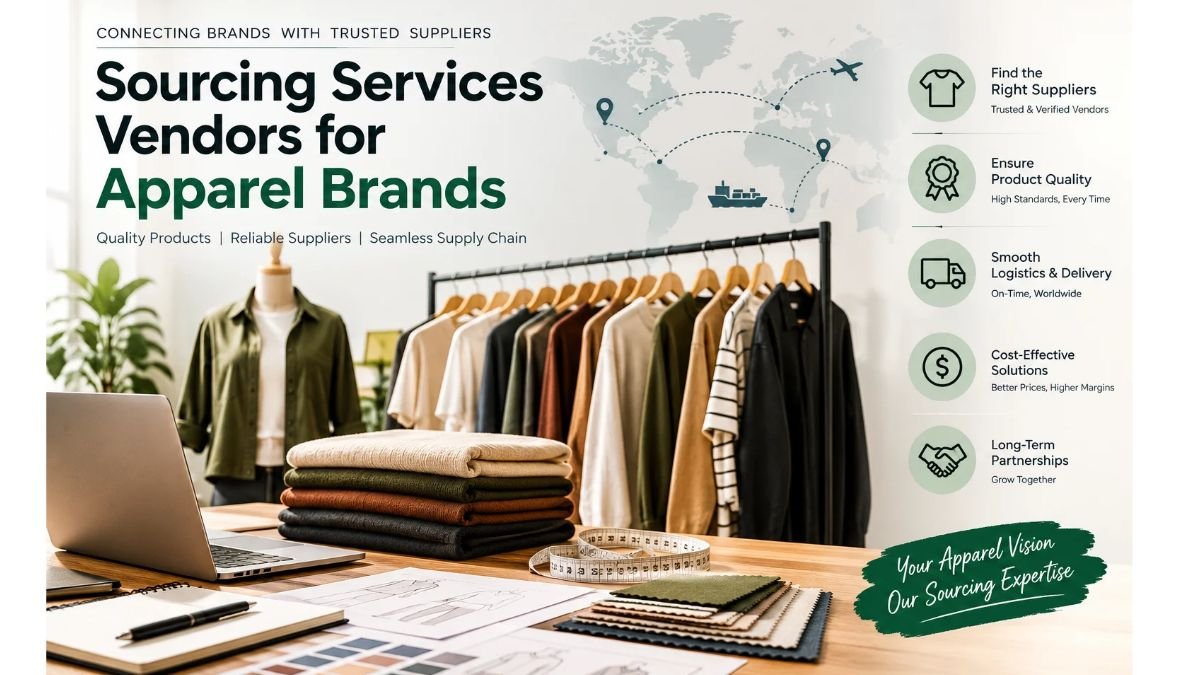
Choosing the right sourcing services vendors can help businesses find reliable suppliers, control product quality, manage costs, and maintain a steady supply of products. Whether you are launching a clothing brand, expanding an online store, or developing a new product line, the right sourcing partner can make the process easier.
Sourcing involves more than finding a supplier with a low price. Businesses must compare product quality, manufacturing capabilities, minimum order quantities, production timelines, communication, and shipping arrangements. A reliable sourcing partner helps buyers evaluate these factors before committing to an order.
Many businesses also work with product sourcing companies to identify suitable manufacturers, compare supplier offers, and coordinate product development. For fashion brands, sourcing may include finding fabrics, trims, labels, packaging materials, and clothing manufacturers.
This guide explains what sourcing services vendors do, how they work, what to consider when choosing one, and how to build a reliable sourcing process for your business.
What Are Sourcing Services Vendors?
Sourcing services vendors are businesses or professionals that help companies identify, evaluate, and work with suppliers. Depending on their services, they may assist with supplier research, price negotiations, product development, sample coordination, quality checks, order management, and shipping arrangements.
These vendors can support businesses that lack an internal sourcing team or need access to suppliers in different markets.
For example, a clothing startup may have a design ready but need a manufacturer that can produce custom T-shirts. A sourcing vendor can help identify potential manufacturers, collect quotations, and coordinate sample development.
However, not every vendor offers the same services. Some only introduce buyers to suppliers, while others manage several stages of the purchasing and production process.
What Services Do Sourcing Vendors Provide?
Common sourcing services include:
- Supplier identification: Finding manufacturers, wholesalers, and material suppliers.
- Supplier evaluation: Reviewing capabilities, product samples, communication, and business information.
- Price negotiation: Comparing quotations and discussing commercial terms.
- Product development: Helping buyers communicate specifications and prepare products for production.
- Sample coordination: Arranging product samples before a larger order.
- Quality control: Coordinating inspections against agreed specifications.
- Order management: Monitoring production progress and communicating updates.
- Logistics coordination: Helping organize packaging, documentation, and transportation when included in the agreement.
The exact scope depends on the vendor’s expertise and contract. Buyers should confirm which services are included before paying a sourcing fee.
Why Do Businesses Need Sourcing Services Vendors?
Finding a supplier online is relatively easy. Finding one that can consistently meet your requirements is much harder.
A supplier may offer an attractive price but have limited production capacity. Another may provide excellent samples but struggle with bulk orders. Sourcing support helps businesses investigate these differences before making purchasing decisions.
1. Save Time on Supplier Research
Searching for manufacturers, contacting suppliers, and comparing offers can take considerable time. This is particularly challenging for small businesses with limited staff.
Sourcing vendors can organize supplier information and help narrow the options to businesses that appear suitable for the product, budget, and order size.
However, buyers should still review the shortlisted suppliers independently.
2. Improve Supplier Selection
A suitable supplier must match your technical and commercial requirements. These may include materials, product dimensions, customization options, order quantities, and delivery schedules.
A sourcing partner can help assess whether a supplier’s capabilities align with these requirements. This reduces the risk of selecting a manufacturer based only on price or promotional claims.
3. Support Cost Planning
The product price is only one part of the total sourcing cost. Businesses may also pay for samples, customization, packaging, inspections, freight, insurance, duties, and other applicable charges.
Experienced sourcing professionals can help buyers compare these expenses and identify costs that might otherwise be overlooked.
4. Help Manage Product Quality
Clear product specifications and sample approvals are essential for consistent quality.
Sourcing vendors may coordinate product inspections or help establish quality requirements with suppliers. Buyers should confirm whether inspections are performed by the vendor, the manufacturer, or an independent inspection company.
5. Make International Sourcing Easier
Working with overseas suppliers can involve different time zones, languages, business practices, shipping arrangements, and import requirements.
A sourcing partner familiar with the relevant market may help coordinate communication and documentation. Still, businesses remain responsible for understanding their legal obligations and confirming the agreed responsibilities of each party.
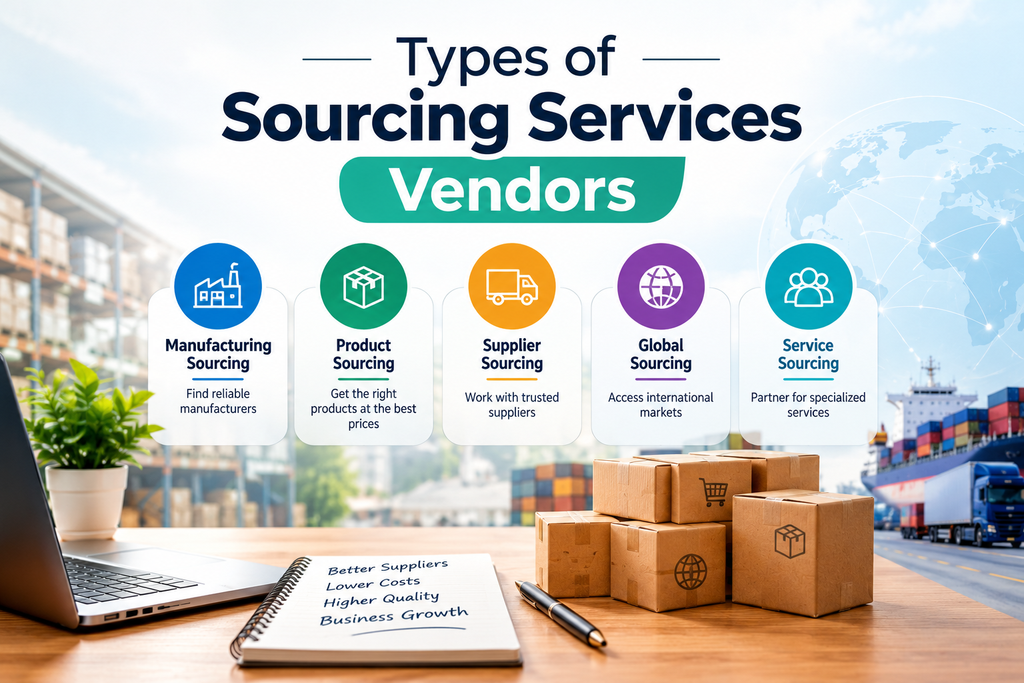
Types of Sourcing Services Vendors
Different vendors specialize in different stages of the purchasing process. Understanding these categories helps you choose a partner that matches your business needs.
Product Sourcing Companies
Product sourcing companies help businesses identify suppliers for specific products or product categories. Depending on their specialization, they may support supplier discovery, quotations, samples, product customization, and order coordination.
For example, an online retailer looking for custom accessories may use a sourcing company to compare manufacturers and evaluate available options.
Some product sourcing companies focus on general merchandise, while others specialize in apparel, electronics, home goods, packaging, or industrial products.
Sourcing Agents
A sourcing agent typically acts as an intermediary between a buyer and potential suppliers. Agents may communicate with factories, request quotations, coordinate samples, and help negotiate commercial terms.
Their responsibilities vary considerably. Some charge a fixed fee, while others receive commissions or use another agreed payment structure.
Before hiring an agent, clarify who pays them and whether they receive compensation from suppliers.
Manufacturers Offering Direct Sourcing
Some manufacturers source raw materials, trims, components, and packaging as part of their production services.
This arrangement can be useful when the manufacturer already understands the product requirements and can coordinate material selection with production.
For clothing brands, a manufacturer may help source cotton fabric, fleece, polyester, ribbing, zippers, drawcords, labels, and other garment components.
Direct manufacturing and sourcing support can reduce the number of separate suppliers a buyer needs to manage. However, buyers should still confirm material specifications, available options, and pricing.
Wholesale Suppliers and Distributors
Wholesale suppliers sell products in larger quantities, often for resale. They may offer ready-made inventory rather than custom manufacturing.
This can be a practical choice for retailers that need products quickly and do not require unique
Wholesale sourcing differs from custom manufacturing because the buyer may have less control over product construction, materials, branding, and design.
Full-Service Sourcing Providers
Full-service sourcing providers may manage several stages of the purchasing process, from supplier research to order coordination and shipping.
The term “full-service” is not a guarantee of a particular scope. One company may offer product development and inspections, while another may only coordinate suppliers and logistics.
Always request a written service breakdown before agreeing to work together.
How to Choose the Right Sourcing Services Vendors
Selecting the right partner requires more than comparing websites and quotations. You should evaluate experience, supplier access, communication, transparency, and the ability to meet your specific requirements.
1. Define Your Product Requirements
Start by documenting exactly what you want to source.
For manufactured products, include dimensions, materials, colors, design references, technical specifications, packaging requirements, and any applicable compliance requirements.
For clothing, you may also need:
- Fabric composition and GSM.
- Size charts and measurement tolerances.
- Stitching and construction details.
- Printing or embroidery requirements.
- Labels, hang tags, and packaging.
- Target order quantities and color options.
A detailed brief helps sourcing vendors identify relevant suppliers and request more accurate quotations.
2. Check Industry Experience
Look for a vendor with experience in your product category and target market.
A company that sources electronics may not have the technical knowledge needed for apparel production. Similarly, a clothing specialist may not be suitable for sourcing industrial machinery.
Ask about similar product categories the vendor has handled, what services it provides, and how it evaluates suppliers.
Request verifiable examples when available. Do not rely solely on broad claims about experience or supplier networks.
3. Evaluate Supplier Verification Procedures
Ask how the vendor checks potential suppliers.
Depending on the product and market, verification may include reviewing business registration, factory capabilities, production equipment, relevant certifications, sample quality, references, and inspection arrangements.
No single check guarantees that a supplier will perform well. Use several forms of evidence and independently verify important claims.
If certifications are required, confirm their authenticity, validity, scope, and relevance to your product.
4. Compare Pricing Transparently
Request a clear explanation of all costs.
A useful quotation should distinguish product costs from sourcing fees, sampling charges, customization, packaging, inspection, freight, and other applicable expenses.
Also confirm whether the sourcing vendor receives a commission from suppliers. This helps you understand potential conflicts of interest.
The cheapest quotation may not offer the best value if it excludes important services or involves greater quality and delivery risks.
5. Assess Communication
Effective communication is essential throughout sourcing and production.
The vendor should explain requirements clearly, respond within agreed timeframes, and provide realistic updates when problems arise.
Ask who will manage your account, how progress will be reported, and how disagreements or production delays will be handled.
6. Start With a Sample or Small Trial
Before committing to a large order, consider requesting samples or placing a manageable trial order when practical.
This lets you evaluate product quality, communication, packaging, and the supplier’s ability to meet specifications.
For custom products, approve the sample against a written specification. Make sure any changes are documented before bulk production begins.
7. Review the Contract
Your agreement should explain the vendor’s responsibilities, fees, payment terms, confidentiality obligations, quality requirements, cancellation rules, and dispute procedures.
If the vendor coordinates manufacturing, clarify who owns the designs, molds, artwork, technical files, and other intellectual property.
For international transactions, also establish the responsibilities for shipping, insurance, import documentation, duties, and delivery terms.
Product Sourcing Companies vs. Direct Manufacturers
Both sourcing companies and direct manufacturers can be useful, but they serve different purposes.
| Factor | Product sourcing companies | Direct manufacturers |
|---|---|---|
| Main role | Help identify and coordinate suppliers | Produce goods or components |
| Supplier access | May work with multiple suppliers | Usually focuses on its own production and approved supply chain |
| Product customization | Depends on its supplier network | Depends on manufacturing capabilities |
| Communication | Adds an intermediary | Buyer communicates directly with the manufacturer |
| Fees | May charge sourcing or coordination fees | May include sourcing costs in product quotations |
| Best suited for | Buyers who need help finding or managing suppliers | Buyers who know what they need and want a production partner |
Neither option is automatically better.
A sourcing company may be valuable when you need access to multiple suppliers or lack the time to manage supplier research. Direct manufacturing may be more suitable when you have clear specifications and want to work closely with the production team.
Some businesses combine both approaches. They use a sourcing specialist to identify a manufacturer and then communicate directly with that manufacturer during production.
How the Sourcing Process Works
A structured sourcing process makes supplier selection more manageable and helps reduce misunderstandings.
Step 1: Research the Market
Identify the products, materials, or components you need and determine which supplier markets may be suitable.
Consider quality expectations, production capabilities, minimum order quantities, delivery requirements, and applicable regulations.
Do not choose a sourcing country based on labor costs alone. Shipping expenses, lead times, duties, communication, and supplier reliability also affect the decision.
Step 2: Shortlist Potential Suppliers
Create a list of potential suppliers based on relevant experience, product capabilities, and commercial suitability.
Ask sourcing vendors to explain why each recommended supplier matches your requirements.
Where possible, compare several qualified suppliers instead of relying on one recommendation.
Step 3: Request Detailed Quotations
Provide the same specifications to each supplier so that their quotations are comparable.
Ask for pricing by quantity, sample charges, production timelines, customization costs, payment terms, and shipping arrangements.
If a quotation leaves important details unclear, request clarification before comparing offers.
Step 4: Evaluate Samples
Review samples for materials, measurements, workmanship, function, finish, and other product-specific requirements.
For apparel, inspect stitching, seams, fabric hand feel, color, fit, print placement, embroidery, and labels.
Document required changes and obtain approval for the final pre-production sample where applicable.
Step 5: Confirm the Order
Before production begins, finalize the specification, order quantity, price, payment schedule, quality standards, packaging, and delivery arrangements.
Use a written purchase order or manufacturing agreement. Avoid relying on informal messages for important commercial decisions.
Step 6: Monitor Production and Quality
Agree on how progress will be tracked and when inspections will occur.
For custom manufacturing, quality checks may take place during production and before shipment. The inspection plan should identify the product characteristics being checked and the process for handling defects.
Step 7: Arrange Delivery and Review Performance
Confirm shipping documents, destination details, delivery terms, and any import requirements.
After receiving the order, compare the goods with the approved specifications. Record problems and discuss corrective actions with the responsible supplier or vendor.
This review can help you decide whether to place repeat orders.
Sourcing Services Vendors for Clothing Brands
Fashion businesses have specific sourcing needs because garments combine materials, construction, fit, decoration, and branding.
A clothing brand may need several suppliers for fabric, trims, labels, packaging, printing, embroidery, and finished garments. Managing these separately can create delays and inconsistencies.
Working with a suitable apparel sourcing partner or manufacturer can help coordinate these requirements.
Fabric and Material Sourcing
Fabric selection affects comfort, appearance, durability, fit, and product cost.
Common options include cotton, French terry, fleece, polyester, denim, twill, canvas, and stretch fabrics. The right material depends on the garment’s intended use and design.
Buyers should specify fabric composition, weight, stretch, color, finish, and performance requirements. For example, a lightweight cotton T-shirt requires different material properties from a heavyweight fleece hoodie.
Whenever possible, review fabric swatches or samples before approving bulk materials.
Custom Clothing Manufacturing
Brands that need unique designs may work directly with a custom clothing manufacturer.
Depending on the manufacturer, services may include product development, material sourcing, sampling, cutting, sewing, decoration, quality control, and packaging.
Before choosing a manufacturer, confirm its experience with your garment type, available customization options, minimum order quantity, sampling process, and production timeline.
Fashion Soul International is a factory-owned custom clothing manufacturer based in Sialkot, Pakistan. Its service offering includes private-label, OEM, ODM, white-label, cut-and-sew, and full-package clothing production.
These services may be relevant to brands seeking a production partner for custom garments. Buyers should discuss their designs, quantities, materials, and project requirements directly with the company to confirm suitability.
Branding and Packaging
Custom branding helps clothing businesses create a consistent customer experience.
Depending on production capabilities, branding options may include screen printing, embroidery, heat transfer, woven labels, printed labels, hang tags, and custom packaging.
Provide artwork files, placement instructions, dimensions, colors, and material preferences before sampling.
Confirm whether the manufacturer or sourcing vendor handles each branding component. Also check whether setup charges, sample costs, and packaging materials are included in the quotation.
Common Sourcing Mistakes to Avoid
Even a promising supplier relationship can fail when buyers overlook important details.
Choosing Only by Price
A low unit price does not guarantee good value. Poor workmanship, delays, unexpected charges, and rejected products can increase total costs.
Compare the full cost and expected quality of each offer.
Skipping Samples
Ordering customized products without reviewing a sample can create expensive problems.
Whenever practical, approve a sample and document the specifications that bulk production must follow.
Ignoring Minimum Order Quantities
Manufacturers often set minimum order quantities based on materials, equipment setup, production efficiency, and customization requirements.
Confirm whether minimums apply per product, style, color, or another unit. Do not assume every supplier offers small quantities.
Using Unclear Specifications
Vague instructions can lead to incorrect materials, dimensions, colors, or finishes.
Provide written specifications and reference files. Make sure the supplier confirms any changes before production.
Overlooking Shipping and Import Costs
A quotation that excludes freight, duties, insurance, or customs-related expenses may appear cheaper than it really is.
Calculate the expected landed cost and confirm who is responsible for each part of the delivery process.
Failing to Check Ownership and Confidentiality
When sourcing custom products, clarify ownership of artwork, patterns, designs, tooling, and technical documents.
Use appropriate confidentiality and intellectual property terms, particularly when sharing unreleased designs or proprietary information.
How Much Do Sourcing Services Vendors Cost?
Sourcing fees vary according to the product category, supplier market, complexity of the order, and scope of work.
Common pricing models include:
- Fixed fee: A defined amount for a specific sourcing task.
- Commission: A percentage of the order value or another agreed transaction amount.
- Hourly or daily rate: Payment for research, consulting, or coordination time.
- Project fee: A negotiated amount for a broader sourcing or development project.
- Product pricing with included services: Some manufacturers incorporate material sourcing or production coordination into their quotation.
Ask for written confirmation of the fee structure and any additional charges.
You should also establish when payment is due, whether the fee is refundable, and what deliverables you will receive. Comparing vendors becomes easier when you understand exactly what each price includes.
Frequently Asked Questions
What Do Sourcing Services Vendors Do?
Sourcing services vendors help businesses find and evaluate suppliers. Depending on their services, they may coordinate quotations, samples, negotiations, quality inspections, order management, and shipping.
How Do I Find Reliable Product Sourcing Companies?
Start by defining your product requirements and identifying companies with relevant industry experience. Review their supplier verification process, fee structure, communication, references, and contractual responsibilities. Verify important claims independently before placing an order.
Are Sourcing Agents and Manufacturers the Same?
No. A sourcing agent generally helps buyers identify and coordinate suppliers, while a manufacturer produces goods. Some manufacturers also provide material sourcing and product development services.
Can Small Businesses Use Sourcing Services Vendors?
Yes. Small businesses can use sourcing support when they lack supplier contacts or need help comparing options. However, they should confirm service fees, minimum order requirements, and whether the expected order value makes the arrangement commercially worthwhile.
What Should I Send a Sourcing Vendor?
Provide a product description, specifications, reference images, target quantity, target budget, preferred materials, customization needs, and delivery destination. For clothing, include a tech pack if available, along with fabric details, measurements, colors, and branding instructions.
Should I Choose a Sourcing Company or a Direct Manufacturer?
Choose according to your needs. A sourcing company may help if you need supplier research and coordination. A direct manufacturer may be more suitable if you already understand your product requirements and want to work directly with the production team.
How Can I Reduce Sourcing Risks?
Use written specifications, verify suppliers, review samples, confirm commercial terms, establish quality standards, and document approvals. For larger orders, consider independent inspections and appropriate contractual protections.
Conclusion
Choosing the right sourcing services vendors can help businesses identify suitable suppliers, manage product requirements, and make more informed purchasing decisions. The best partner depends on your product category, budget, order size, customization needs, and desired level of support.
When evaluating product sourcing companies, look beyond the initial quotation. Review supplier verification, communication, quality procedures, fees, production capabilities, and shipping responsibilities.
For fashion brands, sourcing decisions also involve fabric selection, garment construction, sampling, branding, and production planning. Working with a suitable apparel manufacturer may help coordinate these requirements.
Start with a clear product brief, compare qualified suppliers, request samples where practical, and document every important agreement. A structured approach can help you build stronger supplier relationships and create a more dependable sourcing process.