Apparel Industry: A Complete Guide to Clothing Manufacturing and Fashion
The apparel industry covers the businesses involved in designing, producing, distributing, and selling clothing. It connects fashion designers, fabric suppliers, garment factories, wholesalers, retailers, and clothing brands. Every stage plays a role in turning raw materials into finished garments that customers can wear.
Understanding this industry helps entrepreneurs launch clothing brands, retailers choose reliable suppliers, and manufacturers improve production. It also explains how fabrics, garment construction, quality control, and supply chains influence the final product.
The apparel sector includes everything from basic T-shirts and hoodies to activewear, uniforms, denim, and premium fashion. Some companies manage the entire production process, while others specialize in specific services.
This guide explains how the apparel industry works, its major segments, the garment manufacturing process, current challenges, and the factors businesses should consider when sourcing clothing.
What Is the Apparel Industry?
The apparel industry is the business sector responsible for creating and supplying clothing. It includes product design, fabric sourcing, garment manufacturing, finishing, packaging, wholesale distribution, retail, and related services.
The term covers both physical production and the commercial activities that bring clothing to customers. A clothing brand may design products and market them without owning a factory. A manufacturer may produce garments for several brands without selling directly to consumers.
The industry serves many markets, including:
- Everyday and casual clothing
- Streetwear and fashion collections
- Sportswear and activewear
- Workwear and uniforms
- Denim and outerwear
- Children’s and baby clothing
- Formalwear and occasionwear
- Performance and technical apparel
Each category has different requirements. Activewear may need stretch fabrics and moisture management, while workwear may require durable materials and reinforced stitching.
The apparel industry also depends on related sectors. Textile producers supply fabrics, trim manufacturers provide buttons and zippers, and logistics companies transport finished goods.
Apparel Industry vs. Garment Industry vs. Cloth Industry
These terms are related, but they do not always mean exactly the same thing.
| Term | Meaning | Main focus |
|---|---|---|
| Apparel industry | The wider business sector involved in clothing | Design, production, distribution, and sales |
| Garment industry | Businesses that manufacture or supply finished clothing | Garment construction and production |
| Cloth industry | A less precise term often used for fabric and textile production or the broader clothing trade | Cloth, fabric, and related products |
| Garment manufacturing industry | The production-focused part of the clothing sector | Cutting, sewing, finishing, and quality control |
| Textile industry | The sector that processes fibers into yarn, fabrics, and textile products | Fibers, yarns, fabrics, dyeing, and finishing |
For example, a textile mill may manufacture cotton fabric, while a garment factory uses that fabric to produce T-shirts. A clothing brand then sells those T-shirts through its website or retail stores.
These businesses operate within connected parts of the same supply chain.
How Does the Apparel Industry Work?
The apparel supply chain starts with a product idea and ends when the finished garment reaches its buyer. The exact process varies by product, supplier, and business model.
1. Fashion Research and Product Planning
Clothing businesses begin by identifying their target customers and product requirements. They may research fashion trends, customer preferences, competing products, seasonal demand, and expected prices.
A brand planning a hoodie collection might decide on the fit, fabric weight, colors, sizes, and decoration methods before contacting a manufacturer.
Good planning helps businesses avoid unnecessary samples, unsuitable materials, and costly production changes.
2. Design and Product Development
Designers create concepts through sketches, reference images, digital illustrations, or technical drawings. They define garment details such as fit, seams, pockets, cuffs, collars, and closures.
A technical specification or tech pack can communicate these requirements to the factory. It may include measurements, grading, fabric details, color references, artwork placement, stitching requirements, and labels.
Clear specifications reduce misunderstandings between brands and manufacturers.
3. Fabric and Trim Sourcing
Fabric selection affects appearance, comfort, durability, cost, and production performance. Manufacturers may source cotton, polyester, fleece, French terry, denim, twill, canvas, and stretch materials.
Buyers should consider the following factors:
- Fiber composition
- Fabric weight, often measured in GSM
- Stretch and recovery
- Color consistency
- Shrinkage
- Surface texture
- Durability and intended use
- Compatibility with printing or embroidery
GSM means grams per square meter. It describes fabric weight, although weight alone does not determine quality.
Trims also matter. Zippers, buttons, drawcords, elastic, labels, and other components must suit the garment’s design and intended use.
4. Sampling and Approval
Before bulk production, a manufacturer may create a physical sample. The brand checks the sample for fit, measurements, fabric feel, color, stitching, artwork, and finishing.
This stage gives the buyer an opportunity to request adjustments. Changes made before bulk production are generally easier to manage than changes made after hundreds of garments have been produced.
Brands should approve the final pre-production sample and confirm the agreed specifications in writing.
5. Bulk Manufacturing
Once the sample and production details are approved, the factory prepares materials, patterns, cutting plans, sewing operations, and production schedules.
The factory may handle the entire order or work with specialized suppliers for certain processes. Production requirements depend on garment complexity, order quantity, fabric availability, and customization.
6. Quality Control and Delivery
Quality checks may take place during production and after garments are completed. Inspectors can review measurements, stitching, fabric defects, print placement, trims, and overall appearance.
Approved garments are then folded, labeled, packed, and prepared for shipment. Export documentation and transport arrangements depend on the destination and agreed shipping terms.
What Is the Garment Manufacturing Industry?
The garment manufacturing industry focuses on converting fabric and other materials into finished clothing. It includes factories that produce garments for fashion brands, retailers, wholesalers, uniform suppliers, and other businesses.
Some manufacturers specialize in a particular product, such as denim jeans, T-shirts, jackets, or sportswear. Others offer a broader range of products and production services.
The work often involves several connected activities:
- Pattern development and grading
- Fabric inspection and preparation
- Cutting garment panels
- Sewing and assembly
- Printing and embroidery
- Washing and finishing
- Measurement and quality inspection
- Labeling and packaging
A manufacturer’s capabilities affect which products it can produce efficiently. A factory experienced in lightweight T-shirts may not automatically be the right choice for technical outerwear with complex construction.
Brands should evaluate experience with the specific product they plan to manufacture.
Understanding the Clothing Manufacturing Process
The clothing manufacturing process transforms approved designs and materials into finished garments. The steps can differ by product, but most orders follow a similar production sequence.
Step 1: Pattern Making
A pattern defines the shape and dimensions of each garment component. Pattern makers use the design and measurement specifications to prepare pieces for cutting.
Pattern grading creates additional sizes from a base pattern. Accurate grading helps maintain consistent proportions across a size range.
Step 2: Fabric Inspection and Cutting
Before cutting, the factory checks fabric for visible defects, shade differences, and other problems. Fabric may be spread in layers before pattern pieces are cut.
Cutting accuracy matters because incorrect pieces can cause fit problems, fabric waste, or sewing delays.
Step 3: Sewing and Assembly
Cut fabric panels are joined according to the garment’s construction requirements. Operators may attach sleeves, collars, cuffs, pockets, waistbands, zippers, and other components.
Different products require different stitching methods and seam strengths. Stretch garments, for example, often need construction that accommodates movement without damaging the seams.
Step 4: Printing, Embroidery, and Branding
Brands can customize clothing with logos, graphics, labels, and other design elements.
Common decoration options include screen printing, embroidery, heat transfer, direct-to-garment printing, and sublimation. The appropriate method depends on the artwork, fabric, order quantity, desired appearance, and performance requirements.
A design intended for repeated washing should be tested for durability and suitability before full production.
Step 5: Garment Processing and Finishing
Finishing improves the garment’s appearance or prepares it for sale. Depending on the product, this may include pressing, thread trimming, washing, dyeing, or other treatments.
Denim and streetwear products may use specialized washes or garment-dye effects. These treatments can affect color, texture, shrinkage, and final measurements, so they should be considered during development.
Step 6: Final Inspection and Packing
Finished garments are checked against the approved specifications. Inspectors may review sizing, seams, decoration, color, labels, and packaging requirements.
After inspection, garments are folded, packed, and prepared for shipment. Buyers should agree on packaging specifications before production begins.
Major Segments of the Apparel Industry
The industry includes several product and business categories. Each serves different customers and requires different production knowledge.
Casualwear and Everyday Clothing
Casualwear includes T-shirts, sweatshirts, hoodies, joggers, shorts, and other everyday garments. Brands often focus on comfort, fit, fabric feel, and consistent sizing.
These products can suit businesses launching their first collections, although design complexity and order requirements still affect production costs.
Sportswear and Activewear
Sportswear includes clothing designed for exercise, training, and other physical activities. Common products include leggings, sports bras, performance T-shirts, tracksuits, and training shorts.
Activewear may require stretch fabrics, moisture-management properties, flat seams, and durable construction. Buyers should test garments for movement, comfort, opacity where relevant, and wash performance.
Streetwear
Streetwear combines casual clothing with distinctive styling, graphics, silhouettes, and branding. Hoodies, oversized T-shirts, sweatpants, jackets, and caps are common product categories.
Successful development requires attention to fabric weight, fit, decoration quality, and consistent artwork placement. Brands should share clear measurements and design references with manufacturers.
Workwear and Uniforms
Workwear serves employees in industries such as hospitality, construction, healthcare, and logistics. Requirements vary by use.
Some products need reinforced seams, durable fabrics, easy-care finishes, or functional pockets. Protective clothing may also need to meet applicable safety requirements. Buyers should verify the relevant standards rather than assuming ordinary workwear provides protective performance.
Denim and Outerwear
Denim and outerwear can require specialized equipment and production experience. Jeans may involve multiple panels, rivets, hardware, washes, and complex finishing.
Jackets may include linings, insulation, zippers, structured collars, or weather-resistant materials. Sampling is particularly important when a design includes several layers or specialized components.
The Role of Technology in the Apparel Industry
Technology supports product development, production planning, inventory management, and customer sales.
Digital Design and 3D Sampling
Digital design tools help designers prepare technical drawings and communicate garment details. Some businesses use 3D garment software to visualize designs before making physical samples.
Digital sampling can support early design decisions, but physical samples may still be necessary to check fabric behavior, fit, color, construction, and decoration.
Automated Production Equipment
Factories may use specialized cutting equipment, sewing machines, and production tracking systems to improve consistency and efficiency.
Automation is not equally suitable for every garment. Complex designs, small batches, and frequent customization may require more manual work.
Data and Inventory Planning
Retailers and brands can use sales data to estimate demand and plan inventory. Better forecasting may help reduce excess stock and missed sales opportunities.
However, forecasts are not guarantees. Businesses should account for seasonality, changing preferences, supplier lead times, and minimum order quantities.
E-Commerce and Digital Sales
Online stores allow clothing brands to reach customers beyond their immediate geographic markets. They also make product information, size charts, product photographs, and customer feedback important parts of the buying experience.
Manufacturing decisions should support the sales channel. For example, an online brand may need consistent sizing, reliable replenishment, and packaging suited to direct-to-consumer orders.
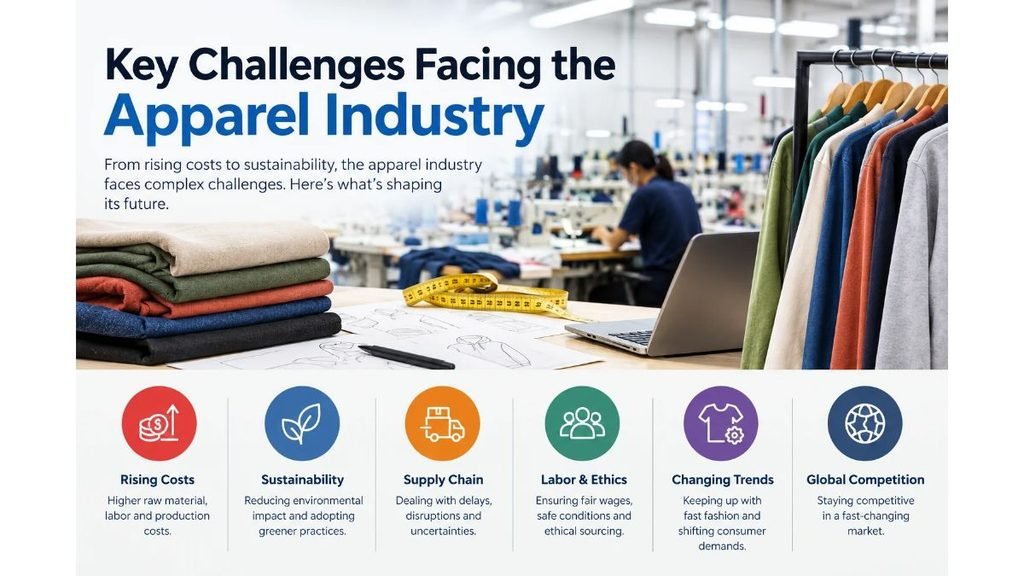
Key Challenges Facing the Apparel Industry
Clothing businesses face operational and commercial challenges throughout the supply chain. Understanding these issues helps brands plan more realistically.
Changing Consumer Demand
Fashion preferences can shift quickly. Products that attract attention during development may not sell as expected months later.
Brands can manage this risk through market research, small initial collections, careful inventory planning, and realistic sales forecasts.
Rising Material and Production Costs
Fabric, trims, labor, packaging, transport, and duties all affect the final cost of a garment. A low factory price does not necessarily mean a low total landed cost.
Buyers should compare quotations using the same specifications. They should also confirm what the quote includes, such as sampling, decoration, packaging, and shipping.
Quality Consistency
A garment may look correct in a sample but differ in bulk production if specifications or controls are weak.
To reduce this risk, brands should approve a clear sample, document measurements and materials, agree on acceptable tolerances, and arrange appropriate quality checks.
Supply Chain Delays
Fabric shortages, trim availability, sample revisions, production bottlenecks, and shipping disruptions can affect delivery dates.
Brands can reduce avoidable delays by finalizing specifications early, approving samples promptly, and confirming material availability before scheduling bulk production.
Environmental and Ethical Concerns
The apparel sector uses resources and can create waste through material production, dyeing, finishing, and unsold inventory.
Businesses can assess material choices, reduce unnecessary sampling and cutting waste, improve demand planning, and ask suppliers for accurate information about working practices and environmental measures.
Claims such as “sustainable,” “organic,” or “ethical” should be supported by suitable evidence. Brands should not rely on broad marketing language alone.
How to Choose an Apparel Manufacturer
Choosing a suitable manufacturer is an important decision for clothing brands. The right partner should be able to understand the product, communicate clearly, and meet agreed quality requirements.
Review Product Experience
Ask whether the manufacturer has experience with your garment category. A factory’s capabilities should match your product’s fabric, construction, decoration, and finishing requirements.
Request relevant examples or sample work when available.
Confirm Minimum Order Quantity
Minimum order quantity, or MOQ, is the smallest order a supplier accepts under stated conditions. The MOQ may vary by product, fabric, color, size range, and customization.
New brands should confirm the minimum before investing time in detailed development. A low MOQ can make testing a collection easier, but unit prices may be higher for smaller orders.
Understand Sampling and Production Timelines
Ask how sampling works, how revisions are handled, and when bulk production can begin. Confirm the expected timeline in writing.
Production schedules may depend on sample approval, fabric sourcing, order complexity, and the factory’s workload. Avoid assuming that every order will follow the same timeline.
Evaluate Quality Control
Ask how the manufacturer checks fabric, measurements, stitching, decoration, and finished garments. Find out whether inspections occur during production and before shipment.
Discuss how defects will be documented and handled. Clear quality requirements are more useful than general promises of excellent quality.
Compare Total Costs
A quotation should be reviewed in relation to the full order requirements. Check whether costs include labels, printing, embroidery, packaging, samples, freight, and other applicable charges.
For international orders, confirm the shipping terms, destination, duties, and responsibility for transport costs.
Check Communication and Documentation
A reliable working relationship depends on clear communication. The manufacturer should be able to discuss specifications, clarify uncertainties, and confirm important decisions.
Keep approved samples, tech packs, quotations, timelines, and production changes documented.
Private Label, OEM, ODM, and Full-Package Production
Different manufacturing models give brands different levels of control over product design and sourcing.
Private-label manufacturing allows a brand to sell garments under its own name and branding. The exact level of customization depends on the supplier and project.
OEM manufacturing generally means the factory produces goods according to the buyer’s specifications.
ODM manufacturing may involve adapting a manufacturer’s existing product designs or development capabilities to suit the buyer’s needs.
Full-package production can include several services, such as fabric and trim sourcing, product development, sampling, manufacturing, quality control, branding, and packaging.
These terms can vary between suppliers. Buyers should confirm which services are included rather than relying on the label alone.
How Fashion Soul International Supports Clothing Brands
Fashion Soul International is a factory-owned custom clothing manufacturer based in Sialkot, Pakistan. The company supports brands seeking custom garment production and related services.
Its service offering includes private-label, OEM, ODM, white-label, cut-and-sew, and full-package production. Depending on the project, support may cover product development, fabric and trim sourcing, sampling, bulk manufacturing, quality control, branding, packaging, and international shipping.
Brands may develop products such as T-shirts, hoodies, tracksuits, activewear, sportswear, workwear, jackets, denim, and other custom garments.
Product Development and Sampling
Brands can provide a tech pack, technical drawings, sketches, or reference images to communicate their ideas. A manufacturer can use these details to assess materials, construction, and development requirements.
The physical sample should be reviewed before bulk production. Buyers should confirm measurements, fabric, colors, trims, decoration, and finishing in writing.
MOQ and Production Planning
Fashion Soul International lists a standard minimum order quantity starting at 100 pieces, although actual requirements depend on the product and project details. Buyers should confirm the applicable MOQ during quotation.
Production planning should also account for fabric availability, sample revisions, decoration methods, and packaging needs.
Quality Control and International Shipping
Quality checks can help identify issues before an order is shipped. Buyers should discuss inspection procedures and acceptance requirements with the manufacturer before production.
For international orders, shipping arrangements and documentation depend on the destination and agreed trade terms. Brands should confirm freight options, duties, delivery responsibilities, and required paperwork when requesting a quote.
If you are developing a clothing line, prepare your product specifications, estimated order quantity, target market, and branding requirements before contacting a manufacturer. These details help suppliers assess your project and provide a more relevant quotation.
The Future of the Apparel Industry
The apparel industry will continue to respond to technology, changing consumer behavior, supply chain needs, and environmental concerns.
Digital product development may help teams communicate designs more efficiently. Better production planning can help businesses manage inventory and reduce avoidable waste. New material technologies may also provide additional options for performance, comfort, and durability.
At the same time, fundamental manufacturing skills will remain important. A successful garment still depends on appropriate fabric, accurate patterns, suitable construction, consistent finishing, and effective quality control.
Businesses that combine practical product knowledge with clear supplier communication will be better prepared to manage these changes.
Frequently Asked Questions
What is the apparel industry in simple words?
The apparel industry includes businesses that design, manufacture, distribute, and sell clothing. It connects fabric suppliers, garment factories, clothing brands, wholesalers, and retailers.
What is the difference between the apparel industry and the textile industry?
The textile industry focuses on fibers, yarns, fabrics, and textile processing. The apparel industry focuses on clothing products and the businesses that develop, manufacture, distribute, and sell them. The two sectors are closely connected.
What does the garment industry do?
The garment industry produces and supplies finished clothing. Its activities can include pattern making, cutting, sewing, decoration, finishing, inspection, and packaging.
What is the garment manufacturing process?
The garment manufacturing process typically includes design development, fabric sourcing, pattern making, cutting, sewing, decoration, finishing, quality inspection, and packing. The exact stages depend on the product.
How can a new brand enter the apparel industry?
A new brand should research its target customers, define its product range, set a realistic budget, prepare design specifications, and identify suitable manufacturers. It should confirm MOQ, sampling costs, production timelines, quality requirements, and shipping arrangements before placing an order.
What should I look for in a clothing manufacturer?
Look for relevant product experience, clear communication, transparent quotations, suitable MOQ, a defined sampling process, quality-control procedures, and realistic production timelines. Review the manufacturer’s ability to meet your specific requirements.
Is the apparel industry only about fashion brands?
No. It also includes uniform suppliers, workwear businesses, sportswear companies, private-label brands, wholesalers, retailers, and manufacturers producing garments for other businesses.
Why is quality control important in garment manufacturing?
Quality control helps identify issues with fabric, sizing, stitching, decoration, and finishing. It can reduce the risk of receiving garments that do not match approved specifications.
Conclusion
The apparel industry connects design, materials, manufacturing, distribution, and retail. Understanding these stages helps clothing brands make better decisions about product development, sourcing, quality, and costs.
The garment industry and garment manufacturing industry are important parts of this wider sector, turning fabric and product specifications into finished clothing. The cloth industry and textile suppliers support this process by providing the materials manufacturers need.
For businesses planning a new collection, careful product development and manufacturer selection can reduce uncertainty. Clear specifications, sample approval, realistic timelines, and agreed quality standards help create a stronger production process.
Fashion Soul International supports custom clothing projects from product development and sampling through bulk manufacturing, branding, and international shipping. Brands can share their requirements to discuss the next steps for their apparel projects.