Fashion Industry News Today: Trends, Retail Updates and Business Insights
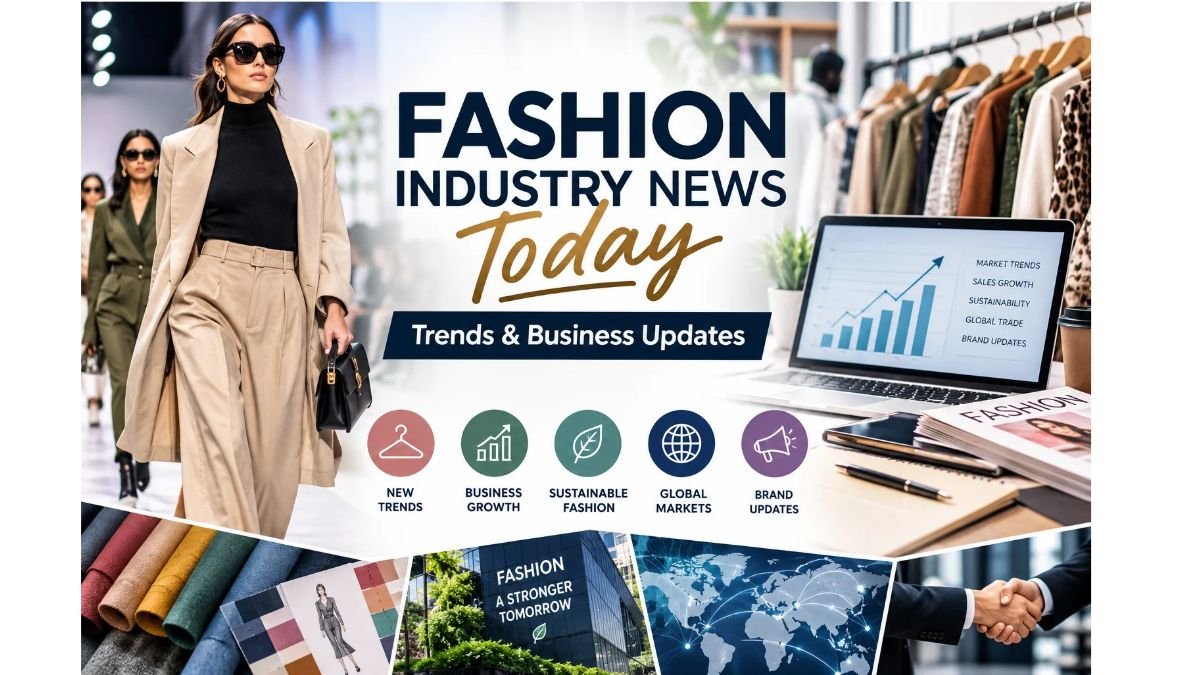
Fashion industry news today helps designers, retailers, clothing brands, manufacturers, and fashion entrepreneurs understand changes across the global apparel market. From retail performance and consumer preferences to manufacturing technology and sustainable materials, industry developments influence how fashion businesses plan their next steps.
For fashion brands, following fashion business news today is more than keeping up with popular styles. It also means understanding production costs, sourcing decisions, supply chain challenges, digital retail, and customer expectations. These factors can influence product development, pricing, inventory, and long-term business growth.
This guide explores the major topics shaping fashion industry news, explains how retail and manufacturing developments affect businesses, and shares practical ways brands can use industry updates to make better decisions.
What Is Fashion Industry News Today?
Fashion industry news today covers current developments affecting clothing, footwear, accessories, retail, manufacturing, design, and the wider fashion economy. It includes business announcements, consumer trends, new technologies, supply chain changes, sustainability initiatives, and updates from fashion companies.
Unlike fashion inspiration content, industry news focuses on the decisions and developments behind the products customers see in stores and online.
Common topics include:
- New collections, collaborations, and designer announcements.
- Retail sales, store openings, and business expansion.
- Changes in consumer shopping behavior.
- Clothing manufacturing and apparel sourcing.
- Sustainable materials and responsible production.
- E-commerce platforms and digital shopping tools.
- Textile innovation and garment production technology.
- Import costs, shipping challenges, and supply chain management.
These subjects matter to different audiences for different reasons. Retailers want to understand demand, manufacturers monitor production requirements, and emerging brands look for opportunities to compete in a crowded market.
Reliable reporting helps businesses distinguish meaningful developments from short-lived social media trends.
Major Trends Shaping the Fashion Industry
Fashion trends are not limited to colors, silhouettes, or seasonal collections. Business models, technology, sourcing practices, and customer expectations also influence how the industry develops.
Understanding these broader changes can help brands identify opportunities and prepare for potential challenges.
1. Changing Consumer Preferences
Consumers often evaluate clothing based on more than appearance. Price, comfort, quality, versatility, fit, and perceived value can all affect purchasing decisions.
Many shoppers also look for products that match their lifestyles. This creates opportunities for brands offering comfortable everyday clothing, practical activewear, versatile basics, and products designed for specific communities.
However, consumer preferences differ across countries, age groups, and market segments. A trend that performs well in one market may not produce the same results elsewhere.
Fashion businesses can respond by studying customer feedback, analyzing product performance, and monitoring relevant retail fashion news today. These activities help brands make decisions based on evidence rather than assumptions.
For example, a small clothing brand might discover that customers prefer fewer designs with better fabric quality. That insight could influence its next collection, production quantities, and pricing strategy.
2. Growth of Digital Fashion Retail
Online shopping has changed how customers discover, compare, and purchase clothing. Brands can now reach customers through their own websites, online marketplaces, social commerce, and mobile shopping experiences.
Digital retail also provides information about customer behavior. Businesses can examine product views, conversion rates, return reasons, and repeat purchases to understand which products meet customer needs.
Still, online selling creates challenges. Customers cannot physically examine fabrics or try garments before purchasing. Accurate product descriptions, size charts, fabric details, and useful photographs are therefore essential.
Fashion retailers should monitor developments in e-commerce technology, payment systems, delivery services, and digital marketing. These changes can influence both customer expectations and operating costs.
For emerging labels, a clear online shopping experience can be an important part of building customer trust.
3. Demand for Product Quality and Value
Fashion businesses face pressure to offer products that justify their prices. Customers may compare several brands before deciding whether a garment provides enough value.
Quality depends on multiple factors, including fabric selection, stitching, fit, construction, finishing, and durability. Attractive branding cannot compensate for poor garment performance.
Brands can improve value by developing products carefully and testing samples before placing bulk orders. Manufacturers can support this process through appropriate material recommendations, construction guidance, and quality inspections.
The goal is not necessarily to make every garment expensive. It is to match materials and construction with the product’s intended price, purpose, and customer expectations.
Fashion Business News Today: What Brands Should Watch
Fashion business news today examines the commercial decisions that influence fashion companies. It covers business performance, investment, sourcing, pricing, brand strategy, partnerships, and changes in the wider retail environment.
For clothing entrepreneurs, the most useful updates are those that help answer practical questions: What are customers buying? How are costs changing? Which sales channels are becoming more important? What risks could affect production?
Retail Sales and Business Performance
Retail performance can reveal how customers respond to different product categories, price points, and shopping experiences.
However, a sales increase at one company does not automatically mean the entire fashion market is growing. Results may reflect a specific brand’s audience, marketing strategy, product mix, or regional conditions.
When reviewing retail reports, consider the following:
- Sales growth: Determine whether reported growth reflects higher demand, price increases, or other factors.
- Profit margins: Rising sales do not always translate into higher profits.
- Inventory levels: Excess inventory can lead to discounting and additional storage costs.
- Returns: High return rates may indicate sizing, quality, or product-description problems.
- Customer retention: Repeat purchases can help indicate whether a brand is meeting customer expectations.
Looking at several indicators provides a more balanced view than focusing on a single headline.
Brand Expansion and Competition
Fashion companies may expand through new product categories, wholesale partnerships, international sales, or additional retail locations.
Expansion can create opportunities, but it also increases operational complexity. Brands may need stronger inventory planning, reliable suppliers, better logistics, and more structured financial management.
Smaller businesses should evaluate expansion carefully. Increasing production before confirming demand can tie up money in unsold inventory.
A controlled approach allows brands to test products, measure customer interest, and improve their operations before committing to larger orders.
Pricing and Operating Costs
Material prices, labor, freight, packaging, duties, and marketing expenses can all influence a clothing brand’s cost structure.
Fashion businesses should understand the complete cost of bringing a product to market. The factory price alone does not represent the final cost of selling a garment.
A useful cost review includes:
- Fabric and trims.
- Cutting, sewing, and finishing.
- Printing, embroidery, and other decoration.
- Labels and packaging.
- Freight, insurance, and applicable duties.
- Warehousing, fulfillment, and returns.
- Marketing and sales expenses.
Monitoring these factors helps brands evaluate pricing decisions and avoid relying on unrealistic profit expectations.
Retail Fashion News Today: Changes in Shopping and Merchandising
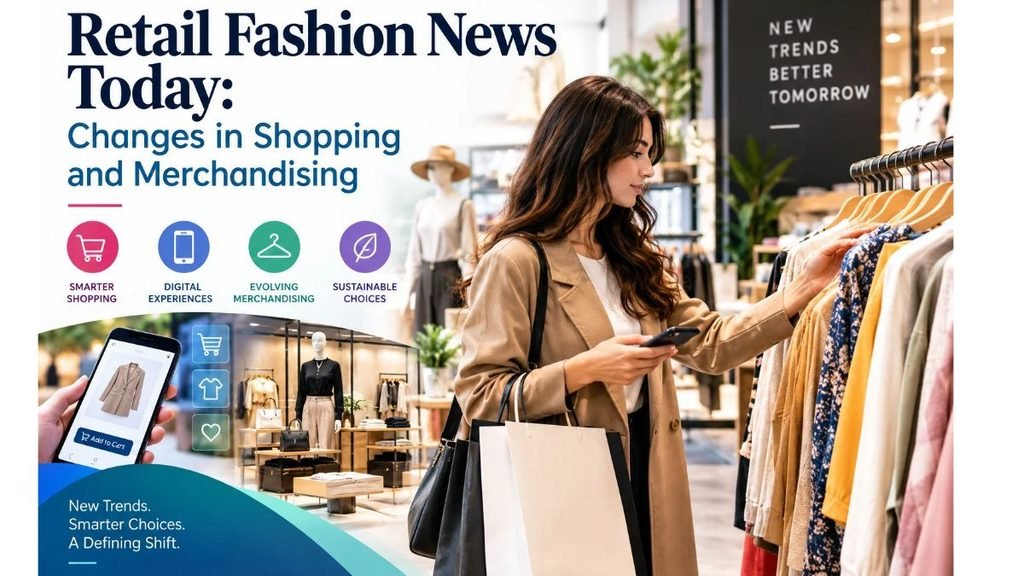
Retail fashion news today covers how clothing is presented, sold, delivered, and experienced by customers. Retailers must balance customer expectations with inventory costs, product availability, and competition.
The Role of Omnichannel Retail
Omnichannel retail connects different shopping channels so customers can interact with a brand through multiple touchpoints.
For example, a customer might discover a product on social media, review it on a website, purchase it through an online store, and contact customer service about delivery.
Consistency matters throughout this journey. Product information, pricing, availability, and brand communication should remain accurate across channels.
Fashion retailers can improve their approach by maintaining updated inventory records, providing clear shipping information, and making returns policies easy to understand.
Inventory Management and Seasonal Demand
Fashion demand can change quickly. Weather, cultural events, marketing campaigns, and social media exposure can influence which products customers want.
Buying too much inventory can create cash-flow problems. Buying too little may lead to missed sales when popular items become unavailable.
Businesses can reduce these risks by reviewing previous sales, testing new products in smaller quantities, and planning replenishment where suppliers and production schedules allow it.
Seasonal planning should also consider manufacturing lead times. A product needs to be developed, sampled, produced, shipped, and prepared for sale before the relevant selling period begins.
Returns and Customer Experience
Clothing returns can result from incorrect sizing, unsuitable fit, color differences, fabric expectations, or damaged products.
Retailers can address some of these issues through better product photography, accurate measurements, clear fabric descriptions, and consistent quality standards.
Brands should review return reasons rather than treating all returns as unavoidable business expenses. Patterns in customer feedback can reveal opportunities to improve product development and product-page information.
Apparel Manufacturing and Fashion Supply Chains
Manufacturing and sourcing are important parts of fashion industry news because they influence product quality, costs, delivery schedules, and business flexibility.
A clothing brand may have a strong design concept, but successful execution depends on turning that concept into a consistent finished garment.
How the Apparel Manufacturing Process Works
The apparel manufacturing process generally includes several connected stages. The exact workflow depends on the garment, materials, production method, and supplier.
1. Product development: The brand defines the design, target customer, measurements, features, and intended price point.
2. Material selection: Fabric, trims, thread, labels, and other components are selected according to the product’s requirements.
3. Pattern development: Patterns translate garment measurements and design details into pieces that can be cut and assembled.
4. Sampling: A physical sample allows the brand to evaluate fit, construction, materials, and appearance before bulk production.
5. Cutting and sewing: Approved materials are prepared, cut, and assembled according to the specifications.
6. Decoration and finishing: Printing, embroidery, washing, labeling, and other treatments are completed where required.
7. Quality control: Garments are inspected for measurements, workmanship, appearance, and compliance with approved specifications.
8. Packaging and shipping: Finished products are packed and prepared for delivery according to the agreed requirements.
Understanding these stages helps brands ask better questions when evaluating suppliers.
Why Reliable Sourcing Matters
A supplier should be evaluated on more than quoted price. Communication, production experience, sample quality, material availability, inspection procedures, and delivery planning can all affect the outcome.
Before choosing a manufacturer, brands should confirm:
- Whether the supplier produces the required garment category.
- Which fabrics and customization methods are available.
- The minimum order quantity for the specific product.
- Whether physical samples are available before bulk production.
- How quality inspections are handled.
- Which packaging and branding options are supported.
- What production and shipping timelines apply.
- Which payment, shipping, and delivery terms are agreed upon.
These checks help reduce misunderstandings and make production expectations clearer.
The Importance of Minimum Order Quantities
Minimum order quantity, or MOQ, refers to the smallest order a supplier accepts under specified conditions.
MOQ requirements can vary by garment style, fabric, color, printing method, and construction. A supplier might accept a relatively small order for one product but require a larger quantity for another.
For new brands, smaller production runs can reduce the amount of money committed to untested designs. However, lower quantities may increase the cost per garment or limit access to certain materials and decoration methods.
Brands should compare the full commercial terms rather than selecting a manufacturer based on MOQ alone.
Sampling and Quality Control
A sample provides an opportunity to identify problems before they affect a full production run.
Brands should review measurements, fit, stitching, fabric weight, color, print placement, embroidery, trims, and finishing. Any necessary changes should be documented clearly.
Bulk production should proceed only after the required sample has been approved and the final specifications are understood by both parties.
Quality control can include inspections during production and checks before shipment. The inspection plan should reflect the garment’s complexity, order size, and quality requirements.
Sustainability and Responsible Fashion
Sustainability remains an important topic in fashion business discussions. Businesses, customers, and supply chain partners increasingly examine how products are made, what materials are used, and how garments are managed after purchase.
However, sustainability claims need evidence. Using one recycled or natural material does not automatically make an entire product environmentally sustainable.
Material Selection and Product Longevity
Material decisions affect garment comfort, performance, appearance, and durability.
Cotton, polyester, recycled fibers, and blended fabrics each have different properties. Their suitability depends on the garment’s intended use, required performance, sourcing, care instructions, and available evidence about environmental impact.
For example, a performance garment may require stretch and moisture management, while an everyday sweatshirt may prioritize softness, warmth, and shape retention.
Brands should choose materials according to clear product requirements rather than relying only on broad sustainability labels.
Reducing Waste in Production
Waste reduction can begin during product development.
Accurate patterns, thoughtful fabric layouts, suitable order quantities, and careful production planning may reduce avoidable material waste. Quality checks can also help identify problems before defective garments move through later stages.
Brands can support better inventory management by testing demand before scaling a design and avoiding unnecessary variations that add complexity without serving a clear customer need.
Transparency and Responsible Claims
Customers need clear information to evaluate sustainability statements.
Fashion companies should explain relevant material details, care requirements, manufacturing information, and any verified environmental or social standards. Claims should be specific and supported by appropriate documentation.
Avoid vague statements such as “completely sustainable” unless the claim can be substantiated across the relevant scope.
Trust grows when businesses communicate limitations honestly and improve their practices over time.
Technology and Innovation in Fashion
Technology influences how fashion businesses design products, forecast demand, manufacture garments, and communicate with customers.
Following technology-related fashion industry news can help companies identify useful tools without assuming every new development is suitable for their business.
Artificial Intelligence and Trend Analysis
Artificial intelligence tools can help organize large amounts of information, summarize customer feedback, and identify patterns in sales or search behavior.
Design teams may use digital tools to explore concepts, while business teams can use data analysis to support inventory planning or product research.
These tools have limitations. Online attention does not always predict purchasing behavior, and automated trend analysis can reflect incomplete or biased data.
Human review remains important when deciding which ideas fit a brand’s customers, identity, and production capabilities.
Digital Design and Product Development
Digital design tools can help teams prepare sketches, technical drawings, measurement specifications, and product presentations.
Three-dimensional garment visualization may support design reviews before a physical sample is produced. However, digital representations do not always capture the exact behavior of real fabrics, stitching, washing, or garment construction.
Physical samples remain valuable when brands need to assess actual fit, material feel, and finishing quality.
A combined digital and physical workflow can help teams communicate more clearly and reduce avoidable development errors.
Automation in Manufacturing
Manufacturing technology can support tasks such as fabric spreading, cutting, production tracking, and quality inspection.
The value of automation depends on the product, factory setup, investment requirements, and production volume. Some specialized garments still require significant manual skill.
Brands should focus on whether a manufacturer’s processes can meet their specifications consistently, rather than assuming advanced equipment guarantees better results.
Opportunities for Small and Emerging Fashion Brands
Industry news is useful not only for large retailers. Small fashion businesses can also use market information to identify a suitable niche and make careful decisions.
Start With a Clear Customer
A new brand should identify who it serves and why its products are relevant to that audience.
Possible markets include streetwear, activewear, modest fashion, casual basics, workwear, or specialized apparel. Each market has different fit, fabric, pricing, and branding requirements.
A focused product range can make it easier to communicate a clear identity and understand customer demand.
Test Products Before Scaling
Launching many designs at once can increase development costs and create inventory risk.
A more controlled strategy is to develop a small collection, test customer interest, review feedback, and refine the product range.
Before placing an order, estimate the full cost of production, shipping, marketing, fulfillment, and potential returns. This provides a clearer picture of the financial commitment.
Build Strong Supplier Relationships
A reliable supplier relationship depends on clear communication and realistic expectations.
Brands should provide useful design references, measurement charts, fabric requirements, branding instructions, and packaging details. If a complete tech pack is unavailable, discuss which information the manufacturer needs to prepare a suitable sample.
Written approvals and documented changes can prevent confusion during development and bulk production.
How Fashion Soul International Fits Into Apparel Manufacturing
For brands researching fashion business news and sourcing opportunities, understanding the manufacturing side of the industry is an important step.
Fashion Soul International is a custom clothing manufacturer based in Sialkot, Punjab, Pakistan. The company offers manufacturing support for apparel brands seeking customized products and production services.
Its service areas include private-label clothing, OEM, ODM, white-label production, cut-and-sew manufacturing, and full-package production.
Depending on the project, the workflow can include product development, fabric sourcing, sampling, bulk production, quality control, custom branding, packaging, and international shipping.
What Brands Should Prepare Before Contacting a Manufacturer
Brands can make sourcing discussions more productive by preparing the following information:
- Product type: Specify whether you need T-shirts, hoodies, tracksuits, activewear, workwear, or another garment category.
- Design details: Share sketches, reference images, measurements, or a technical pack.
- Fabric requirements: Describe the preferred composition, weight, stretch, texture, and performance features.
- Order quantity: Provide estimated quantities by style and color.
- Branding requirements: Explain your needs for printing, embroidery, labels, hang tags, and packaging.
- Delivery destination: Share the destination country and preferred shipping requirements.
- Target budget: Provide a realistic cost target where possible.
Fashion Soul’s published standard MOQ starts at 100 pieces per style, although the actual requirement depends on the product and project specifications. Brands should confirm the current MOQ, sample costs, production timeline, and shipping terms during quotation.
Preparing these details can help both sides assess whether the proposed product is practical to manufacture.
How to Follow Fashion Industry News More Effectively
There is a difference between reading fashion headlines and using industry information to make better business decisions.
A structured research routine can help brands focus on developments that matter to their customers and operations.
Choose Reliable Information Sources
Use a mix of established fashion trade publications, official company announcements, retail reports, industry organizations, and relevant government information.
For market statistics, check the original report when available. Review the publication date, geographic scope, methodology, and definitions before using figures in business planning.
Social media can help identify emerging conversations, but viral content should not automatically be treated as evidence of a lasting market trend.
Separate Headlines From Business Implications
When reviewing a story, ask three questions:
- What has actually happened?
- Which customers, products, markets, or supply chains could be affected?
- Does this development require a change in our plans?
For example, news about a new textile material may be interesting, but a brand should evaluate its availability, price, durability, care requirements, and suitability before changing its product specifications.
This approach turns general news into practical research.
Review Updates Regularly
A weekly review may be enough for a small brand, while businesses with active retail operations or complex supply chains may need more frequent monitoring.
Track topics such as consumer demand, competitor launches, material costs, retail performance, sourcing risks, and relevant regulations.
Keep a simple record of important developments and the decisions they influence. Over time, this can help the business distinguish recurring patterns from temporary attention.
Frequently Asked Questions
What does fashion industry news today cover?
It covers current developments in fashion design, apparel manufacturing, retail, business performance, consumer trends, sustainability, technology, and supply chains.
Why is fashion business news today important for clothing brands?
It helps brands understand changes that may affect customer demand, production costs, sourcing decisions, pricing, inventory, and sales channels.
How is retail fashion news today different from general fashion news?
Retail fashion news focuses more closely on sales, store operations, e-commerce, merchandising, customer behavior, inventory, and retail business strategies. General fashion news may also cover design, culture, and creative developments.
Where can I find reliable fashion business news?
Look for established fashion trade publications, official company announcements, industry reports, recognized organizations, and primary sources. Verify dates and statistics before relying on them.
How can small clothing brands use fashion industry news?
Small brands can monitor customer preferences, competitor activity, material developments, and sourcing changes. They can use those insights to test products carefully and make informed production decisions.
Why should fashion brands follow manufacturing news?
Manufacturing developments can affect fabric availability, product quality, production methods, lead times, and costs. Understanding these issues helps brands plan orders and communicate effectively with suppliers.
How often should a fashion business review industry updates?
The ideal frequency depends on the business. A weekly review can suit many small brands, while businesses facing fast-changing inventory or sourcing conditions may benefit from more frequent monitoring.
Conclusion
Fashion industry news today provides useful context for understanding the forces that influence clothing brands, retailers, manufacturers, and consumers. Retail performance, digital commerce, product quality, sustainability, technology, and supply chain management all contribute to the industry’s changing landscape.
Fashion business news today becomes more valuable when businesses connect reported developments to practical decisions. Rather than following every headline, brands should focus on information that affects their customers, products, budgets, and operations.
For emerging labels, careful product development, realistic production planning, reliable supplier communication, and consistent quality checks remain essential. By combining informed market research with sound manufacturing decisions, fashion businesses can respond more thoughtfully to change and build products that meet their customers’ needs.