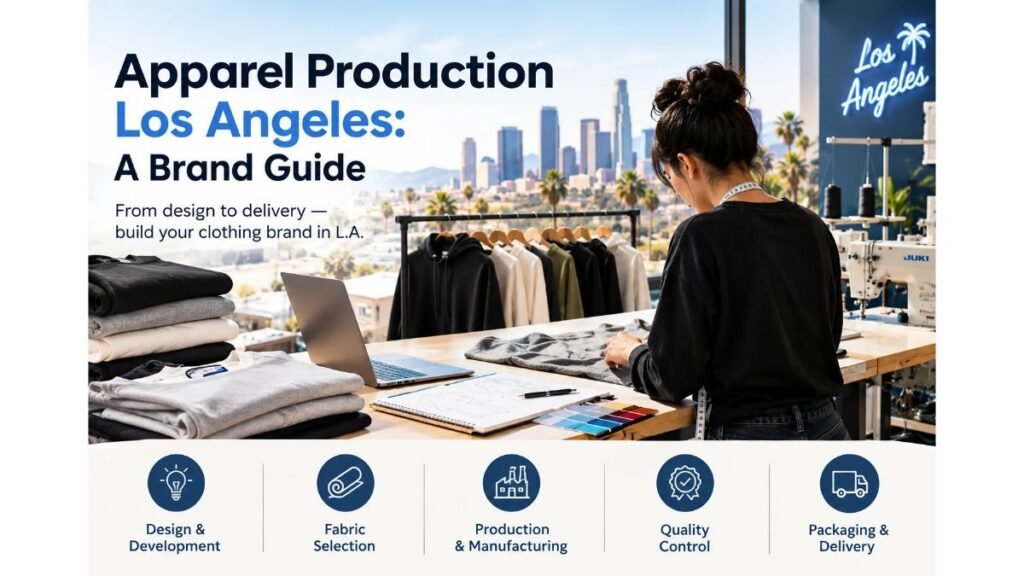
Apparel Production Los Angeles: A Complete Guide to Clothing Manufacturing
Apparel production in Los Angeles attracts fashion startups, independent designers, established clothing brands, and retailers looking to develop new products. The city has a long-standing connection with fashion, garment production, wholesale apparel, and creative design. However, choosing the right production partner requires more than finding a factory nearby.
Before starting a clothing line, you need to understand the production process, minimum order quantities, fabric options, sampling, quality control, pricing, and delivery timelines. You should also decide whether local manufacturing or an international production partner better fits your business goals.
Whether you are developing graphic T-shirts, streetwear, activewear, hoodies, or a complete fashion collection, this guide explains how apparel production works, what to look for in a cut-and-sew factory, and how to prepare your designs for manufacturing.
What Is Apparel Production in Los Angeles?
Apparel production refers to the process of turning clothing designs into finished garments. It can include product development, fabric sourcing, pattern making, cutting, sewing, decoration, finishing, inspection, and packaging.
Los Angeles is known for its fashion and garment industry. Designers and brands may work with local sample makers, pattern makers, sewing contractors, garment manufacturers, and production management companies.
The exact services available depend on the individual business. Some providers specialize in small production runs, while others focus on particular garment categories or larger orders.
A clothing brand might use a local production partner to develop samples, test a new design, or manufacture a complete collection. Other brands may compare local suppliers with overseas factories to find the right balance of cost, customization, communication, and production capacity.
Before contacting a manufacturer, identify what you need. A provider that specializes in simple T-shirts may not be the best fit for technical activewear, structured jackets, or garments requiring complex construction.
Why Do Clothing Brands Choose Los Angeles for Apparel Production?
Many fashion businesses consider Los Angeles because of its creative community, garment industry connections, and access to apparel-related services.
However, the advantages depend on the production partner, product, and order size.
Access to Fashion and Design Services
Brands may find designers, sample developers, pattern makers, fabric suppliers, and production specialists in the wider Los Angeles fashion market.
Working with different specialists can help a business develop a design before committing to full production. This can be especially useful for brands that need several rounds of revisions.
Easier In-Person Communication
When a brand and its manufacturer operate near each other, they may be able to arrange meetings, inspect samples, discuss construction, and resolve questions in person.
This can be helpful when a garment has complex fit requirements or needs frequent design adjustments.
However, in-person collaboration depends on the supplier’s location, schedule, and working arrangements.
Sample Development and Product Testing
Sampling allows brands to evaluate a garment before manufacturing a larger quantity. A physical sample can reveal problems that are difficult to identify in a digital drawing.
For example, a hoodie may need adjustments to its body width, sleeve shape, ribbing, or fabric weight. Reviewing a sample helps the brand communicate these changes before approving production.
Support for Brand Development
New clothing businesses often need guidance on translating an idea into a product that can be manufactured consistently.
A suitable production partner may help clarify fabric options, construction details, decoration methods, and manufacturing requirements. The level of support varies, so confirm what is included before signing an agreement.
What Is a Cut and Sew Factory in Los Angeles?
A cut and sew factory in Los Angeles is a manufacturing facility or production business that cuts fabric pieces according to garment patterns and sews them together to create finished clothing.
Unlike services that only print graphics on ready-made garments, cut-and-sew production can offer greater control over a garment’s shape, measurements, construction, and design details.
The exact level of customization depends on the factory’s equipment, experience, materials, and production capabilities.
How Cut-and-Sew Manufacturing Works
The process typically follows several steps:
- Design development: The brand provides a sketch, reference garment, or design brief.
- Pattern making: Patterns are created to define the shapes and dimensions of garment pieces.
- Fabric selection: Materials are chosen based on the design, intended use, and budget.
- Sample development: A sample garment is produced for review.
- Cutting: Fabric is cut according to the approved pattern.
- Sewing: The cut pieces are assembled using the required construction methods.
- Finishing: Trims, labels, prints, embroidery, and other details are added as required.
- Quality inspection: Finished garments are checked against the agreed specifications.
A cut-and-sew provider may perform all these steps or coordinate selected stages through other suppliers. Ask which operations happen in-house and which are outsourced.
Which Products Can Be Made Through Cut-and-Sew Production?
Depending on the factory’s capabilities, cut-and-sew production may be suitable for:
- T-shirts and long-sleeve shirts
- Hoodies and sweatshirts
- Sweatpants and tracksuits
- Streetwear collections
- Casual shirts and trousers
- Jackets and outerwear
- Activewear and sportswear
- Uniforms and workwear
- Other custom apparel
Complex products may require specialized equipment, materials, or technical expertise. Always confirm that the factory has experience with your specific garment type.
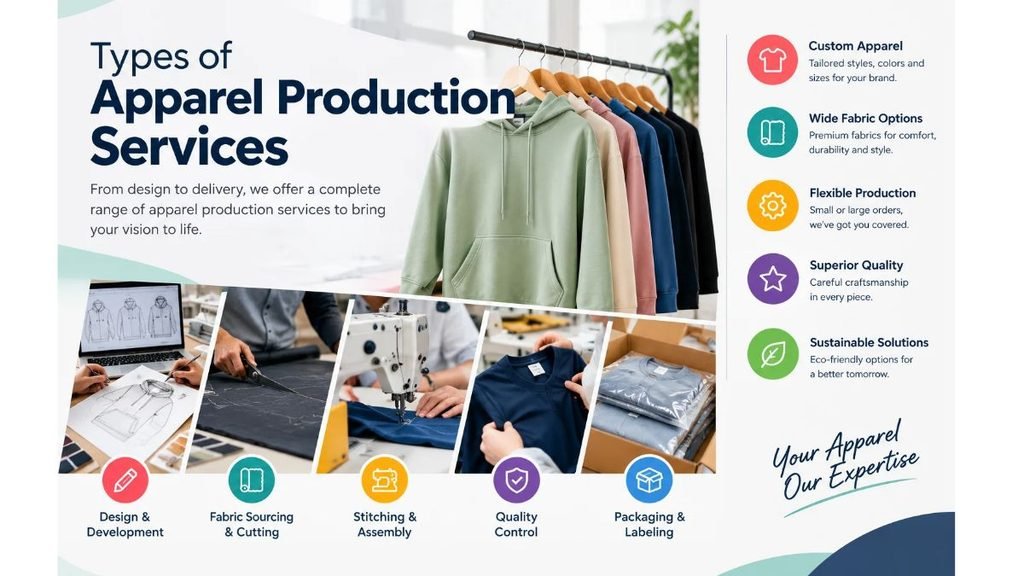
Types of Apparel Production Services
Understanding the available production models helps you select a partner that matches your requirements.
1. Custom Cut-and-Sew Manufacturing
Custom cut-and-sew production is suitable for brands that want more control over the garment itself.
You may specify the fit, measurements, fabric, stitching, pocket placement, closures, labels, and finishing details. This approach is useful when standard ready-made garments do not match your concept.
It also requires clear specifications and product development. More customization can increase sampling work, production complexity, and cost.
2. Private-Label Clothing Manufacturing
Private-label manufacturing allows a brand to sell garments under its own brand identity.
Depending on the supplier, the product may use an existing garment design or a customized specification. Branding options can include neck labels, care labels, hang tags, and packaging.
Private-label production can be useful for businesses that want branded products without operating their own factory.
3. OEM Apparel Manufacturing
Original Equipment Manufacturing, or OEM, generally means producing garments according to the buyer’s designs and specifications.
The buyer provides product requirements, while the manufacturer handles the agreed production work. The exact division of responsibilities depends on the contract.
OEM can be suitable for brands with established designs, technical packs, and defined quality requirements.
4. ODM Apparel Manufacturing
Original Design Manufacturing, or ODM, typically involves a manufacturer offering product design or development support in addition to production.
This may help businesses that need assistance developing a garment concept. Confirm who owns the design, what customization is permitted, and which development services are included.
5. Full-Package Production
Full-package production brings multiple stages together under one production arrangement. Services may include fabric and trim sourcing, sampling, manufacturing, branding, quality control, packaging, and shipping coordination.
This can reduce the number of separate suppliers a brand must manage. However, the exact package varies by manufacturer, so request a written breakdown of included services and costs.
The Apparel Production Process: From Idea to Finished Clothing
Understanding the complete production process helps you prepare better instructions and avoid unnecessary revisions.
Step 1: Develop Your Product Concept
Start with a clear description of the garment you want to make.
Include its intended customer, style, purpose, preferred fit, colors, and any special features. Reference photographs and sketches can help explain the concept.
For example, an oversized streetwear T-shirt may require dropped shoulders, a wider body, a specific neckline, and heavier fabric. These details should be communicated instead of relying on the phrase “oversized T-shirt” alone.
Step 2: Prepare a Tech Pack
A tech pack is a document that communicates how a garment should be manufactured.
It commonly includes:
- Front and back technical drawings
- Measurements and size specifications
- Fabric composition and weight
- Stitching and construction instructions
- Color references
- Print or embroidery placement
- Labels, trims, and closures
- Packaging requirements
A detailed tech pack helps the manufacturer understand your expectations and identify missing information before sampling.
If you do not have a complete tech pack, ask whether the production partner can assist with development. Some manufacturers can begin with sketches or reference garments, but the final specifications must be clarified before production.
Step 3: Select the Fabric
Fabric affects comfort, appearance, durability, fit, and manufacturing cost.
Common options include cotton jersey for T-shirts, French terry for lighter sweatshirts, brushed fleece for warmer hoodies, denim for jeans, and stretch blends for certain activewear products.
GSM means grams per square metre and describes fabric weight. A higher GSM usually indicates a heavier fabric, but it does not automatically mean better quality.
Consider the garment’s purpose before choosing a material. A lightweight summer shirt needs different fabric characteristics from a heavyweight winter hoodie.
Request swatches when possible and confirm the composition, color, weight, and other relevant specifications before bulk cutting.
Step 4: Develop and Review a Sample
A pre-production sample allows you to evaluate the design as a physical garment.
Check the fit, measurements, stitching, fabric, trims, and decoration. Try the garment on the intended wearer or use an appropriate fit model when necessary.
Compare the sample with the tech pack and record any corrections clearly.
For example, you may need to change the sleeve length, adjust the chest width, reposition a logo, or select a different fabric weight.
Do not assume that the final production will automatically match a concept image. Written specifications and sample approval are important.
Step 5: Cut the Fabric
After the materials and sample are approved, the production team prepares the fabric for cutting.
Patterns guide the shape and size of each garment piece. Accurate cutting is important because errors can affect garment measurements and assembly.
Fabric may need to be checked for defects, shade differences, or shrinkage considerations before cutting. The appropriate checks depend on the material and the factory’s process.
Step 6: Sew and Assemble the Garment
The cut pieces are sewn together according to the approved construction requirements.
Different products require different operations. A basic T-shirt may need shoulder seams, sleeves, side seams, and hems. A jacket may require zippers, lining, pockets, interfacing, and more complex assembly.
Stitch type, seam strength, thread, and finishing can influence the garment’s appearance and durability.
Make sure your manufacturer understands any special construction details before bulk production begins.
Step 7: Add Printing, Embroidery, and Branding
Many brands require visual details that distinguish their products.
Common options include screen printing, embroidery, heat transfer, and other suitable decoration techniques. The right method depends on the artwork, fabric, order quantity, and desired finish.
Branding can also include woven labels, printed care labels, hang tags, and custom packaging.
Confirm logo size, color, placement, and artwork files before production. Request a sample or decoration approval when the final appearance is important.
Step 8: Inspect, Finish, and Package
Quality checks should happen throughout production, not only after every garment has been completed.
Inspections may cover measurements, seam quality, print alignment, trim attachment, stains, and finishing.
Once garments pass the agreed checks, they can be folded, labeled, packed, and prepared for shipping.
Specify packaging requirements early if you need individual bags, size stickers, branded inserts, or particular carton arrangements.
How Much Does Apparel Production in Los Angeles Cost?
There is no single price for apparel production. The total cost depends on the product, materials, construction, order quantity, and services included.
A simple T-shirt using an existing pattern will usually have different production requirements from a fully customized jacket or technical activewear garment.
Consider these major cost factors.
Garment Complexity
Products with unusual shapes, multiple panels, pockets, linings, or specialized closures may require more labor and development.
Simple garments can be easier to produce, but the final price still depends on materials, quality requirements, and order volume.
Fabric and Trims
Premium fabrics, specialized performance materials, custom dyeing, and branded trims can increase costs.
Request clear fabric specifications rather than comparing prices based only on broad terms such as “cotton” or “premium material.”
Order Quantity
Minimum order quantity, often shortened to MOQ, is the minimum number of units a manufacturer accepts for a particular order or product.
A factory’s MOQ may vary by style, color, fabric, decoration method, and production requirements. Small orders can have higher per-unit costs because setup and development expenses are spread across fewer pieces.
Always confirm the MOQ for your specific product.
Sampling and Development
Sampling may involve pattern work, fabric sourcing, prototype construction, revisions, and decoration tests.
Ask whether the quotation includes the first sample, pattern development, revisions, and any additional sample charges.
Decoration and Packaging
Printing, embroidery, custom labels, hang tags, and branded packaging can add to the total cost.
Ask for a detailed quotation so you can understand which elements are included and which are charged separately.
Shipping and Delivery
Local delivery, freight, insurance, customs duties, and import taxes may affect the final landed cost.
When comparing local and international production, evaluate the total cost of receiving usable garments, not just the quoted factory price.
How to Choose the Right Cut-and-Sew Factory in Los Angeles
Choosing a production partner is a business decision. The lowest quote is not always the best value if the supplier cannot meet your specifications or quality requirements.
Use the following criteria when evaluating potential factories.
Experience with your product: Ask whether the factory regularly produces your type of garment. Experience with basic knitwear does not automatically prove expertise in structured jackets or performance clothing.
Sample quality: Review the physical sample before approving bulk production. Check construction, fit, materials, and finishing.
Production capacity: Confirm that the supplier can handle your expected quantity and timeline. Ask how it manages peak workloads and repeat orders.
Minimum order quantity: Make sure the MOQ suits your business stage and budget.
Quality-control procedures: Ask what is inspected, when inspections occur, and how defects are handled.
Communication and documentation: The factory should provide clear quotations, specifications, timelines, and production updates.
Commercial terms: Confirm payment schedules, ownership of patterns and artwork, cancellation terms, shipping arrangements, and responsibilities for defective goods.
Where possible, ask for relevant references or examples of previous work. Verify any important claims before making a large commitment.
Should You Choose Local or Overseas Apparel Production?
For some brands, working with a Los Angeles manufacturer may offer convenient access to local services and face-to-face communication. For others, overseas production may provide a better fit for the required product, order size, or budget.
The right decision depends on the full project.
Potential Advantages of Local Production
Local manufacturing may make it easier to visit suppliers, review samples in person, and coordinate product development. Shorter domestic shipping distances may also simplify some deliveries.
However, local production does not automatically mean lower costs, faster completion, or higher quality. These factors depend on the supplier and the specific order.
Potential Advantages of Overseas Production
An overseas manufacturer may offer a different combination of product expertise, material sourcing, production capacity, and pricing.
However, buyers must consider international shipping, customs documentation, import duties, time-zone differences, and the process for handling sample revisions.
Strong communication and written specifications are especially important when the factory is far from the buyer.
Compare the Complete Project
Before choosing, compare:
- Sample and development costs
- Per-unit production prices
- Minimum order quantities
- Fabric and customization options
- Quality-control procedures
- Production timelines
- Freight and insurance
- Duties and taxes
- Communication and revision processes
A written comparison can help you identify which option offers the best overall fit.
An International Manufacturing Option: Fashion Soul International
Brands searching for apparel production in Los Angeles may also consider manufacturers outside the United States. This can be useful when they want to compare customization options, production arrangements, and total landed costs.
Fashion Soul International is a factory-owned custom clothing manufacturer based in Sialkot, Pakistan. The company provides private-label, OEM, ODM, white-label, cut-and-sew, and full-package production for international apparel businesses.
Its services cover product development, fabric and trim sourcing, sampling, bulk production, quality control, custom branding, packaging, export documentation, and international shipping.
The company states that its standard minimum order quantity starts at 100 pieces, although actual requirements depend on the garment and project specifications.
Its published workflow includes a physical pre-production sample, customer approval before bulk production, inline quality checks, and pre-shipment inspection. Sample development and bulk timelines should be confirmed for each order.
For Los Angeles-based brands considering overseas manufacturing, the key is to compare the complete project: garment specifications, sample quality, MOQ, production cost, shipping terms, and expected delivery schedule.
You can visit the official website at https://fashionsoulintl.com/ to review services and discuss your product requirements. The company is based in Pakistan and should not be confused with a factory located in Los Angeles.
Common Mistakes to Avoid When Starting Apparel Production
New brands can reduce avoidable costs by addressing common production problems early.
Starting Without Clear Specifications
A design image may not show exact measurements, seam details, or fabric requirements.
What to do: Prepare a tech pack or a detailed product brief before sampling.
Choosing a Manufacturer Based Only on Price
A low quote may exclude sampling, trims, decoration, packaging, or shipping.
What to do: Compare quotations line by line and confirm the total cost.
Skipping Physical Sample Approval
A digital mockup cannot fully show fit, fabric behavior, or construction quality.
What to do: Review a physical sample and approve the final specifications in writing before bulk production.
Ignoring Minimum Order Requirements
A factory may have different MOQs for each style, color, or fabric.
What to do: Confirm minimum quantities before spending time on development.
Underestimating Delivery Time
Sampling, material sourcing, revisions, production, inspection, and shipping all require time.
What to do: Build a realistic schedule with your supplier and leave room for revisions or unexpected delays.
Failing to Define Quality Standards
Terms such as “high quality” can mean different things to different people.
What to do: Specify measurable requirements, including dimensions, tolerances, stitch quality, print placement, and acceptable defect levels.
Frequently Asked Questions
1. What does apparel production include?
Apparel production can include product development, pattern making, fabric sourcing, cutting, sewing, decoration, finishing, quality inspection, packaging, and shipping. The exact services depend on the manufacturer.
2. What is a cut-and-sew factory?
A cut-and-sew factory cuts fabric according to garment patterns and sews the pieces together to create clothing. Depending on its capabilities, it may also offer sampling, pattern development, printing, embroidery, and finishing.
3. Is apparel production in Los Angeles suitable for small brands?
It can be, depending on the supplier’s minimum order quantity, services, and product capabilities. Small brands should confirm sample costs, minimum quantities, and total project expenses before proceeding.
4. How do I find a cut-and-sew factory in Los Angeles?
Research suppliers that produce your specific garment category. Review their services, ask about sample development and MOQ, request a detailed quotation, and evaluate physical samples before placing a bulk order.
5. Do I need a tech pack for apparel production?
A tech pack is strongly recommended because it communicates measurements, materials, construction, and branding requirements. Some manufacturers can assist with creating one, but the product specifications must be clear before production.
6. Can I manufacture clothing outside Los Angeles for a Los Angeles brand?
Yes. A brand can work with an international manufacturer if the arrangement suits its requirements. Consider shipping, customs, duties, communication, quality control, and total landed costs before choosing.
7. How can I reduce apparel production costs?
You can review fabric options, simplify unnecessary construction details, plan order quantities carefully, and prepare accurate specifications. Compare complete quotations rather than choosing based on unit price alone.
8. What should I ask a manufacturer before placing an order?
Ask about MOQ, sampling costs, fabric sourcing, production timelines, quality checks, branding options, payment terms, shipping, and how defects or delays are handled. Get important terms confirmed in writing.
Conclusion
Apparel production in Los Angeles offers fashion brands access to a range of design and garment production services. Finding the right partner requires careful consideration of product expertise, sampling, materials, minimum order quantities, quality control, and delivery requirements.
A suitable cut-and-sew factory should understand your design and provide a clear process for turning it into a finished garment. Prepare your specifications, review a physical sample, and compare complete quotations before approving bulk production.
You can also compare local and overseas manufacturers when deciding how to produce your collection. Focus on the total project cost, product quality, customization options, communication, and delivery plan. With the right preparation, your brand can make more informed production decisions and build a stronger foundation for growth.