Custom Full Service Manufacturer: A Complete Guide for Clothing Brands
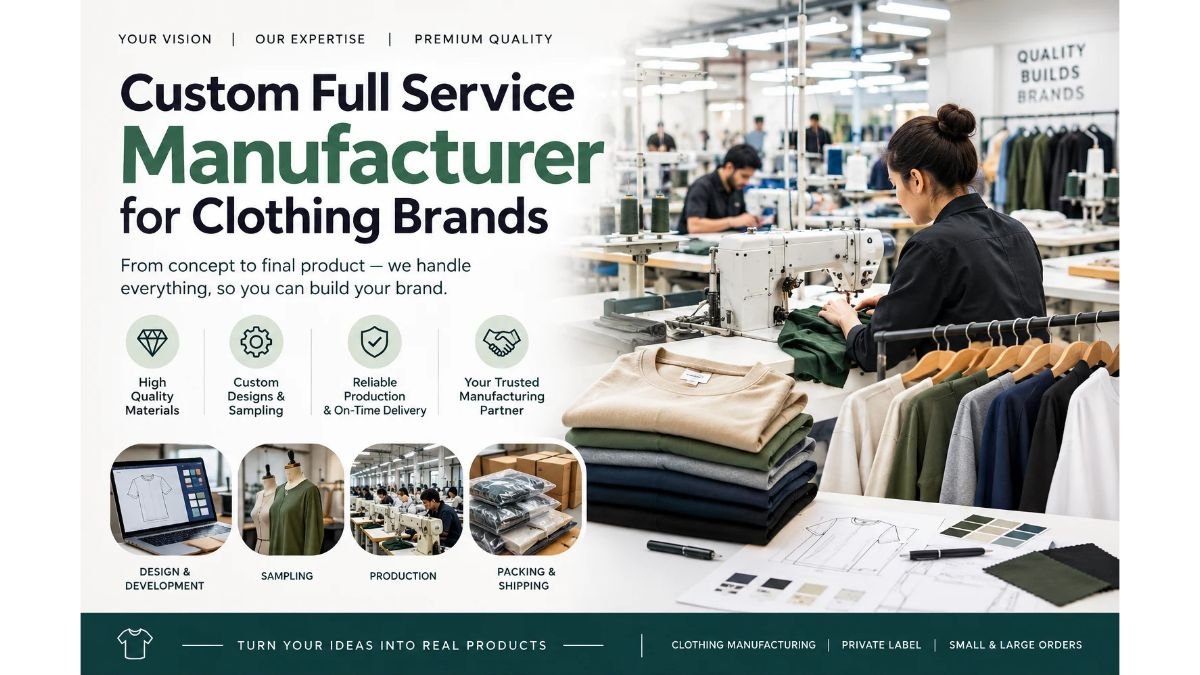
Choosing a custom full service manufacturer can make clothing production easier for startups, growing fashion labels, and established apparel businesses. Instead of managing separate suppliers for fabric, sampling, sewing, branding, and packaging, brands can coordinate these activities through one manufacturing partner.
This approach can save time, improve communication, and help keep product requirements consistent. However, the results depend on the manufacturer’s capabilities, production process, quality standards, and ability to meet your needs.
In this guide, you will learn what a custom full service manufacturer does, how the process works, which services to expect, and what to consider before placing an order. You will also discover how full-service clothing manufacturing can support your brand from the first design to finished garments.
What Is a Custom Full Service Manufacturer?
A custom full service manufacturer is a production partner that manages several stages of product development and manufacturing. These services may include design support, material sourcing, pattern development, sampling, bulk production, quality control, custom branding, packaging, and shipping.
In the clothing industry, this type of manufacturer helps turn a design idea into a finished garment. You can provide a complete tech pack, a sample garment, sketches, or reference images to explain your requirements.
The manufacturer’s exact responsibilities depend on the agreement. Some companies offer only selected services, while others manage most of the production process under one arrangement.
For example, a clothing brand planning to launch custom hoodies may need fabric sourcing, pattern development, size grading, printing, woven labels, and individual packaging. A full-service manufacturer can coordinate these steps instead of requiring the brand to find every supplier separately.
How Does Full-Service Clothing Manufacturing Work?
The full-service manufacturing process usually follows a series of steps. Each stage prepares the product for the next one and helps reduce errors before bulk production begins.
1. Initial Consultation and Product Requirements
The process begins with a discussion about your clothing concept and business needs. You explain what you want to produce, who will wear it, and how you plan to sell it.
Important details include:
- Garment type, such as T-shirts, hoodies, jackets, or activewear
- Target customers and intended use
- Fabric preferences and material composition
- Colors, sizes, and design details
- Printing, embroidery, and branding requirements
- Estimated order quantity
- Target budget and delivery expectations
A clear brief helps the manufacturer understand the project. It also makes the quotation more accurate.
You do not always need a finished tech pack to request an initial quotation. However, detailed specifications are important before sampling and production begin.
2. Design Development and Technical Planning
Once the requirements are clear, the next step is to prepare the garment for manufacturing.
This stage may include reviewing sketches, checking reference garments, developing patterns, and documenting measurements. A technical pack, often called a tech pack, records important production details.
A typical tech pack may include:
- Technical drawings of the garment
- Measurement charts and size specifications
- Fabric composition and weight
- Stitching and construction details
- Color references
- Trims, buttons, zippers, and other accessories
- Print or embroidery placement
- Labels and packaging instructions
These details give the production team a consistent reference. Without clear specifications, the finished garment may differ from your expectations.
If you need help preparing technical documents, ask whether the manufacturer offers tech-pack development or product development support.
3. Fabric and Trim Sourcing
Fabric selection affects a garment’s comfort, appearance, durability, fit, and cost. A full-service manufacturer may source suitable materials based on your product requirements.
Common clothing materials include cotton, polyester, French terry, brushed fleece, denim, twill, canvas, and stretch blends.
Different products need different fabrics. For example, a lightweight cotton jersey may suit a basic T-shirt, while brushed fleece may work better for a warm hoodie.
You should also consider fabric weight, often measured in GSM, which means grams per square metre. GSM helps describe fabric weight, but it does not determine quality on its own.
The manufacturer may also source trims, such as zippers, drawcords, buttons, elastic, labels, and other accessories. Confirm material composition, available colors, and any minimum purchase requirements before approving the selection.
4. Sample Development and Approval
Sampling allows you to evaluate a garment before committing to bulk production.
The manufacturer creates a sample based on the approved specifications. You can review its fit, measurements, construction, fabric, color, decoration, and finishing.
During this stage, check details such as:
- Shoulder and sleeve measurements
- Garment length and overall fit
- Stitch strength and seam appearance
- Fabric feel and stretch
- Print or embroidery placement
- Zipper and trim quality
- Label position and finishing
If the sample needs changes, communicate them clearly. Provide updated measurements, marked images, or written instructions.
A physical pre-production sample is especially important because digital mockups cannot show every material or construction detail. Bulk production should begin only after the agreed sample and specifications receive approval.
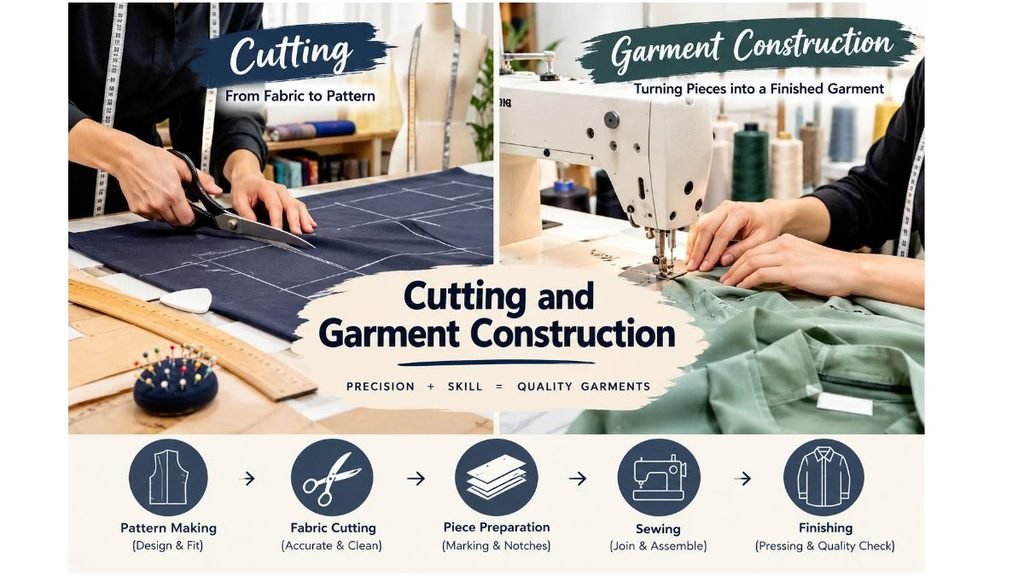
5. Cutting and Garment Construction
After sample approval, the manufacturer prepares materials for bulk production. Fabric may be checked, relaxed when necessary, and arranged for efficient cutting.
Pattern pieces are placed according to the cutting plan. The fabric is then cut into components such as sleeves, front panels, back panels, collars, and pockets.
The sewing team assembles these components according to the approved construction details. The process may include overlocking, cover stitching, attaching collars, installing zippers, and adding other garment features.
Different products require different equipment and skills. Activewear, denim, workwear, and heavyweight streetwear may need different construction methods.
Clear specifications and trained operators help maintain consistency across the production run.
6. Printing, Embroidery, and Custom Branding
Branding is an important part of custom clothing manufacturing. A full-service partner may coordinate decoration and labeling as part of the production process.
Depending on the design, available options may include:
- Screen printing
- Embroidery
- Puff printing
- Heat transfer
- Direct-to-garment printing
- Sublimation
- Woven labels
- Printed neck labels
- Custom hang tags
Each method has different benefits. Embroidery can provide a textured finish, while screen printing may suit larger graphic designs. Sublimation is commonly used for suitable synthetic fabrics and all-over designs.
Before bulk production, confirm the artwork, dimensions, placement, colors, and decoration method. Ask for a sample or approved production reference when the design requires precise matching.
7. Quality Control and Finishing
Quality control helps identify production issues before garments are packed and shipped.
A manufacturer may conduct checks during sewing and finishing, rather than waiting until the entire order is complete. Inline inspections can identify problems early, when corrections may be easier.
Quality checks may cover:
- Measurements and size consistency
- Stitch quality and seam strength
- Fabric defects and stains
- Print alignment and color consistency
- Embroidery quality
- Trim attachment
- Loose threads and finishing
- Labels and packaging requirements
The final inspection should follow agreed acceptance criteria. If the buyer requires a particular inspection method or AQL standard, this should be documented before production.
A clear quality-control plan helps both sides understand what counts as an acceptable finished product.
What Services Does a Custom Full Service Manufacturer Offer?
Not every manufacturer provides the same service package. Before choosing a partner, confirm which services are included in the quotation and which may cost extra.
| Service | What it covers |
|---|---|
| Product development | Turning a concept into production-ready specifications |
| Fabric sourcing | Finding suitable materials and trims |
| Pattern making | Preparing garment shapes and construction pieces |
| Sampling | Creating samples for fit and design approval |
| Bulk production | Manufacturing the agreed order quantity |
| Custom branding | Adding labels, prints, embroidery, and tags |
| Quality control | Checking garments against approved requirements |
| Packaging | Folding, bagging, labeling, and preparing products |
| Export support | Preparing agreed shipping and export documents |
| International shipping | Coordinating delivery under agreed terms |
Some manufacturers provide all these services in-house. Others use approved outside suppliers for certain processes. Ask how each stage is managed and who is responsible for resolving problems.
Types of Custom Manufacturing Services
Several manufacturing models can fall under the broader full-service approach. Understanding their differences helps you choose a service that fits your brand.
Private-Label Manufacturing
Private-label manufacturing allows you to sell clothing under your own brand name. The manufacturer produces garments according to the agreed design, specifications, and branding requirements.
This model can suit startups, online stores, retailers, and established fashion labels. Your brand may use custom labels, packaging, colors, and garment details.
Confirm whether the manufacturer develops a fully custom product or offers existing base designs with selected modifications.
OEM Clothing Manufacturing
OEM stands for Original Equipment Manufacturer. In apparel production, the buyer generally provides the product design or specifications, and the manufacturer produces the garments accordingly.
OEM manufacturing can work well when a brand has a clear concept, technical documentation, and defined quality requirements.
ODM Clothing Manufacturing
ODM stands for Original Design Manufacturer. In this model, the manufacturer may provide design or product development support in addition to production.
This can help brands that need assistance turning an idea into a manufacturable product. Confirm which design services are included and who owns the final artwork, patterns, and other intellectual property.
White-Label Manufacturing
White-label manufacturing usually involves producing garments that can be branded and sold by different businesses. It may offer a faster starting point than developing every product detail from scratch.
The level of customization varies by supplier. Some offer standard products with custom labels, while others allow changes to fabric, colors, fit, or decoration.
Cut-and-Sew Manufacturing
Cut-and-sew manufacturing involves cutting fabric into pattern pieces and sewing them into finished garments. It is useful when a brand needs control over garment shape, fit, construction, and material selection.
Cut-and-sew can be part of a full-service package, but the brand should confirm whether sourcing, sampling, branding, and shipping are also included.
Benefits of Working With a Full-Service Clothing Manufacturer
Working with one coordinated production partner can offer several advantages. The benefits depend on the manufacturer’s experience, communication, and service scope.
Fewer Supplier Relationships to Manage
When multiple suppliers handle fabric, cutting, sewing, printing, and packaging, you may need to coordinate several schedules and contacts.
A full-service manufacturer can bring these activities under one production plan. This may simplify communication and make responsibilities clearer.
However, ask which operations are handled directly and which are outsourced. This helps you understand how much coordination the manufacturer actually manages.
Better Product Consistency
A shared set of specifications can help different production stages follow the same requirements. Approved samples, measurement charts, artwork files, and material details create a common reference.
This is useful when you want to reorder a successful style or develop several related products.
Consistency still requires proper inspection and clear communication. A full-service arrangement does not automatically guarantee perfect results.
Support for New Clothing Brands
First-time founders may have limited experience with patterns, fabric sourcing, garment construction, or production planning.
A manufacturer that offers product development support can explain technical requirements and identify issues before bulk production.
This can help founders make more informed decisions. It does not remove the need to review samples, confirm costs, and approve specifications.
More Coordinated Production Planning
Fabric availability, sampling, decoration, and sewing all affect the final schedule. When these stages are coordinated, the team can plan the work more effectively.
Ask for an estimated timeline covering sample development, sample revisions, bulk production, inspection, and shipping. Build extra time into your launch plan for changes or delays.
Branding and Packaging Support
A full-service partner may help you create a more consistent customer experience through labels, hang tags, branded packaging, and product presentation.
Provide artwork files and placement instructions early. Confirm packaging dimensions, materials, labeling requirements, and any market-specific rules before production.
How Much Does a Custom Full Service Manufacturer Cost?
There is no single price for a custom full-service manufacturing project. The total cost depends on the product, materials, construction, order quantity, decoration, packaging, and shipping arrangements.
Common cost factors include:
- Fabric: Material type, weight, quality, and availability
- Construction: Number of panels, seams, pockets, and special features
- Decoration: Printing, embroidery, appliqué, and other branding
- Quantity: Order size and production setup requirements
- Sampling: Pattern development, sample making, and revisions
- Trims: Zippers, buttons, drawcords, labels, and other components
- Packaging: Individual bags, hang tags, boxes, and custom packaging
- Logistics: Freight method, destination, duties, and delivery terms
To compare quotations fairly, ask each manufacturer to specify what the price includes. A lower unit price may exclude sampling, labels, packaging, or freight.
You should also ask about payment milestones, sample charges, tooling or setup costs, and the process for handling approved changes.
What Is the Minimum Order Quantity (MOQ)?
Minimum order quantity, or MOQ, is the smallest order a manufacturer accepts under particular production terms.
The MOQ may vary by product, fabric, color, construction, and decoration method. Custom materials or special trims may require larger commitments than standard options.
For example, Fashion Soul International publishes a standard MOQ starting at 100 pieces. The actual minimum for a project should be confirmed through a quotation because requirements can vary.
Before placing an order, clarify whether the MOQ applies per style, color, size run, or another unit. Also ask whether sizes can be mixed within the order.
Understanding these terms helps you plan inventory and manage your starting budget.
How Long Does Full-Service Clothing Production Take?
Production timelines depend on product complexity, material availability, order quantity, sample revisions, and factory scheduling.
The main stages usually include:
- Reviewing the product brief and preparing a quotation
- Sourcing materials and confirming specifications
- Developing and reviewing samples
- Approving the pre-production sample
- Manufacturing the bulk order
- Conducting quality inspections
- Packing and preparing the shipment
- Transporting the order to its destination
Fashion Soul International publishes a typical sample-development timeline of 7–14 business days and a general bulk-production timeline of 20–35 business days after sample approval. These are company-published estimates, not guaranteed delivery dates. Your project timeline should be confirmed in writing.
International shipping adds more time. Air and sea freight have different costs and transit periods, while customs clearance can also affect delivery.
How to Choose the Right Custom Full Service Manufacturer
Choosing a manufacturer requires more than comparing unit prices. You need a partner that understands your product and can communicate clearly throughout production.
Review Product Experience
Look for experience with garments similar to yours. A manufacturer that produces basic T-shirts may not have the same capabilities as one experienced in technical activewear or structured outerwear.
Ask about relevant product categories, construction methods, and available decoration options.
Request a Clear Quotation
The quotation should identify the garment specifications, material requirements, order quantity, branding, packaging, and shipping terms.
Ask for clarification when costs or responsibilities are unclear. Written details reduce the risk of disagreements later.
Evaluate Sampling and Quality Control
Ask how samples are developed, how revisions are handled, and what quality checks take place during production.
Confirm whether you will approve a physical pre-production sample before bulk manufacturing. Agree on measurements, tolerances, and inspection criteria.
Check Communication
Your manufacturing partner should explain technical issues in understandable language and provide clear updates.
Before committing to a large order, observe how the company handles questions, revisions, and requests for documentation.
Confirm International Shipping Arrangements
If you are importing clothing, discuss the destination, shipping method, delivery terms, customs paperwork, and responsibility for duties.
Do not assume that shipping is included in the product price. Confirm the exact arrangement in the quotation.
Check Company Claims
Review the manufacturer’s official website, available business records, product examples, and relevant certification documents.
Ask for current evidence when certifications or registrations matter to your buying decision. Avoid relying only on broad marketing statements.
Common Mistakes to Avoid
A few early decisions can prevent unnecessary costs and delays.
Starting production without sample approval: Always review the garment and confirm the final specifications before bulk manufacturing.
Choosing only by price: Very low quotations may exclude important services or use materials that do not meet your requirements.
Providing incomplete instructions: Missing measurements, artwork, fabric details, or trim specifications can lead to avoidable errors.
Ignoring MOQ terms: Confirm the minimum quantity and how it applies to styles, colors, and sizes.
Underestimating shipping time: Include freight, customs clearance, and delivery planning in your launch schedule.
Failing to document changes: Record approved changes to measurements, colors, materials, and decoration in writing.
Assuming every service is included: Ask which tasks are covered by the quotation and which require additional charges.
Is Fashion Soul International a Custom Full Service Manufacturer?
Fashion Soul International is a factory-owned custom clothing manufacturer based in Sialkot, Punjab, Pakistan. The company offers private-label, OEM, ODM, white-label, cut-and-sew, and full-package apparel production for international clothing businesses.
Its stated services cover several stages of the manufacturing process, including product development, fabric and trim sourcing, sampling, bulk production, quality control, custom branding, packaging, export documentation, and international shipping.
The company works with different types of buyers, including startups, growing clothing brands, retailers, wholesalers, and established apparel businesses.
Its product categories include streetwear, sportswear, activewear, workwear, jackets, denim, casual wear, tracksuits, T-shirts, hoodies, baby clothing, and other custom garments.
Fashion Soul International publishes a standard MOQ starting at 100 pieces. Its published production information also describes sample development and bulk-production timelines, which should be confirmed for each project.
If you are considering a manufacturing partner, prepare your product brief, estimated quantity, fabric preferences, branding requirements, and target delivery date. You can then request a project-specific quotation through the official website at https://fashionsoulintl.com/.
Frequently Asked Questions
What does a custom full service manufacturer do?
A custom full service manufacturer coordinates multiple stages of product development and production. Depending on its service package, this may include material sourcing, sampling, bulk manufacturing, branding, quality control, packaging, and shipping.
Is a full-service manufacturer suitable for a startup clothing brand?
Yes. It can help a startup coordinate production without managing every supplier separately. However, founders should check the MOQ, sample costs, customization options, payment terms, and total project budget before committing.
Do I need a tech pack to work with a clothing manufacturer?
A tech pack is helpful because it documents measurements, materials, construction, and branding. Some manufacturers can provide initial quotations from a design brief or reference images. Finalized specifications or a suitable sample are generally needed before accurate sampling and production.
What is the difference between full-service and cut-and-sew manufacturing?
Cut-and-sew describes the process of cutting fabric and sewing garment components together. Full-service manufacturing refers to a broader package that may include sourcing, product development, sampling, quality control, branding, packaging, and shipping.
Can a full-service manufacturer add my brand labels?
Many manufacturers offer custom labels, hang tags, printing, embroidery, and packaging. Confirm the available options, minimum quantities, artwork requirements, and additional charges before ordering.
How can I reduce clothing production costs?
Start with clear specifications and choose materials that meet your quality goals and budget. Avoid unnecessary design changes after sampling, compare complete quotations, and confirm the MOQ and shipping costs. Larger orders may reduce unit costs in some cases, but they also require more inventory investment.
What should I confirm before bulk production?
Approve the physical sample, measurement chart, fabric, colors, trims, decoration, labels, packaging, order quantity, price, and delivery schedule. Put important decisions and approved changes in writing.
How do I compare two manufacturing quotations?
Compare the same garment specifications, materials, order quantity, branding, packaging, quality checks, payment terms, and shipping arrangement. A fair comparison considers the full project cost rather than unit price alone.
Final Thoughts
A custom full service manufacturer can help clothing brands manage product development and production through one coordinated process. From fabric sourcing and sampling to quality control, branding, packaging, and shipping, the right partner can simplify many operational tasks.
Before choosing a manufacturer, review its product experience, service scope, MOQ, sample process, quality standards, communication, and shipping terms. Request a detailed quotation and approve a physical pre-production sample before bulk production begins.
With clear specifications and realistic planning, your brand can make better manufacturing decisions and build a more consistent clothing range. Choose a partner whose capabilities match your product needs, budget, and long-term business goals.