What Is Sublimation Printing? A Complete Guide to the Process, Benefits, and Uses
Sublimation printing is a popular printing method used to create colourful, detailed, and long-lasting designs on clothing and other products. It is especially common in sportswear, activewear, team uniforms, and custom apparel because it allows designs to become part of the fabric instead of sitting on top of it.
If you are starting a clothing brand or looking for custom printing options, understanding this method can help you choose the right production technique. You may have questions such as what is sublimation printing, how does it work, and which fabrics are suitable for it. Knowing the answers can help you make better decisions about garment design, fabric selection, and product quality.
In this guide, we explain the printing process, its benefits, limitations, common applications, and the factors brands should consider before choosing sublimation printing for their clothing collections.
What Is Sublimation Printing?
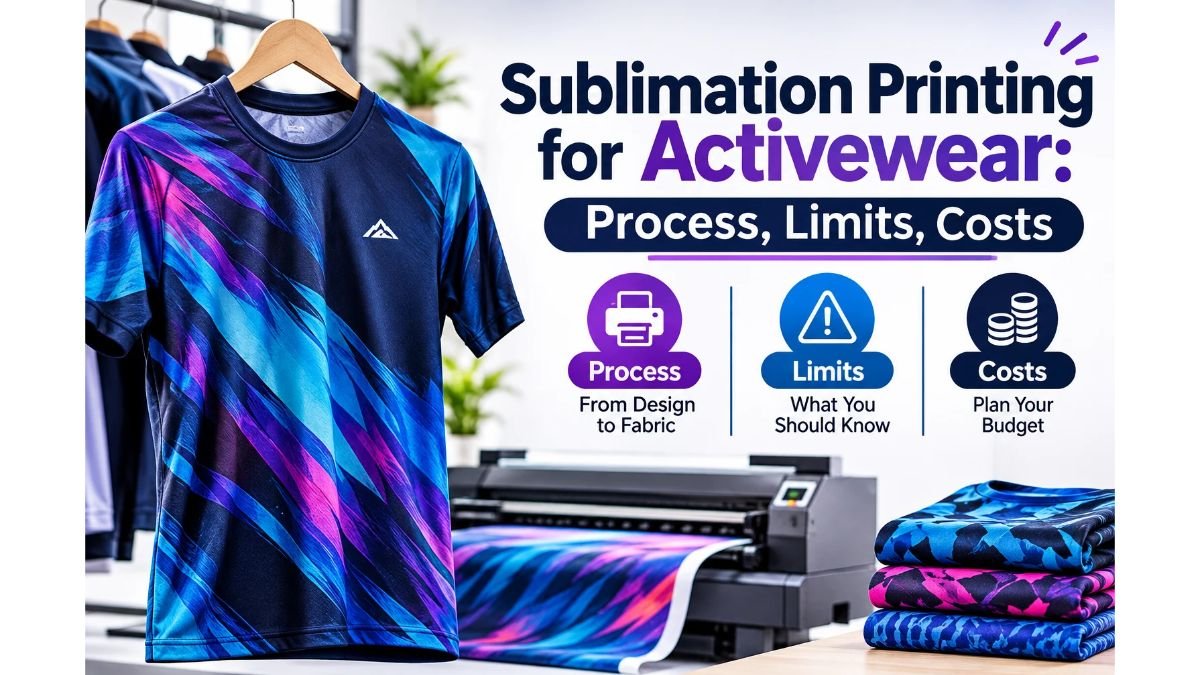
Sublimation printing is a digital printing technique that uses special sublimation ink, heat, and pressure to transfer a design onto a suitable material. During the process, the ink changes from a solid state into a gas without becoming liquid. The gas enters the surface of the material and bonds with its fibres or coating.
In clothing production, sublimation is mainly used on polyester fabrics and suitable polyester-blend materials. The design becomes part of the fabric, rather than forming a separate layer on top. This helps preserve the fabric’s original feel and allows the printed area to remain flexible.
Unlike some traditional printing methods, sublimation can reproduce detailed artwork, gradients, photographs, and multiple colours. It is particularly useful for garments that require large printed areas or all-over designs.
For example, a sportswear brand may use sublimation to create a jersey with colourful patterns, team graphics, numbers, and logos across the front, back, and sleeves.
What Are Sublimation Prints?
Sublimation prints are designs transferred onto compatible materials using sublimation ink and heat. These designs can include text, logos, photographs, patterns, illustrations, and complex colour combinations.
When people ask what are sublimation prints, they are usually referring to the finished designs created through this process. On polyester clothing, the ink bonds with the fibres, producing a print that does not feel like a thick layer sitting on the fabric.
Sublimation prints are known for several characteristics:
- Detailed artwork: The process can reproduce fine lines, small details, and complex graphics.
- Bright colours: Suitable materials can display vivid colours and smooth colour transitions.
- Lightweight finish: The print does not create the raised surface associated with some other printing methods.
- Flexible design: Printed fabric can stretch and move according to its construction, although the fabric itself must also have suitable stretch properties.
- Large print areas: It can be used for all-over designs on compatible garments.
- No separate print layer: The ink bonds with the material rather than forming a thick surface coating.
The final appearance depends on the fabric, ink, artwork, printer settings, and heat-transfer conditions.
What Is Sublimated Printing and How Does It Work?
The phrase what is sublimated printing refers to the same general process as sublimation printing. It describes transferring a design to a compatible surface by using heat to turn sublimation ink into gas.
The process involves several important stages. Each stage affects the final appearance and quality of the printed product.
1. Creating the Digital Design
The process begins with artwork created using graphic design software. A designer prepares the required logo, pattern, text, or illustration and adjusts it to match the garment’s dimensions.
For clothing, the artwork may need to fit specific pattern pieces, such as the front panel, back panel, sleeves, and collar. This is especially important when producing all-over printed garments.
The design should be prepared at an appropriate resolution and in the correct colour settings for the printing equipment.
2. Printing the Design on Transfer Paper
The prepared artwork is printed onto special sublimation transfer paper using a printer that supports sublimation ink.
The design is usually printed in a mirrored format so that it appears in the correct direction after transfer. The transfer paper temporarily holds the ink until the heat-pressing stage.
3. Preparing the Fabric
The fabric must be compatible with sublimation printing. Polyester is the most common choice because sublimation dyes bond effectively with polyester fibres.
Before printing, the material should be checked for wrinkles, dust, moisture, and other issues that could affect the result. Correct fabric preparation helps create a more consistent finish.
4. Applying Heat and Pressure
The printed transfer paper is placed against the fabric. A heat press applies controlled heat and pressure for a specific period.
The heat causes the sublimation ink to turn into gas. The gas enters the polyester fibres and bonds with them as the material cools.
Temperature, pressure, and pressing time depend on the equipment, ink, transfer paper, and fabric. Manufacturers should follow the recommended settings for their particular materials rather than using one setting for every product.
5. Removing the Transfer Paper
After the transfer process is complete, the paper is carefully removed. The design remains on the fabric.
The printed material can then move to the next production stage, such as cutting, stitching, finishing, or garment inspection. In some manufacturing workflows, fabric panels are printed before they are cut and sewn into garments.
Which Fabrics Are Suitable for Sublimation Printing?
Fabric selection is one of the most important parts of sublimation printing. The method does not work equally well on every textile.
Polyester Fabric
Polyester is generally the preferred material for sublimation printing. Its fibres can bond with sublimation dyes, allowing colours and details to become part of the fabric.
Polyester is widely used in sportswear, activewear, jerseys, tracksuits, and performance clothing. It is available in different weights, textures, and constructions, giving clothing brands several options for product development.
Polyester Blends
Some polyester-blend fabrics can also be used for sublimation. However, the final result depends on the percentage of polyester and the construction of the material.
When a fabric contains other fibres, the sublimation dye may only bond with its polyester content. This can make the printed result appear less vibrant than it would on a fabric made entirely from polyester.
Brands should test the actual fabric before approving bulk production.
Cotton Fabric
Traditional sublimation printing is generally not suitable for untreated cotton. Sublimation dyes are designed to bond with compatible synthetic fibres, particularly polyester.
If a clothing brand wants to print on cotton, it may need to consider another method, such as screen printing, direct-to-garment printing, or a suitable heat-transfer technique.
Nylon and Other Synthetic Materials
Some nylon and other synthetic materials may be printable with specialised processes, inks, or coatings. However, standard polyester sublimation settings should not automatically be used on these fabrics.
Testing is important because different fibres react differently to heat and dye.
Benefits of Sublimation Printing for Clothing Brands
Sublimation printing offers several advantages for brands that want colourful designs and a comfortable garment finish.
1. Long-Lasting Designs
Because the dye bonds with compatible fibres, the print does not behave like a separate layer sitting on the fabric. This can help reduce common surface-print problems such as cracking and peeling.
The durability of the final product still depends on fabric quality, correct processing, garment construction, and care instructions.
2. Bright and Detailed Colours
Sublimation can reproduce a wide range of colours and detailed artwork. This makes it useful for clothing with complex patterns, photographs, gradients, and multiple graphic elements.
Sportswear brands often use this feature to create distinctive uniforms and team designs.
3. Lightweight Feel
The process does not normally leave a thick ink layer on the fabric. As a result, the printed area can maintain a lightweight feel.
This is useful for activewear and sports clothing, where comfort and freedom of movement matter.
4. All-Over Printing Options
Sublimation can be used to print large areas of fabric. Clothing manufacturers can create patterns that cover the front, back, sleeves, and other garment panels.
This gives designers more freedom when developing custom sportswear, jerseys, and fashion collections.
5. Flexible Design Customisation
Digital artwork can be adjusted for different colours, patterns, names, numbers, and graphic placements.
This makes sublimation useful for customised teamwear and collections with detailed visual designs. However, each design must still be prepared correctly for the garment pattern and production method.
6. No Heavy Surface Layer
Since the dye bonds with compatible fibres, the print does not create the same raised texture as some surface-printing techniques.
This can help preserve the original hand feel of the fabric, although the fabric’s weight, weave, and finishing still influence the garment’s overall comfort.
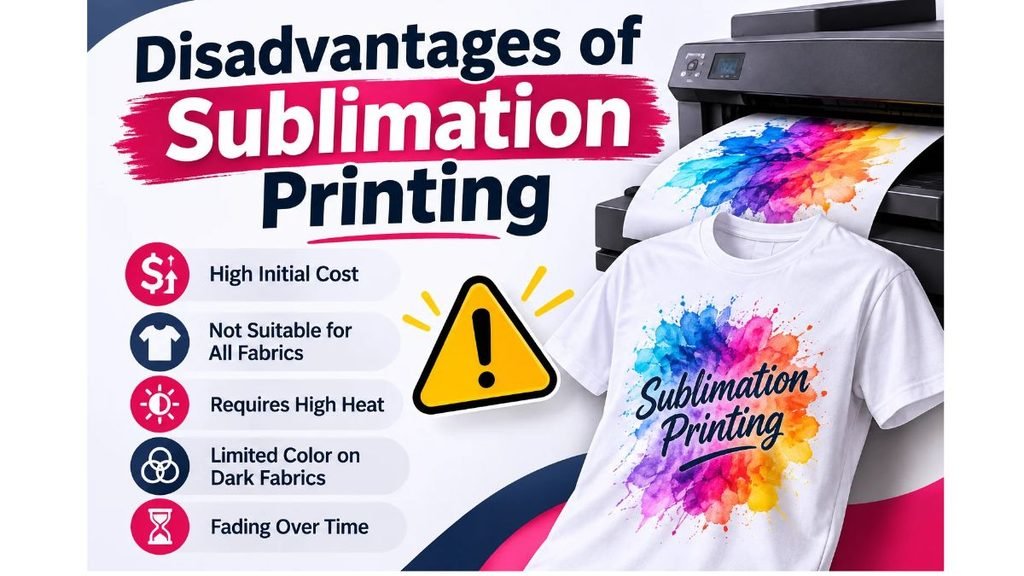
Disadvantages of Sublimation Printing
Although sublimation has many benefits, it is not the right solution for every fabric or clothing design.
1. Limited Fabric Compatibility
The main limitation is that traditional sublimation works best on polyester and suitable polyester-rich materials. It is generally not appropriate for untreated cotton or other natural fibres.
Brands that focus on cotton T-shirts, sweatshirts, or other natural-fibre garments may need a different printing technique.
2. Best Results on Light-Coloured Materials
Traditional sublimation printing is most effective on white or light-coloured fabrics. Standard sublimation ink does not provide an opaque white layer.
This means that printing a bright design directly onto dark fabric can produce weak or unclear colours. Brands planning dark-coloured garments should discuss alternative printing methods with their manufacturer.
3. Equipment and Material Requirements
Sublimation requires compatible printers, inks, transfer paper, and heat-press equipment. The production team also needs the knowledge to prepare artwork and control the transfer process.
These requirements can affect the setup and production costs of a clothing project.
4. Colour Differences
The colours displayed on a computer screen may not look exactly the same after printing. Fabric composition, ink, printer calibration, heat settings, and other production factors can affect the final result.
A physical sample is useful for checking colours before approving a full order.
5. Care and Fabric Quality Still Matter
Sublimation can create durable prints, but it does not make a garment indestructible. Poor-quality fabric, incorrect processing, unsuitable washing, or weak garment construction can still affect product life.
Clothing brands should evaluate the complete garment rather than judging quality by the print alone.
Sublimation Printing vs Other Clothing Printing Methods
Different printing techniques are designed for different fabrics, artwork styles, and production requirements. Understanding the differences helps brands select a method that matches their products.
| Printing method | How it works | Common applications |
|---|---|---|
| Sublimation printing | Heat transfers sublimation dye into compatible fibres | Polyester sportswear, jerseys, all-over prints |
| Screen printing | Ink is pushed through a prepared screen onto the material | T-shirts, hoodies, promotional clothing |
| Direct-to-garment (DTG) | A specialised printer applies ink directly to the garment | Detailed designs on suitable T-shirts |
| Heat transfer printing | A design is transferred using heat and pressure | Logos, names, numbers, and graphics |
| Direct-to-film (DTF) | A printed film design is transferred onto fabric | Custom graphics on various garment fabrics, subject to material compatibility |
Sublimation Printing vs Screen Printing
Screen printing applies ink to the surface of the garment through a screen. It is widely used for T-shirts, sweatshirts, and promotional clothing.
Sublimation, on the other hand, transfers dye into compatible fibres. It is particularly useful for polyester garments with detailed, all-over designs.
Screen printing may be a better choice for many cotton products, while sublimation is often suitable for polyester sportswear.
Sublimation Printing vs DTG Printing
Direct-to-garment printing applies specialised ink directly to a garment. It can be used for detailed artwork on suitable materials, including cotton garments with the appropriate printing process.
Sublimation is mainly used on polyester and suitable synthetic materials. The best option depends on fabric type, design, order requirements, and the desired finish.
Sublimation Printing vs DTF Printing
DTF printing transfers a design from a printed film onto fabric using heat and pressure. It can work with a wider range of garment fabrics than traditional sublimation, depending on the film and adhesive system.
Sublimation does not normally create a separate transfer layer, while DTF designs generally sit on the fabric surface.
Common Uses of Sublimation Printing
Sublimation printing is used in several industries, but it is particularly popular in custom apparel and sportswear manufacturing.
Sports Jerseys
Sports jerseys often feature team logos, player names, numbers, sponsors, and colourful patterns. Sublimation makes it possible to combine these elements into a single design.
It is commonly used for football, basketball, cycling, running, and other sportswear made from suitable polyester fabrics.
Activewear and Gym Clothing
Activewear brands use sublimation for leggings, sports tops, training shirts, and other polyester-based products.
The process supports detailed patterns without adding a thick print layer. However, the garment’s stretch, recovery, moisture management, and fit depend on the fabric and construction as well as the printing method.
Custom T-Shirts
Polyester T-shirts can be decorated with sublimated graphics, photographs, and colourful patterns. This can be a useful option for brands that want all-over designs or full-colour artwork.
For cotton T-shirts, another printing method may be more appropriate.
Team Uniforms
Schools, clubs, sports teams, and organisations may use sublimation for custom uniforms. Names, numbers, logos, and colour combinations can be included in the design.
Brands should confirm that all artwork is positioned correctly before production.
Fashion and Streetwear
Fashion labels can use sublimation to create distinctive polyester-based clothing. Abstract patterns, geometric artwork, colourful illustrations, and repeated graphics can be incorporated into garment designs.
The method is most suitable when the chosen fabric and design work well together.
How to Choose the Right Sublimation Printing Manufacturer
Choosing a suitable manufacturer is important when developing a custom clothing collection. A good production partner should understand both printing requirements and garment construction.
Here are some factors to consider before placing an order.
1. Check Fabric Knowledge
Ask the manufacturer which fabrics are suitable for your design. A supplier should understand the differences between polyester, polyester blends, cotton, and other materials.
The fabric should be selected according to the product’s purpose, desired feel, fit, and performance requirements.
2. Review Previous Work
Request examples of similar printed garments. Look for clear artwork, consistent colours, accurate placement, and clean garment finishing.
If possible, review a physical sample instead of relying only on digital photographs.
3. Ask About Sampling
A sample helps you evaluate the print and the garment before bulk production.
Check the artwork, colour appearance, measurements, stitching, fabric feel, and overall construction. Any necessary changes should be discussed before approving the sample.
4. Understand Minimum Order Quantity
Minimum order quantity, or MOQ, is the smallest quantity a manufacturer accepts for a particular order.
MOQ can vary according to the product, fabric, printing requirements, colours, and construction. Ask for a project-specific quotation so you understand the actual production requirements.
5. Discuss Quality Control
Quality checks should cover more than the printed design. The manufacturer should also inspect garment measurements, stitching, panel alignment, trims, and finishing.
For sublimated garments, print placement, colour consistency, and artwork alignment are particularly important.
6. Confirm Production and Shipping Details
Before starting production, discuss sample approval, estimated production time, packaging, shipping options, and export documentation.
Clear communication helps reduce misunderstandings and makes the manufacturing process easier to manage.
The Role of Sublimation Printing in Custom Apparel Manufacturing
Sublimation printing is only one part of developing a finished garment. A successful product also depends on design preparation, fabric selection, pattern making, cutting, stitching, finishing, and quality inspection.
For example, producing a custom sports jersey involves several connected steps:
- Design planning: The brand prepares the artwork, logo, colours, and garment specifications.
- Fabric selection: A suitable polyester fabric is selected according to the desired weight, texture, and performance.
- Artwork preparation: The design is adjusted to fit the garment’s pattern pieces.
- Printing: Sublimation artwork is transferred onto the compatible fabric.
- Cutting: Printed fabric panels are cut according to the garment pattern.
- Stitching: The panels are assembled into the finished garment.
- Quality inspection: The product is checked for print alignment, measurements, stitching, and finishing.
- Packaging: Approved garments are packed according to the order requirements.
Each stage contributes to the final product. Even high-quality printing cannot compensate for poor stitching, unsuitable fabric, or incorrect garment measurements.
How Fashion Soul International Supports Custom Apparel Production
Fashion Soul International is a factory-owned custom clothing manufacturer based in Sialkot, Pakistan. The company works with clothing brands that need support with custom apparel development and manufacturing.
Its services include private-label, OEM, ODM, white-label, cut-and-sew, and full-package production. Depending on the project, the production process can include product development, fabric and trim sourcing, sampling, bulk manufacturing, quality control, branding, packaging, and international shipping.
For brands considering sublimation-printed apparel, fabric compatibility and artwork requirements should be discussed during product development. Polyester-based sportswear and activewear may be suitable for sublimation, depending on the fabric and design specifications.
Fashion Soul International’s published standard MOQ starts at 100 pieces per style. The actual quantity can vary according to the product, fabric, colour, construction, and customisation requirements. Brands should confirm the MOQ and quotation for their particular project.
The company also follows a sample approval process before bulk production. This gives buyers an opportunity to review the garment’s fabric, design, measurements, and finishing before approving the larger order.
For a clothing brand, working through these details early can help create a more organised manufacturing process and reduce avoidable production changes.
Tips for Getting Better Sublimation Printing Results
Good results depend on preparation, material selection, and production control. The following tips can help clothing brands improve their printing projects.
Use Compatible Fabric
Choose polyester or a suitable polyester-rich fabric for traditional sublimation printing. Do not assume that every synthetic or blended material will produce the same result.
Prepare High-Quality Artwork
Use clear, high-resolution artwork. Blurry images and poorly prepared graphics can affect the final print.
Make sure the design matches the garment’s dimensions and pattern pieces.
Check Colour Requirements
Discuss the desired colours with the printing team. Screen colours and printed colours can differ, so a physical sample is useful for checking the result.
Approve a Sample Before Bulk Production
A sample allows you to review the print, fabric, garment fit, and construction. Approve the sample only after checking the details that matter to your brand.
Check Artwork Placement
For all-over printed garments, artwork must align correctly across different panels. Important details such as logos, text, and patterns should be positioned carefully.
Follow Suitable Care Instructions
Follow the garment’s recommended washing and care instructions. Correct care can help preserve the fabric and printed design over time.
Frequently Asked Questions About Sublimation Printing
1. What is sublimation printing in simple words?
Sublimation printing is a method that uses heat to transfer special ink into compatible materials, especially polyester fabric. The ink turns into gas and bonds with the fibres, creating a design without a thick surface layer.
2. What are sublimation prints used for?
Sublimation prints are used for polyester clothing, sports jerseys, activewear, team uniforms, custom T-shirts, and other compatible products. The method is useful for detailed artwork, colourful patterns, and all-over designs.
3. What is sublimated printing?
Sublimated printing is another way of referring to sublimation printing. It describes the process in which heat changes sublimation ink into gas so that it can bond with a compatible material.
4. Can you use sublimation printing on cotton?
Traditional sublimation printing is generally not suitable for untreated cotton. The dye is designed to bond with polyester fibres. Cotton clothing usually requires another printing method or a specially prepared surface.
5. Does sublimation printing crack or peel?
A traditional sublimation print does not form a separate thick layer on the fabric, so it does not crack or peel in the same way as some surface-applied prints. However, overall durability still depends on the fabric, printing process, and garment care.
6. Is sublimation printing good for sportswear?
Yes. Sublimation is commonly used for polyester sportswear because it supports detailed designs and a lightweight print finish. The fabric must also provide the required comfort, stretch, and performance.
7. Can sublimation printing be used on dark fabrics?
Traditional sublimation printing works best on white or light-coloured materials because standard sublimation inks do not provide an opaque white layer. Other printing techniques may be more suitable for dark garments.
8. Is sublimation printing better than screen printing?
Neither method is always better. Sublimation is useful for polyester garments and detailed all-over designs. Screen printing is often suitable for cotton clothing and designs that use surface-applied ink. The right choice depends on the fabric, artwork, and product requirements.
9. Is sublimation printing suitable for custom clothing brands?
Yes. It can be a useful option for brands producing polyester sportswear, activewear, jerseys, and custom uniforms. Brands should check fabric compatibility, sampling requirements, and production costs before choosing the method.
10. Does sublimation printing change the feel of fabric?
Sublimation does not normally create a thick surface layer, so the fabric can retain much of its original feel. However, the material’s texture, weight, and finishing still affect how the finished garment feels.
Conclusion
Understanding what is sublimation printing helps clothing brands make better decisions when choosing a printing method for custom apparel. The process uses heat to transfer special dye into compatible fibres, particularly polyester, creating detailed designs without a thick surface layer.
It is widely used for sportswear, activewear, jerseys, uniforms, and other garments that require colourful or all-over designs. However, it is not suitable for every fabric. Traditional sublimation works best on white or light-coloured polyester, while cotton and dark fabrics may require alternative printing techniques.
Before starting a clothing project, consider the fabric, artwork, garment construction, sampling process, and quality requirements. Working with an experienced apparel manufacturer can help you assess these details and develop products that match your brand’s goals.