Apparel Industry: A Complete Guide to the Garment and Clothing Business
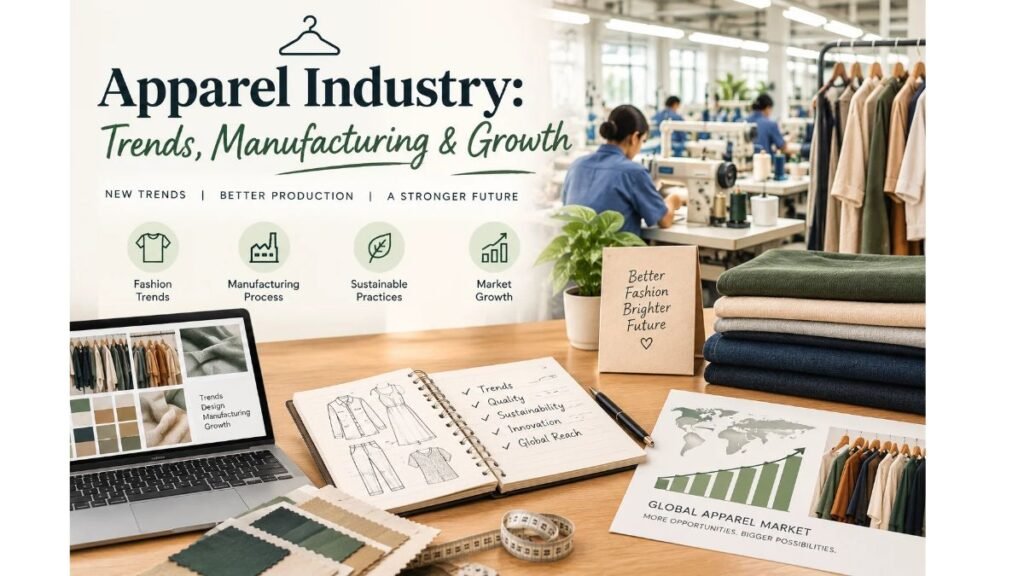
The apparel industry connects fashion design, textile production, garment manufacturing, retail, and global trade. It includes the businesses that develop, produce, distribute, and sell clothing for different customers and markets. From basic T-shirts and denim jeans to technical sportswear and luxury fashion, the industry turns fabric and design ideas into finished products.
Understanding the apparel industry is important for fashion entrepreneurs, clothing brands, retailers, manufacturers, and anyone interested in the clothing business. It helps explain how garments are developed, how production works, what influences costs, and how businesses respond to changing customer needs.
This guide explores the apparel industry, its main sectors, the garment manufacturing industry, production processes, sourcing decisions, technology, sustainability, and future opportunities.
What Is the Apparel Industry?
The apparel industry is the business sector involved in designing, manufacturing, distributing, and selling clothing. It includes companies that produce garments, supply materials, create fashion collections, manage brands, and deliver products to consumers.
The term covers a wide range of businesses. These include textile mills, clothing factories, fashion designers, private-label manufacturers, wholesalers, retailers, and online clothing stores.
For example, a cotton farm may supply raw cotton to a textile mill. The mill turns the fiber into yarn and fabric. A garment factory cuts and sews that fabric into clothing. A fashion brand then sells the finished garments through a website or retail store.
Each business contributes to the larger supply chain.
The apparel industry serves many markets, including:
- Casual clothing and everyday basics
- Luxury and designer fashion
- Sportswear and activewear
- Workwear and uniforms
- Children’s and baby clothing
- Outerwear, jackets, and coats
- Streetwear and fashion collections
- Protective and specialized garments
Although these categories serve different customers, they share many processes. Product development, material sourcing, manufacturing, quality control, and distribution are important throughout the industry.
Apparel Industry vs. Garment Industry vs. Cloth Industry
The terms apparel industry, garment industry, and cloth industry are closely related. However, they can refer to different parts of the clothing supply chain.
Apparel Industry
The apparel industry is a broad term that covers clothing design, production, branding, marketing, wholesale, retail, and distribution. It includes both manufacturing businesses and companies that sell finished clothing.
Garment Industry
The garment industry usually focuses on producing finished clothing. It includes cutting, sewing, assembling, finishing, inspecting, and preparing garments for delivery.
Garment factories may produce clothing for their own brands or manufacture products for other companies.
Cloth Industry
The cloth industry generally refers to businesses involved in producing and processing textile materials. This may include spinning fibers into yarn, weaving or knitting fabric, dyeing materials, and applying textile finishes.
The cloth industry supplies many of the materials used by the garment industry.
In simple terms, the cloth industry helps produce the fabric, the garment industry turns fabric into clothing, and the apparel industry covers the wider business of bringing clothing to market. These activities overlap, especially in companies that manage several stages of production.
Main Sectors of the Apparel Industry
The apparel industry contains several connected sectors. Each sector performs a specific role in developing and delivering clothing.
1. Fashion Design and Product Development
Fashion design is the starting point for many clothing products. Designers research customer preferences, develop concepts, select colors, create sketches, and plan collections.
Product development turns those ideas into garments that can be manufactured. This stage may include fabric selection, measurements, pattern development, sample creation, and fitting.
For a clothing brand, effective product development helps establish a clear identity. It also reduces production mistakes by defining what the finished product should look like.
A product development team may prepare a technical package, commonly called a tech pack. This document can include measurements, materials, stitching details, artwork, labels, and construction instructions.
2. Textile and Fabric Production
Textile production supplies the materials needed for clothing manufacturing. It may involve converting natural or synthetic fibers into yarn, then turning yarn into fabric through weaving or knitting.
The fabric may undergo additional processes, such as dyeing, printing, washing, or finishing.
Material choice affects the garment’s appearance, comfort, durability, weight, and cost. Cotton may be suitable for everyday clothing, while stretch blends can be useful for fitted activewear.
Fabric suppliers must also provide the specifications required by the clothing manufacturer. These can include fiber composition, fabric width, weight, color, and finishing requirements.
3. Garment Manufacturing
The garment manufacturing industry converts fabric and other materials into finished clothing. Factories may specialize in specific products, such as T-shirts, hoodies, denim, uniforms, sportswear, or jackets.
The manufacturing process commonly includes:
- Reviewing the design and specifications
- Sourcing fabric and trims
- Creating patterns and samples
- Cutting fabric
- Sewing and assembling components
- Adding prints, embroidery, or other branding
- Finishing and inspecting garments
- Packing products for shipment
The exact process depends on the garment’s construction and the services offered by the factory.
4. Clothing Brands and Merchandising
Clothing brands develop products for specific audiences. They establish product ranges, brand identities, pricing strategies, and marketing plans.
Merchandising helps businesses decide which products to offer, when to release them, and how to balance styles, colors, and sizes.
A brand may manufacture its own products, work with an external factory, purchase ready-made garments, or combine these approaches.
5. Wholesale and Retail
Wholesalers purchase or distribute clothing in quantities suitable for retailers and other businesses. Retailers sell garments directly to customers through physical stores, websites, marketplaces, or social commerce channels.
Online retail has made it easier for smaller fashion businesses to reach customers without operating traditional stores. However, businesses still need to manage product quality, inventory, delivery, returns, and customer service.
These sectors connect manufacturers with the people who ultimately wear the clothing.
How the Apparel Industry Works
The apparel industry operates through a supply chain. A supply chain is the network of businesses and activities involved in making and delivering a product.
Although some companies control several stages internally, many rely on different suppliers and service providers.
Step 1: Market Research
Businesses study their target customers, competitors, price ranges, and product demand. They may research customer feedback, sales data, seasonal preferences, and emerging styles.
Market research helps brands decide what to develop and how much inventory they may need.
Step 2: Design and Planning
Designers create product concepts and decide on the materials, fit, colors, and construction details. The business also establishes its target cost and planned selling price.
Manufacturing requirements should be considered early. A design that looks attractive may still be expensive or difficult to produce.
Step 3: Fabric and Trim Sourcing
Manufacturers source fabrics and components such as zippers, buttons, elastic, drawcords, labels, and thread.
Availability, quality, and price can affect the production schedule. Custom materials may require additional time or minimum order quantities.
Step 4: Sampling
A sample allows the brand to evaluate a garment before bulk production. The buyer can review measurements, fit, material, stitching, decoration, and finishing.
Changes should be documented clearly. Bulk production should follow the approved sample and agreed specifications.
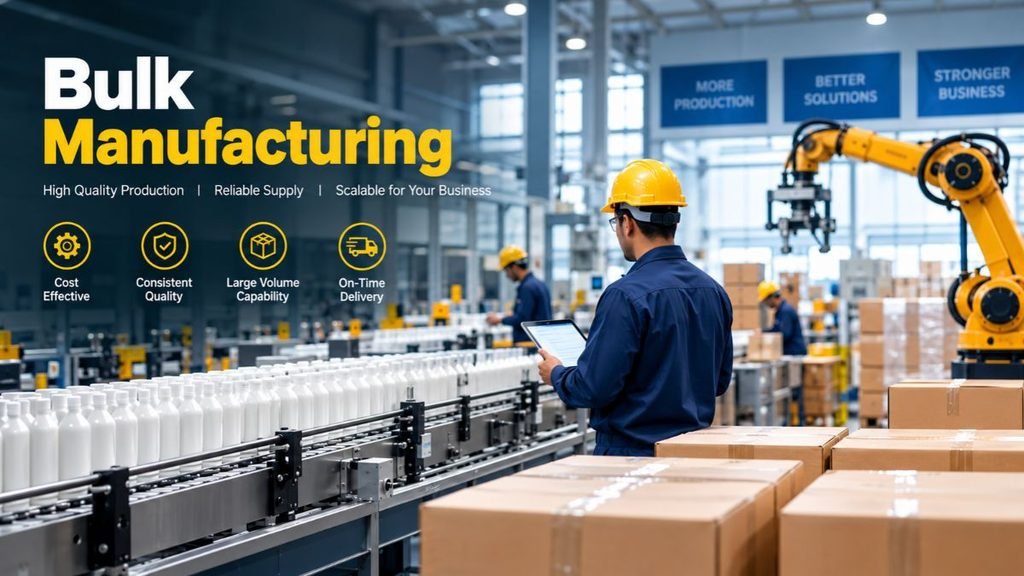
Step 5: Bulk Manufacturing
After approval, the factory prepares materials and production operations. Workers or automated equipment cut fabric, assemble garment components, and complete the required construction steps.
Production planning helps coordinate materials, labor, equipment, and inspection activities.
Step 6: Quality Control
Quality control checks whether garments meet agreed standards. Inspections may cover fabric defects, measurements, stitching, color consistency, print placement, and packaging.
Checking products during production can help identify problems before they affect an entire order.
Step 7: Packaging and Distribution
Finished garments are labeled, folded, packed, and prepared for delivery. Orders may travel by air, sea, road, or a combination of transportation methods.
International shipments may also require customs documents, commercial invoices, packing lists, and other paperwork depending on the shipment and destination.
What Is the Garment Manufacturing Industry?
The garment manufacturing industry is the production-focused part of the wider apparel sector. It includes factories and manufacturers that convert textile materials into finished garments for brands, retailers, wholesalers, institutions, and consumers.
Manufacturers may operate as contractors for other brands or produce clothing for their own businesses. Their capabilities vary. Some focus on sewing and assembly, while others offer more comprehensive services.
A full-package manufacturer may support product development, fabric sourcing, sampling, production, quality control, branding, packaging, and shipping.
This can be useful for brands that want one partner to coordinate multiple production stages.
Types of Garment Manufacturing
Cut-and-sew manufacturing: Fabric is cut into pattern pieces and sewn into finished garments. This method supports custom construction and product designs.
Private-label manufacturing: A factory produces garments that a brand sells under its own name. Depending on the arrangement, the brand may customize materials, colors, labels, and other details.
OEM manufacturing: Original equipment manufacturing generally involves producing goods according to a buyer’s design or specifications.
ODM manufacturing: Original design manufacturing may involve a supplier providing an existing or supplier-developed design that a buyer can adapt or sell under an agreed arrangement.
White-label manufacturing: A supplier offers products that can be sold under another business’s brand, often with less design development than a fully custom project.
The right model depends on how much design control, customization, and product-development support the buyer needs.
Factors That Influence Apparel Manufacturing Costs
Manufacturing costs depend on the garment, order quantity, materials, production requirements, and commercial terms. Understanding these factors helps businesses prepare realistic budgets.
Fabric and Material Selection
Fabric is often a major part of a garment’s cost. The price may vary by fiber content, fabric weight, construction, dyeing, finishing, and availability.
A lightweight cotton T-shirt and a heavyweight hoodie require different materials and production steps. Specialized stretch fabrics or custom-dyed materials may also affect costs.
Design Complexity
Simple garments are generally easier to manufacture than products with complicated construction. Multiple panels, pockets, linings, zippers, special seams, and complex fits may require more labor and technical skill.
Prints, embroidery, appliqué, and custom hardware can add further expenses.
Minimum Order Quantity
Minimum order quantity, or MOQ, is the smallest order a supplier accepts under its stated terms.
A factory may offer different minimums depending on the style, color, material, and production method. Custom fabric orders may have higher minimums than products made with readily available materials.
Small businesses should confirm whether the MOQ applies per design, color, or size run.
Sampling and Product Development
Samples help prevent costly errors but may involve separate development charges. Pattern making, grading, artwork preparation, and sample revisions can also affect the initial budget.
The buyer should ask what is included in the sample fee and whether any part of it can be credited toward a bulk order.
Quality Standards and Finishing
Higher specifications may require additional inspection, specialized materials, more precise construction, or extra finishing steps.
Businesses should define their quality expectations before production rather than assuming that every supplier follows identical standards.
Shipping and Import Costs
The final cost includes more than the factory price. Freight, insurance, duties, taxes, customs charges, and local delivery may all affect the landed cost.
Buyers should confirm which expenses are included in the quotation and which are their responsibility.
Technology and Innovation in the Apparel Industry
Technology is changing how clothing businesses design, manufacture, manage, and sell products. Its impact varies according to a company’s size, investment, and production model.
Digital Design and 3D Sampling
Digital design tools help teams create technical drawings, visualize products, and communicate construction details.
Some businesses use 3D garment software to review designs and fit concepts before making physical samples. This can reduce certain development steps, although physical samples may still be necessary to verify fabric behavior and construction.
Automation in Manufacturing
Automated cutting equipment, digital pattern systems, and specialized sewing machines can support productivity and consistency.
However, not every garment can be automated to the same degree. Complex designs and frequent product changes may still require substantial skilled labor.
Inventory and Production Management
Digital systems help companies track purchase orders, materials, production progress, and stock levels. Better visibility can support planning and reduce avoidable delays.
Accurate inventory data is especially important for businesses selling across multiple channels.
E-Commerce and Digital Marketing
Online stores and social media give apparel brands direct ways to reach customers. They can test product concepts, collect feedback, and communicate with specific audiences.
Digital sales also create operational responsibilities, including order fulfillment, customer service, returns, and stock management.
Sustainability Challenges in the Apparel Industry
Sustainability is an important consideration across the clothing supply chain. Apparel production uses materials, energy, water, chemicals, packaging, and transportation. The scale and type of impact vary by product and manufacturing process.
Brands and manufacturers can examine several areas to identify opportunities for improvement.
Material Selection
Material choice affects resource use, product performance, durability, and end-of-life options. Natural fibers, recycled fibers, and synthetic materials each have different trade-offs.
Businesses should assess relevant evidence instead of assuming that one material is automatically the most sustainable in every situation.
Waste Reduction
Accurate pattern planning and fabric cutting can help reduce offcuts. Better production forecasting may also lower the risk of making garments that remain unsold.
Some factories explore reuse or recycling options for fabric scraps, depending on the material and local infrastructure.
Product Durability
Garments that maintain their function and appearance over time may need replacement less often. Durability depends on material selection, construction, care, and how the product is used.
Brands can support product longevity by specifying suitable fabrics, strong seams, and appropriate finishing.
Responsible Production Practices
Businesses can ask suppliers about material sourcing, chemical management, waste handling, workplace conditions, and relevant certifications.
Claims should be supported by evidence. A company should not describe a product as environmentally friendly or ethically produced without a clear basis for that statement.
Challenges Facing the Apparel Industry
The apparel industry operates in a complex environment. Businesses must manage changing demand, material costs, production schedules, and customer expectations.
Supply Chain Disruptions
Delays in fabric supply, transportation, or production can affect product launches. Brands can reduce some risks by confirming material availability, setting realistic timelines, and maintaining clear communication with suppliers.
For important products, businesses may also evaluate backup material options or alternative suppliers.
Changing Consumer Preferences
Fashion preferences can change quickly. A product that performs well in one season may attract less demand later.
Customer research, careful product planning, and small initial orders can help brands avoid excessive inventory commitments.
Quality Consistency
Maintaining consistent measurements, materials, colors, and construction can be difficult when products are manufactured across multiple batches.
Approved samples, clear specifications, documented inspections, and supplier communication help establish a shared quality standard.
Cost Pressure
Brands must balance production costs with product quality and customer expectations. Reducing costs without considering durability or fit may harm the customer experience.
A better approach is to compare the complete value offered by suppliers, including quality, communication, production support, and delivery terms.
International Trade and Compliance
International apparel businesses may need to comply with destination-specific labeling, safety, customs, and product requirements. These requirements vary by product and market.
Businesses should confirm applicable rules before production and shipment rather than assuming the same requirements apply everywhere.
How to Start a Clothing Business in the Apparel Industry
Starting a clothing business requires more than developing attractive designs. You also need to understand your target customer, production costs, sourcing options, and route to market.
1. Choose a Specific Market
Decide what type of customer you want to serve. You might focus on streetwear, everyday basics, activewear, uniforms, children’s clothing, or another defined segment.
A clear market focus makes product development and marketing more manageable.
2. Develop Your Product Range
Start with a practical collection rather than too many styles. Define each product’s fabric, measurements, colors, construction, and branding requirements.
A focused collection can make sampling, purchasing, and quality control easier.
3. Establish a Budget
Include product development, samples, materials, manufacturing, packaging, shipping, marketing, and operating expenses.
Keep a contingency for unexpected costs. Your cash-flow plan should account for the time between paying suppliers and receiving sales revenue.
4. Find a Suitable Manufacturer
Research suppliers that specialize in your product category and order size. Compare their capabilities, MOQs, quotations, sample policies, communication, and quality procedures.
Do not choose a manufacturer based only on a low advertised price.
5. Approve Samples and Specifications
Check the physical sample and record all required changes. Confirm the final measurements, materials, colors, artwork, and packaging before authorizing bulk production.
6. Plan Sales and Distribution
Decide whether you will sell through your own website, marketplaces, physical stores, wholesalers, or a combination of channels.
Your distribution model affects packaging, inventory, shipping, and customer-service requirements.
7. Review Results and Improve
After a product launch, review customer feedback, returns, sales performance, and production issues. Use this information to improve future designs and purchasing decisions.
The Role of Fashion Soul International in Apparel Manufacturing
Fashion Soul International is a factory-owned custom clothing manufacturer based in Sialkot, Pakistan. The company provides apparel manufacturing services for startups, growing brands, retailers, wholesalers, and international businesses.
Its stated services include private-label, OEM, ODM, white-label, cut-and-sew, and full-package production. The process can cover product development, fabric sourcing, sampling, bulk manufacturing, quality control, custom branding, packaging, and international shipping.
The company manufactures a range of products, including streetwear, activewear, sportswear, workwear, jackets, denim, casual wear, tracksuits, T-shirts, hoodies, and baby clothing.
Fashion Soul International publishes a standard minimum order quantity starting at 100 pieces, with actual project requirements confirmed during quotation. Buyers should provide their product category, estimated quantity, design references, fabric preferences, and delivery destination when discussing a project.
For businesses seeking a custom manufacturing partner, understanding the supplier’s capabilities, sampling process, quality requirements, and shipping terms is an important step before placing an order.
Visit Fashion Soul International to learn more about its manufacturing services.
Future Trends in the Apparel Industry
The future of the apparel industry will be influenced by technology, customer expectations, sourcing decisions, and changes in how products are sold.
More Data-Driven Product Planning
Businesses can use sales information and customer feedback to identify popular styles, adjust size ranges, and plan replenishment. Better planning can help reduce excess inventory and improve product availability.
Greater Attention to Product Traceability
Some brands are placing more emphasis on understanding where materials come from and how products are made. Suppliers may be asked to provide clearer information about materials, processing, and production stages.
The level of traceability available depends on the supply chain and the systems used by participating businesses.
Flexible Manufacturing Models
Smaller brands may seek suppliers that can support manageable order quantities and product development. Larger businesses may prioritize repeat production, capacity planning, and consistency across multiple orders.
Manufacturers that communicate clearly about these requirements can help buyers make more informed sourcing decisions.
Continued Growth of Digital Commerce
Online shopping continues to shape how brands present products and interact with customers. Accurate product information, useful images, consistent sizing, and dependable fulfillment remain important for online apparel sales.
Focus on Quality and Value
Customers may compare more than the initial purchase price. Fit, comfort, durability, design, and brand trust can influence purchasing decisions.
Brands that understand their audience and maintain clear quality standards are better positioned to develop products that meet customer expectations.
Frequently Asked Questions
What is the difference between the apparel industry and the textile industry?
The apparel industry focuses on clothing design, manufacturing, branding, distribution, and sales. The textile industry focuses on fibers, yarns, fabrics, and textile processing. The two industries are closely connected because garments depend on textile materials.
What does the garment manufacturing industry do?
The garment manufacturing industry turns fabric and components into finished clothing. Its processes may include pattern making, cutting, sewing, decoration, finishing, quality inspection, and packaging.
What products are included in the apparel industry?
The apparel industry includes casual clothing, formalwear, sportswear, activewear, uniforms, workwear, children’s clothing, outerwear, streetwear, and many other garment categories.
What affects apparel manufacturing costs?
Costs depend on fabric, design complexity, order quantity, labor, trims, branding, finishing, quality requirements, and shipping. Buyers should compare complete quotations and estimate the landed cost before placing orders.
How can a new brand enter the apparel industry?
A new brand can begin by identifying a target customer, developing a focused product range, preparing a budget, researching manufacturers, reviewing samples, and selecting suitable sales channels. Starting with a manageable collection can help control risk.
Why is quality control important in garment manufacturing?
Quality control helps verify that garments match agreed specifications. It can identify problems with fabric, stitching, measurements, colors, prints, and finishing before defective products reach customers.
Conclusion
The apparel industry is a broad network of businesses that design, manufacture, distribute, and sell clothing. It connects the textile sector with the garment manufacturing industry, fashion brands, wholesalers, retailers, and consumers.
Understanding these relationships helps entrepreneurs make better decisions about product development, supplier selection, manufacturing costs, quality control, and distribution.
Whether you are launching a new clothing brand or managing an established business, success depends on clear product requirements, reliable supplier relationships, realistic planning, and consistent quality. By understanding how the apparel industry works, businesses can make informed decisions and build a stronger foundation for long-term growth.