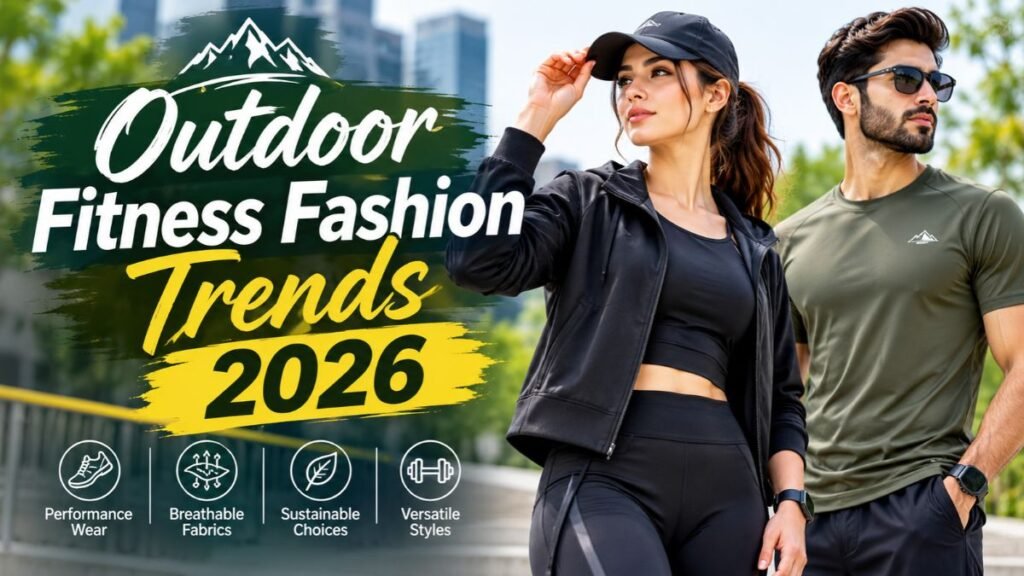
Outdoor Fitness Fashion Trends 2026: Styles, Fabrics and Innovations
Outdoor fitness clothing is changing as people look for garments that combine comfort, performance, and everyday style. Hiking, trail running, cycling, walking, and outdoor training are influencing modern fashion collections. As a result, outdoor clothing is no longer designed only for sports or adventure activities. It is also becoming part of everyday wardrobes.
The outdoor fitness fashion trends 2026 reflect this shift. Lightweight layers, technical fabrics, relaxed silhouettes, nature-inspired colors, and versatile designs are shaping new collections. Customers increasingly want clothing that performs during physical activities while remaining comfortable for travel and casual wear.
For clothing brands, understanding these changes can help with product planning and collection development. The right combination of fabric, fit, construction, and design can create products that serve different outdoor activities.
This guide explores the current trends in outdoor activewear 2026, including popular clothing styles, performance materials, functional features, color directions, and manufacturing considerations.
1. The Growing Connection Between Outdoor Fitness and Everyday Fashion
One of the biggest changes in outdoor clothing is the connection between performance wear and everyday fashion. Customers want garments that can move between different activities without requiring a complete outfit change.
For example, someone may wear a lightweight outdoor jacket while walking, commuting, or travelling. Similarly, comfortable hiking trousers can work for outdoor activities and casual weekend outfits.
This combination is often described as outdoor-to-urban fashion or trail-to-street styling.
Several design elements support this direction:
- Relaxed silhouettes and comfortable fits
- Lightweight jackets and overshirts
- Stretchable trousers and shorts
- Neutral and nature-inspired colors
- Functional pockets and adjustable details
- Breathable fabrics suitable for active use
Moreover, this approach gives clothing brands more opportunities to create versatile collections. Instead of designing every product for one activity, brands can develop garments for several related uses.
However, versatility should not replace performance. A jacket designed for serious outdoor conditions still needs suitable weather protection, construction, and materials.
2. Technical Fabrics for Better Outdoor Performance
Fabric innovation remains an important part of outdoor fitness clothing. Customers need materials that support movement, manage moisture, and provide comfort during changing conditions.
In 2026, technical fabric selection is increasingly connected to the actual activity and expected conditions.
Moisture-Wicking Fabrics
Moisture-wicking materials help move sweat away from the skin. This can improve comfort during running, cycling, hiking, and outdoor workouts.
Polyester-based performance fabrics are commonly used for this purpose. Some fabric constructions also support faster drying.
They are suitable for:
- Running shirts
- Training tops
- Lightweight base layers
- Cycling clothing
- Outdoor fitness T-shirts
Brands should check the fabric’s drying performance and comfort before selecting it for a product.
Four-Way Stretch Materials
Outdoor fitness requires freedom of movement. Four-way stretch fabrics can stretch across both length and width.
They are useful for leggings, hiking trousers, fitted tops, and training shorts.
Nylon and spandex blends are common options for fitted activewear. However, the correct blend depends on the product’s intended use.
Brands should also test stretch recovery. A garment should return to its original shape after movement and repeated wear.
Lightweight and Breathable Fabrics
Heavy clothing can feel uncomfortable during active outdoor sessions. Lightweight materials help create garments that are easier to wear and layer.
Breathable fabric construction can also support comfort during physical activity.
For example, lightweight polyester knits may work well for running tops. Meanwhile, suitable woven fabrics can be used for outdoor trousers and wind-resistant jackets.
Recycled Performance Materials
Recycled polyester and recycled nylon are receiving attention in performance clothing development.
These materials can help brands explore alternative material sourcing. However, recycled content should be confirmed through supplier documentation.
A responsible product description should clearly explain the actual recycled material content. Brands should avoid making broad environmental claims without supporting evidence.
3. Layering Systems for Changing Outdoor Conditions
Layering is a practical design approach because outdoor weather can change throughout the day. A person may begin a hike in cool conditions and become warmer during movement.
Instead of relying on one heavy garment, a layering system uses several clothing layers.
Base Layers
Base layers sit closest to the skin. Their purpose is to support comfort and moisture management.
Common options include:
- Lightweight performance T-shirts
- Long-sleeve training tops
- Fitted thermal shirts
- Breathable leggings
The best fabric depends on temperature, activity level, and personal preference.
Mid-Layers
Mid-layers provide additional warmth. They can also be removed when conditions become warmer.
Fleece pullovers, lightweight sweatshirts, and technical hoodies are common examples.
In 2026, mid-layers can also feature relaxed fits and clean designs. This helps them work as casual clothing outside outdoor activities.
Outer Layers
Outer layers help protect the wearer from environmental conditions. Depending on their construction, they may offer wind resistance, water resistance, or waterproof protection.
Popular examples include:
- Lightweight windbreakers
- Softshell jackets
- Rain jackets
- Packable outdoor shells
Importantly, water-resistant and waterproof are not the same. Brands should describe the actual performance of their products accurately.
4. Relaxed Fits and Comfortable Silhouettes
Very tight clothing is not suitable for every outdoor activity. Relaxed silhouettes offer another direction for modern outdoor activewear.
Wider trousers, oversized tops, loose jackets, and comfortable shorts can provide a more casual appearance.
This trend is especially useful for brands targeting customers who combine outdoor activities with travel and everyday use.
Popular product ideas include:
Relaxed Outdoor Trousers
These trousers can include adjustable waistbands, practical pockets, and articulated knees.
A comfortable cut allows easier movement during walking and hiking.
Oversized Performance T-Shirts
Relaxed T-shirts can be made using lightweight, breathable fabrics. They are suitable for walking, gym sessions, and casual styling.
Loose-Fit Outdoor Jackets
Roomier jackets can make layering easier. However, the fit should not interfere with movement or essential protective features.
Flexible Shorts
Outdoor shorts can use stretch fabrics and adjustable waist details. Pocket placement should also be considered carefully.
Brands should balance comfort with activity-specific requirements. A loose fit may suit casual hiking, while certain technical activities require a more fitted design.
5. Gorpcore and Functional Outdoor Styling
Gorpcore is a fashion direction inspired by hiking, camping, and technical outdoor clothing. It brings practical outdoor elements into everyday outfits.
In 2026, this style continues to influence outdoor fashion through functional details and adaptable clothing.
Common design features include:
- Utility pockets
- Adjustable drawcords
- Lightweight shell jackets
- Fleece layers
- Technical trousers
- Functional zippers
- Outdoor-inspired color combinations
For example, a technical jacket can be paired with relaxed trousers and comfortable sneakers. This creates an outfit that feels practical without looking like specialist expedition equipment.
Brands can use this direction to develop collections that appeal to outdoor enthusiasts and everyday fashion customers.
Nevertheless, decorative details should not reduce garment performance. Zippers, pockets, seams, and closures must be selected according to the product’s intended use.
6. Nature-Inspired Colors and Outdoor Color Palettes
Color plays an important role in outdoor fitness fashion. In 2026, brands can explore colors inspired by landscapes, forests, water, and changing skies.
Useful color directions include:
Earthy Neutrals
Khaki, sand, beige, taupe, and warm brown create a natural appearance. These shades are suitable for hiking trousers, jackets, and casual outdoor sets.
Forest and Olive Greens
Sage, moss, olive, and deep forest green connect naturally with outdoor-inspired styling.
They work well for jackets, utility trousers, fleece tops, and accessories.
Ocean and Sky Blues
Navy, slate blue, ocean blue, and lighter blue shades can create a fresh appearance.
These colors are useful for running tops, windbreakers, and lightweight training clothing.
Sunset-Inspired Colors
Rust, burnt orange, coral, and warm red can add energy to a collection.
Brands can use these shades as statement colors or combine them with neutral products.
Technical Brights
Bright yellow, vivid orange, and electric blue can create contrast.
They may also be useful for selected visibility details. However, a garment should not be described as safety-compliant simply because it uses a bright color.
A balanced palette can combine neutral core colors with seasonal and statement shades. This makes it easier for customers to coordinate different products.
7. Lightweight and Packable Outdoor Clothing
Customers often need clothing that is easy to carry during travel, hiking, and outdoor activities.
Packable designs address this need by reducing bulk and making garments easier to store.
Popular product ideas include:
- Packable windbreakers
- Lightweight rain jackets
- Compact running vests
- Foldable outdoor trousers
- Thin insulating layers
Some jackets include storage pockets or internal compartments that allow the garment to be folded into a compact shape.
For brands, packability should be considered during product development. The fabric, lining, zippers, and construction all affect the final packed size.
A lightweight product should also remain durable enough for its intended use. Reducing fabric weight should not create unnecessary weaknesses.
8. Sun-Protective Clothing for Outdoor Activities
Sun protection is another important consideration for outdoor fitness products.
People who spend long periods outside may look for clothing that offers additional coverage and suitable ultraviolet protection.
Product options include:
- Long-sleeve running shirts
- Lightweight sun-protective jackets
- Breathable outdoor hoodies
- Caps and accessories
- Lightweight neck-covering designs
Some fabrics are specifically tested and rated for ultraviolet protection. Brands should only use a UPF claim when the product has appropriate supporting test results.
Fabric weight, construction, coverage, and ventilation all affect the wearer’s experience.
For warmer conditions, lightweight materials and comfortable fits are especially important.
9. Weather-Resistant and Adaptive Designs
Outdoor conditions can change quickly. Therefore, clothing brands are paying attention to products that help users adapt to different environments.
Weather-resistant features may include:
- Water-repellent outer fabrics
- Wind-resistant construction
- Adjustable cuffs
- Protective hoods
- High collars
- Ventilation openings
Some garments use adjustable features to improve comfort. For example, a jacket may include a drawcord hem to help control the fit.
However, brands should distinguish between water-repellent, water-resistant, and waterproof performance.
A durable water-repellent finish does not automatically make a garment waterproof. The fabric, membrane, seams, and garment construction all affect protection.
For outdoor products, testing should match the conditions the garment is designed to handle.
10. Sustainable Materials and Responsible Product Development
Sustainability remains an important subject in outdoor apparel. Customers and business buyers increasingly want clear information about materials and product sourcing.
Brands can explore several material directions.
Recycled Polyester
Recycled polyester can be used in performance shirts, jackets, and other outdoor garments.
The actual recycled content should be confirmed through supplier records.
Recycled Nylon
Recycled nylon is another option for selected performance products. It can be considered for lightweight jackets, trousers, and other technical garments.
Natural and Bio-Based Materials
Some brands are exploring plant-based and bio-based materials. Their suitability depends on durability, moisture management, stretch, and intended use.
Durable Product Construction
A garment that lasts longer may reduce the need for frequent replacement.
Strong seams, suitable fabric weight, reliable closures, and good construction all contribute to product life.
Responsible Finishes
Brands should review the chemical treatments used in their fabrics and finishes. Where relevant, they can discuss PFAS-free alternatives with suppliers.
However, sustainability claims must be specific and supported. A product should not be called fully sustainable based only on one recycled component.
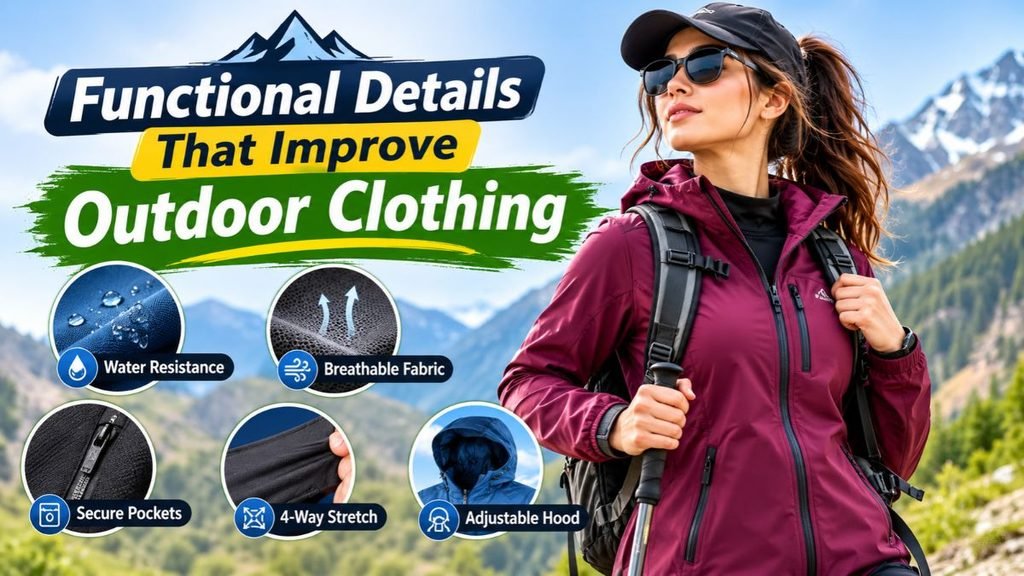
11. Functional Details That Improve Outdoor Clothing
Small construction details can make a major difference to outdoor clothing.
A good design should consider how customers will use the garment during movement.
Practical Pockets
Pockets can hold small essentials such as keys, cards, and other personal items.
Their position should not interfere with movement or create discomfort.
Adjustable Waistbands
Drawcords and elastic waistbands can improve fit across different body shapes.
They are useful for hiking trousers, shorts, and relaxed outdoor pants.
Reflective Details
Reflective trims can help garments become more visible when illuminated.
They are often used on running jackets, cycling clothing, and selected outdoor accessories.
The presence of reflective details alone does not guarantee visibility in every condition.
Ventilation Panels
Mesh panels and ventilation openings can support airflow.
Their placement should match the garment’s activity and construction requirements.
Reinforced Construction
Outdoor clothing may experience friction and repeated movement. Reinforced seams and suitable fabric selection can help improve durability.
These details should be planned before sampling rather than added without checking the garment’s construction.
12. Trail Running and Hiking Fashion
Trail running and hiking are influencing many outdoor clothing designs.
These activities require garments that balance movement, comfort, and practical performance.
Trail Running Clothing
Trail running products often include lightweight shirts, running shorts, breathable layers, and compact outerwear.
Useful design features include:
- Moisture-managing fabric
- Stretchable construction
- Lightweight materials
- Secure storage
- Reflective details
- Comfortable seam placement
Hiking Clothing
Hiking clothing may require more coverage and durable construction.
Popular products include technical trousers, outdoor shirts, fleece layers, and weather-resistant jackets.
Pocket design and adjustable features can also improve everyday usability.
Outdoor Fitness Sets
Brands can create coordinated collections using matching colors and related design details.
For example, a running top, shorts, and lightweight jacket can share the same color palette.
This gives customers more options while creating a consistent brand appearance.
13. Gender-Inclusive and Versatile Outdoor Designs
Outdoor clothing brands are also exploring designs that suit a wider range of customers.
Gender-inclusive styling can include relaxed silhouettes, practical colors, and adaptable construction.
However, inclusive design involves more than removing gender labels. Brands should consider sizing, body proportions, fit testing, and product functionality.
Useful design approaches include:
- Extended size ranges
- Adjustable waist details
- Flexible fits
- Multiple length options
- Comfortable layering shapes
- Clear size measurements
Fit testing across different body types can help brands identify problems before bulk production.
A well-developed size range can make a collection more accessible to customers with different preferences and needs.
14. How to Build an Outdoor Activewear Collection for 2026
Following trends is useful, but brands need a clear plan before developing products.
A focused collection should connect the target audience, activity, fabric, design, and price position.
Step 1: Define the Target Customer
Decide who the collection is designed for.
Your audience may include hikers, trail runners, cyclists, outdoor fitness enthusiasts, or customers who prefer casual technical clothing.
Each group has different needs.
Step 2: Select the Product Categories
Choose products that support the collection’s purpose.
A small outdoor fitness range could include:
- Performance T-shirts
- Running shorts
- Lightweight jackets
- Stretch trousers
- Hoodies
- Fleece pullovers
Step 3: Select Suitable Fabrics
Choose materials according to product function.
Consider breathability, stretch, drying time, fabric weight, durability, and weather requirements.
Step 4: Develop a Color Palette
Select core colors and supporting shades.
Use a consistent palette across different garments. This helps customers combine products from the same collection.
Step 5: Prepare Product Specifications
Create a tech pack or detailed product brief.
Include measurements, fabric composition, GSM, color references, stitching details, trims, labels, and artwork.
Step 6: Review Physical Samples
Check the fit, comfort, fabric, color, and construction.
Make necessary adjustments before approving bulk production.
Step 7: Plan Quality Checks
Define the quality requirements for the product.
Depending on its purpose, testing may include measurements, seam strength, colorfastness, stretch recovery, and relevant performance tests.
15. Manufacturing Considerations for Outdoor Fitness Clothing
Outdoor fitness clothing requires careful product development. The correct manufacturing decisions help ensure that the final garment matches its intended use.
Fabric and GSM Selection
GSM means grams per square meter. It describes fabric weight.
However, a higher GSM does not automatically mean better quality. The ideal weight depends on the garment, climate, and intended activity.
For example, a lightweight running shirt needs a different fabric specification from a fleece mid-layer.
Pattern Development
Patterns determine garment shape and fit.
Outdoor clothing may need additional movement allowance around the shoulders, knees, hips, and elbows.
Pattern development should consider how the customer will move while wearing the product.
Stitching and Seam Construction
Seam construction affects comfort and durability.
The stitch type, seam placement, thread, and reinforcement should match the fabric and garment design.
Branding and Decoration
Brands can use custom labels, embroidery, printing, and other decoration methods.
However, decoration should not interfere with stretch, breathability, or garment comfort.
Sampling and Quality Control
A physical sample helps confirm the product before bulk manufacturing.
Brands should review the approved sample against the final production requirements. Quality checks can then assess measurements, stitching, trims, color, and finishing.
16. How Fashion Soul International Supports Custom Activewear Production
Fashion Soul International is a factory-owned custom clothing manufacturer based in Sialkot, Pakistan.
The company supports international apparel brands through private-label, OEM, ODM, white-label, cut-and-sew, and full-package production.
For outdoor fitness and activewear collections, product development can involve fabric sourcing, sampling, bulk manufacturing, quality control, custom branding, and packaging.
Brands can discuss requirements such as:
- Performance fabric composition and GSM
- Stretch and recovery
- Custom colors and fabric swatches
- Outdoor T-shirt and jacket designs
- Shorts and trouser construction
- Custom labels and branding
- Printing and embroidery
- Packaging and shipping requirements
The standard MOQ starts at 100 pieces, although actual requirements vary by product, fabric, color, and construction.
A physical pre-production sample should be reviewed and approved before bulk manufacturing begins. This allows the brand to check fit, fabric, measurements, colors, and finishing.
Fashion Soul also describes inline inspections and pre-shipment AQL 2.5 inspection within its quality process.
For brands planning an outdoor fitness collection, clear product specifications can make sampling and production communication more effective.
17. Common Mistakes to Avoid When Following Outdoor Fashion Trends
Trends can provide inspiration, but they should not replace practical product planning.
Avoid these common mistakes:
Choosing style over performance: A jacket may look attractive but still fail to meet the needs of its intended activity.
Using unsuitable fabrics: Fabric selection should match the garment’s purpose, climate, and movement requirements.
Ignoring fit testing: Outdoor clothing needs comfortable movement and appropriate sizing.
Adding unnecessary features: Too many pockets, zippers, and trims can increase complexity without improving the product.
Making unsupported performance claims: Waterproof, UPF, and recycled-content claims should have suitable evidence.
Skipping physical samples: Digital designs cannot fully show fabric feel, fit, color, or construction.
Following every trend: Select trends that match your brand identity and customers.
A clear product brief and proper testing can help avoid these problems.
Frequently Asked Questions
What are the biggest outdoor fitness fashion trends in 2026?
Major directions include trail-to-street styling, relaxed fits, technical fabrics, lightweight layering, functional pockets, nature-inspired colors, and versatile outdoor clothing.
What are the current trends in outdoor activewear 2026?
The current trends in outdoor activewear 2026 include breathable performance materials, recycled fabrics, relaxed silhouettes, packable jackets, outdoor-inspired styling, and adaptable clothing designs.
Which fabrics are best for outdoor fitness clothing?
Polyester, nylon, spandex blends, and selected recycled materials are common options. The best fabric depends on the activity, climate, stretch requirements, and garment construction.
Is Gorpcore still relevant in 2026?
Gorpcore continues to influence outdoor-inspired fashion. Functional pockets, technical jackets, fleece layers, and hiking-inspired trousers remain useful design references.
What colors are suitable for outdoor activewear?
Earthy neutrals, olive, forest green, ocean blue, charcoal, rust, and selected bright shades are useful options. Brands should choose colors that match their identity and product range.
How can clothing brands develop outdoor fitness collections?
Brands should define their audience, select suitable product categories, choose performance fabrics, create a color palette, prepare product specifications, and approve physical samples before bulk production.
What should brands check before manufacturing outdoor clothing?
Important checks include fabric performance, GSM, fit, seam construction, color consistency, trims, sample approval, and relevant product testing.
Can small brands manufacture custom outdoor activewear?
Yes. Small brands can discuss custom outdoor clothing with manufacturers. However, minimum order quantities, material availability, and production requirements should be confirmed before ordering.
Conclusion
The outdoor fitness fashion trends 2026 reflect a growing connection between performance clothing and everyday style. Lightweight layers, technical fabrics, relaxed silhouettes, nature-inspired colors, and practical details are shaping modern outdoor collections.
For clothing brands, the opportunity is to combine attractive designs with genuine product functionality. The right fabric, fit, construction, and quality checks can help create clothing that suits real outdoor activities.
Most importantly, trends should support the needs of the target customer. A successful outdoor collection is not simply fashionable. It should also be comfortable, practical, and suitable for its intended purpose.