Athletic Apparel Industry Trends: Key Changes Shaping Sportswear
The athletic apparel industry is changing as consumers expect more from their clothing. People want garments that support exercise, feel comfortable, look stylish, and last longer. As a result, sportswear brands are moving beyond traditional gym clothing.
Today, athletic apparel includes performance T-shirts, leggings, sports bras, training shorts, tracksuits, running jackets, and everyday athleisure. Customers also expect better fabrics, flexible designs, and products that suit different activities.
These changing expectations are influencing the latest athletic apparel industry trends. Brands are exploring technical fabrics, sustainable materials, comfortable fits, personalized products, and stronger online shopping experiences.
The related athletic wear industry trends also show how fitness, wellness, fashion, and everyday lifestyles are becoming connected. For clothing businesses, understanding these changes can help with product development and collection planning.
This guide explains the major athletic apparel trends, what is driving them, and how brands can use them when developing new sportswear collections.
1. The Growing Connection Between Sportswear and Everyday Fashion
One of the most important changes in athletic apparel is the growing connection between sportswear and everyday clothing.
Customers no longer buy athletic clothing only for workouts. Many people wear leggings, joggers, hoodies, performance T-shirts, and sports jackets during daily activities.
This trend is commonly called athleisure. It combines athletic features with casual fashion.
For example, a customer might wear a matching leggings set to a fitness class. Later, the same outfit may be worn while shopping or meeting friends.
This creates opportunities for brands to develop versatile products.
Popular athleisure products include:
- Matching leggings and sports bras
- Relaxed-fit joggers
- Oversized performance T-shirts
- Lightweight zip-up jackets
- Stretch shorts
- Comfortable sweatshirts
- Casual tracksuits
The design challenge is balancing appearance and performance. A garment should look suitable for everyday wear while supporting movement and comfort.
Brands can respond by using clean designs, comfortable fabrics, practical pockets, and coordinated colors.
2. Performance Fabrics Are Becoming More Important
Fabric innovation is a major part of modern sportswear development. Customers expect athletic garments to support movement and provide comfort during physical activity.
Therefore, brands are paying closer attention to fabric composition, weight, stretch, breathability, and durability.
Different activities require different fabric properties. Running clothing may need lightweight and moisture-managing materials. Yoga garments often need flexibility and good recovery. Training shirts may require breathable fabrics that handle regular washing.
Common materials include:
Polyester
Polyester is widely used in athletic apparel. It is lightweight and suitable for many performance garments.
Brands use polyester for running shirts, training tops, shorts, and sports uniforms. It can also be combined with other fibres to achieve different fabric properties.
Nylon
Nylon is often used in fitted activewear. It can provide a smooth surface and good durability.
Nylon blends are common in leggings, sports bras, and compression-style clothing.
Spandex and Elastane
Spandex, also called elastane, provides stretch. It is commonly blended with polyester or nylon.
This helps garments move with the body during exercise. However, brands should check stretch recovery to ensure that garments maintain their shape.
Moisture-Wicking Fabrics
Moisture-wicking materials help move sweat away from the skin toward the fabric surface. This can support comfort during workouts.
These materials are useful for running tops, gym shirts, cycling clothing, and other performance products.
When choosing technical fabrics, brands should consider the intended activity rather than selecting materials based only on appearance.
3. Sustainability Is Influencing Athletic Apparel Development
Sustainability has become an important subject in the clothing industry. Athletic apparel brands are reviewing materials, production methods, packaging, and product durability.
Customers are also paying more attention to what garments contain and how long they may last.
Some brands are exploring:
- Recycled polyester
- Recycled nylon
- Organic cotton
- Recycled packaging
- Lower-impact dyeing methods
- More durable garment construction
- Material traceability
- Waste-reduction practices
Recycled polyester is one option used in some sportswear products. It can be made from recycled plastic materials, including suitable post-consumer bottles.
However, brands should understand that recycled content alone does not make an entire product sustainable. The full material and production process matters.
Durability is another important consideration. A garment that keeps its fit and performance through regular use may offer better long-term value.
Brands should also avoid making broad environmental claims without evidence. Any sustainability statement should match the actual materials, processes, and documentation.
4. Comfort and Functional Design Are Driving Product Choices
Comfort is no longer an extra feature. It is a basic expectation for athletic clothing.
Customers want garments that fit well, allow movement, and feel comfortable during long periods of wear.
This is encouraging brands to focus on practical design details.
Important features include:
- Flat seams to reduce rubbing
- Stretch waistbands
- Flexible fabric blends
- Breathable panels
- Secure pockets
- Adjustable features
- Lightweight construction
- Suitable garment lengths
For example, running shorts may need secure pockets and a comfortable waistband. Yoga leggings may require stretch, coverage, and a fit that stays in place.
Meanwhile, training T-shirts need a comfortable shape and suitable fabric weight.
Brands should test these details through physical samples. A design that looks good on a screen may need adjustments after a wearer tests it.
5. Inclusive Sizing and Different Body Fits
Inclusive product development is another important direction in athletic apparel.
Customers have different body shapes, proportions, and fit preferences. A single pattern cannot provide the same fit for everyone.
Brands are therefore paying more attention to size ranges, garment proportions, and fit testing.
This can include:
- Extended size options
- Different inseam lengths
- Adjustable waistbands
- Support options in sports bras
- Relaxed and fitted silhouettes
- Clear measurement charts
- Fit testing across different body types
Sports bras are a good example. Different customers may need different levels of support depending on their activity and personal requirements.
Similarly, leggings should be checked for waistband comfort, opacity, stretch, and length.
Inclusive sizing should involve actual pattern and fit development. Simply adding larger labels to an existing pattern may not produce a suitable fit.
6. Personalized and Custom Athletic Apparel
Personalization gives customers more ways to express their identity. It is also creating opportunities for sportswear brands, clubs, gyms, and teams.
Custom athletic apparel can include personalized colors, logos, names, numbers, prints, and team graphics.
Examples include:
- Custom gym uniforms
- Team jerseys
- Branded training shirts
- Personalized running tops
- Club tracksuits
- Custom fitness event clothing
- Branded sportswear for businesses
This trend is especially relevant to organizations that want coordinated clothing.
For brands, customization requires clear design specifications. Logo placement, print size, color references, and garment measurements should be agreed before production.
Screen printing, embroidery, heat transfer, and sublimation are among the decoration methods that may suit different products.
The right method depends on the fabric, artwork, design, and intended use.
7. Technology Is Changing the Shopping Experience
Technology is influencing how customers discover, select, and purchase athletic clothing.
Online stores allow brands to reach customers across different locations. At the same time, digital tools can help shoppers understand products before ordering.
Some developments include:
AI-Based Product Recommendations
Online stores can use customer preferences and browsing behaviour to recommend relevant products.
For example, a shopper interested in running clothing may receive suggestions for running tops, shorts, and lightweight jackets.
Virtual Try-On and Size Tools
Digital sizing tools and virtual fitting features aim to help customers make more informed choices.
These tools can be useful when shoppers cannot physically try garments before purchasing.
However, accurate garment measurements and product information remain essential.
Better Product Photography
Clear product photographs help customers understand fabric texture, garment shape, stitching, and design details.
Brands should show clothing from different angles and provide accurate size information.
Omnichannel Shopping
Customers may discover products on social media, compare them on a website, and purchase through an online or physical store.
Brands need consistent product information across these channels.
Technology can improve convenience, but it cannot replace accurate product development and reliable customer service.
8. Wellness and Active Lifestyles Are Supporting Demand
Athletic apparel is closely connected to the wider interest in health and wellness.
Many customers participate in activities such as gym training, running, yoga, cycling, walking, and group fitness.
This creates demand for clothing designed around different types of movement.
For example:
- Yoga requires flexible garments.
- Running often needs lightweight clothing.
- Strength training benefits from comfortable and durable pieces.
- Cycling requires activity-specific fits and construction.
- Walking clothing may focus on comfort and versatility.
The wellness trend also reaches beyond exercise. Customers may choose comfortable clothing because it supports their daily routines.
The Global Wellness Institute reported that worldwide spending on sports apparel and footwear reached $422.2 billion in 2025. It also noted that activewear is increasingly worn as everyday clothing.
This shows why brands should consider both performance and lifestyle needs when planning collections.
9. Running and Specialist Sportswear Are Creating New Opportunities
General sportswear is not the only area of opportunity. Customers also look for clothing designed around specific sports and activities.
Specialist products can help brands serve more focused audiences.
Examples include:
Running Apparel
Running clothing may include lightweight T-shirts, shorts, leggings, jackets, and reflective details.
Fabric breathability, moisture management, and freedom of movement are important design factors.
Yoga and Pilates Clothing
Yoga and Pilates products often focus on flexibility, comfort, and fit.
Leggings, sports bras, fitted tops, and lightweight layers are common products.
Gym and Strength Training Clothing
Gym clothing may include compression tops, training shorts, joggers, and performance T-shirts.
Durability and movement are important because garments experience repeated stretching and washing.
Outdoor and Training Apparel
Outdoor products may require suitable layering, weather protection, and durable construction.
Brands should identify the activity before selecting fabrics and garment features.
Specialization can help smaller brands develop a clear product identity instead of competing across every sportswear category.
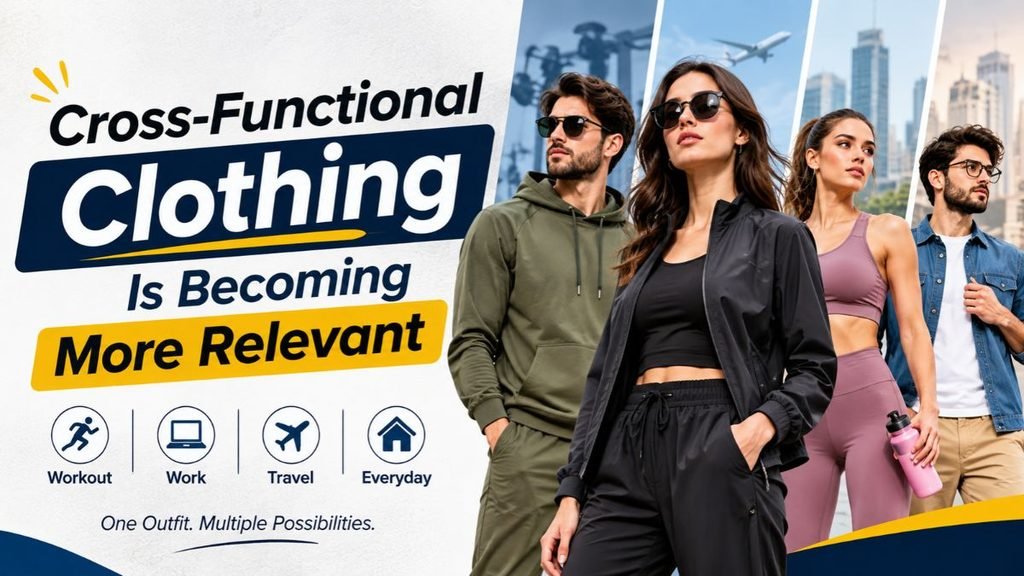
10. Cross-Functional Clothing Is Becoming More Relevant
Customers often prefer clothing that can serve more than one purpose.
Cross-functional apparel is designed to work across different activities or settings.
For example, a performance hoodie may be used during warm-ups, travel, and casual outings. A pair of joggers may work for light exercise and everyday wear.
This trend encourages brands to create practical products with flexible styling.
Useful design features include:
- Comfortable fits
- Durable fabrics
- Simple colors
- Practical pockets
- Easy-care materials
- Lightweight layering
- Versatile silhouettes
However, a garment cannot perform every function equally well. Brands should identify its main use and design around that purpose.
A running jacket, for example, may need different features from a casual sweatshirt.
11. Gender-Neutral and Relaxed Silhouettes
Relaxed fits and gender-neutral designs are influencing parts of the athletic apparel market.
Some customers prefer clothing that does not follow traditional men’s or women’s styling categories.
This creates opportunities for oversized T-shirts, relaxed joggers, simple hoodies, and versatile outerwear.
Brands can explore:
- Unisex training T-shirts
- Relaxed-fit sweatshirts
- Straight-leg joggers
- Oversized hoodies
- Minimalist tracksuits
- Adjustable waist designs
However, gender-neutral clothing still needs careful sizing and pattern development.
Brands should provide accurate garment measurements and explain how the product is intended to fit.
12. Community, Sports Culture, and Brand Identity
Customers may connect with athletic brands through more than products. Sports communities, fitness events, local clubs, and athlete partnerships can influence how people discover and relate to clothing brands.
A brand that supports a running club or local fitness event can build relationships with a focused audience.
Community-based strategies may include:
- Local sports partnerships
- Fitness challenges
- Running events
- Gym collaborations
- Team clothing
- Athlete-led product content
- Customer-generated photographs
These activities can help brands understand what customers need.
They can also provide useful feedback about fit, comfort, product features, and future collections.
However, partnerships and endorsements should be genuine. Brands should not imply that an athlete or organization supports a product without permission.
13. Resale, Durability, and Better Product Value
Consumers are becoming more selective about clothing purchases. Price still matters, but many shoppers also consider durability, versatility, and long-term value.
This is encouraging brands to think about product quality beyond the initial sale.
Some areas receiving attention include:
- Stronger stitching
- Better fabric recovery
- Durable waistbands
- Colorfast materials
- Repair-friendly construction
- Timeless product designs
- Clear care instructions
Resale is also becoming more visible in parts of the fashion market. Athletic clothing with good condition and lasting usefulness may have a longer life beyond its first owner.
For brands, this makes product quality and material transparency important.
A low-cost garment that quickly loses shape may not provide the same value as a well-constructed product.
14. Digital Marketing and Social Commerce
Social media plays an important role in how customers discover athletic apparel.
Platforms such as Instagram, TikTok, YouTube, and Pinterest allow brands to show products in real-life settings.
Useful content includes:
- Workout outfit demonstrations
- Fabric close-ups
- Product comparisons
- Styling ideas
- Customer photographs
- Training videos
- Product development stories
- Size and fit explanations
Short videos can show how a garment moves during exercise. This can help customers understand features that static photographs may not explain.
Social commerce also allows customers to move from product discovery to purchase more quickly.
However, marketing should match the actual product. Brands should avoid using edited images or exaggerated claims that create unrealistic expectations.
15. Supply Chain Planning and Manufacturing Flexibility
Athletic apparel brands must manage more than design and marketing. They also need a reliable way to source materials and manufacture products.
Supply chain planning affects costs, product quality, and delivery schedules.
Brands should consider:
Material Availability
A fabric may be suitable for a product but unavailable in the required color or quantity.
Therefore, material availability should be checked early.
Minimum Order Quantity
Manufacturers often set minimum order quantities, known as MOQs.
The MOQ can depend on fabric sourcing, color requirements, printing, construction, and production methods.
Smaller brands should discuss these details before finalizing their product range.
Sampling
A physical sample allows brands to review fit, fabric, color, stitching, and finishing.
Any required changes should be completed before bulk production.
Quality Control
Quality checks may cover measurements, stitching, fabric defects, print placement, trims, and packaging.
For athletic apparel, stretch and recovery may also need attention.
Production Planning
Brands should agree on product specifications, sample approval, order quantities, and delivery terms.
Clear communication can help reduce avoidable production problems.
16. How Brands Can Respond to Athletic Apparel Industry Trends
Understanding trends is useful, but brands need a practical plan to apply them.
The following steps can help.
Step 1: Identify Your Customer
Decide who your products are designed for.
Your audience may include runners, gym users, yoga customers, sports teams, or everyday athleisure shoppers.
Step 2: Select a Clear Product Category
Avoid launching too many unrelated products at once.
Start with a focused range, such as leggings and sports bras or performance T-shirts and shorts.
Step 3: Choose Suitable Fabrics
Select fabrics based on the product’s purpose.
Review composition, GSM, stretch, recovery, breathability, and durability.
Step 4: Develop a Consistent Design Direction
Choose colors, fits, trims, and branding details that work together.
A consistent collection is easier for customers to understand.
Step 5: Create and Review Samples
Use physical samples to test the garment.
Check measurements, comfort, movement, fabric performance, and finishing.
Step 6: Plan Production and Quality Checks
Confirm the MOQ, materials, production requirements, inspection process, and shipping arrangements.
Keep approved specifications for future orders.
17. How Fashion Soul International Supports Athletic Apparel Brands
Developing athletic clothing requires product planning, suitable materials, sampling, production, and quality control.
Fashion Soul International is a factory-owned custom clothing manufacturer based in Sialkot, Pakistan. The company provides private-label, OEM, ODM, white-label, cut-and-sew, and full-package manufacturing services.
Its stated services include product development, fabric and trim sourcing, sample development, bulk production, quality control, custom branding, packaging, export documentation, and international shipping.
Brands developing sportswear can discuss requirements such as:
- Performance fabric composition
- GSM and fabric weight
- Stretch and recovery
- Moisture-management requirements
- Garment measurements and fit
- Custom colors and prints
- Embroidery and branding
- Labels and packaging
- Product sampling
The company’s standard MOQ starts at 100 pieces. Actual requirements can vary by product, fabric, color, and construction.
Fashion Soul International follows a sample approval process before bulk production. This allows customers to review the physical garment and request changes before confirming production.
The company also describes inline quality checks and pre-shipment AQL 2.5 inspection as part of its quality process.
For new athletic apparel brands, clear specifications can make product development more efficient. A tech pack, reference garment, design brief, or detailed sketches can help communicate the required product.
Frequently Asked Questions
What are the biggest athletic apparel industry trends?
Major trends include athleisure, technical fabrics, sustainability, inclusive sizing, personalization, digital shopping, cross-functional clothing, and greater attention to durability.
What is the difference between athletic apparel and athleisure?
Athletic apparel is designed for sports, training, or physical activity. Athleisure combines athletic features with casual clothing for everyday use.
Which fabrics are commonly used in athletic wear?
Polyester, nylon, spandex, and selected cotton blends are common options. The right material depends on the activity, fit, and required performance.
Why is sustainability important in athletic apparel?
Sustainability matters because brands and customers are paying more attention to materials, durability, waste, and production practices. Claims should always be supported by evidence.
How can a small brand enter the athletic apparel market?
A small brand can start with a focused product range. It should identify its target customer, select suitable fabrics, develop samples, confirm manufacturing requirements, and plan quality checks.
What should brands check before manufacturing sportswear?
Brands should review fabric composition, GSM, measurements, stretch, recovery, color, stitching, decoration, and packaging. A physical sample should be approved before bulk production.
Is athleisure still an important part of sportswear?
Yes. Athleisure remains an important part of the market because customers use athletic-inspired clothing for exercise and everyday activities.
How can brands make athletic apparel more durable?
Brands can select suitable fabrics, use appropriate stitching, test stretch recovery, check colorfastness, and inspect garments before shipment.
Conclusion
The athletic apparel industry trends show how sportswear is moving toward a combination of performance, comfort, style, and everyday usefulness.
Technical fabrics, sustainable material choices, inclusive sizing, customization, digital shopping, and athleisure are influencing product development.
At the same time, customers are paying closer attention to durability and value. Brands must therefore consider more than appearance when developing new collections.
For clothing businesses, the best approach is to understand the target audience and build products around real needs. Careful fabric selection, sample testing, clear specifications, and quality checks can support better manufacturing decisions.
By following relevant athletic wear industry trends and applying suitable athletic apparel trends, brands can develop collections that meet changing customer expectations and create a clear identity in the sportswear market.