What Material Are Tights Made Of? A Complete Fabric Guide
Tights are a popular clothing item worn for warmth, comfort, fashion, and everyday use. They come in different thicknesses, colors, textures, and designs. However, their comfort and performance depend heavily on the materials used to make them.
If you have ever wondered what material are tights made of, the answer depends on their purpose and style. Most modern tights use synthetic fibers such as nylon and elastane. Some designs also include polyester, cotton, wool, or other materials.
Each fabric offers different benefits. Nylon provides a smooth finish, while elastane creates stretch. Cotton offers a softer natural feel, and wool provides warmth during colder weather.
Understanding what are tights made from can help shoppers choose better products. It can also help clothing brands select suitable materials for their collections.
This guide explains the most common tights fabrics, their properties, manufacturing methods, and how to choose the right material.
What Material Are Tights Made Of?
Most tights are made from a combination of synthetic fibers. Nylon and elastane are two of the most common materials.
Nylon creates a smooth, lightweight fabric. Elastane, also known as spandex or Lycra, gives tights their stretch and helps them fit closely to the legs.
Some tights use polyester instead of nylon. Others combine synthetic fibers with cotton or wool for added comfort and warmth.
The exact composition depends on the product type.
For example:
- Sheer tights commonly use nylon and elastane.
- Opaque tights often use nylon, polyester, and elastane.
- Cotton tights include cotton blended with stretch fibers.
- Thermal tights may contain wool, polyester, or brushed synthetic fabrics.
- Sports tights often use polyester or nylon with elastane.
Manufacturers select materials according to the required thickness, stretch, appearance, durability, and intended use.
What Are Tights Made From? Understanding the Main Fabrics
Tights can contain several different fibers. Each material contributes specific qualities to the finished garment.
Here are the most common fabrics used in tights manufacturing.
1. Nylon
Nylon is one of the most widely used materials in tights.
It is a synthetic fiber known for its smooth texture, lightweight feel, and strength. Manufacturers use nylon to create fine, flexible fabrics that fit closely against the body.
Nylon is especially common in sheer and everyday fashion tights.
Benefits of nylon include:
- Smooth and soft surface
- Lightweight construction
- Good strength for its weight
- Flexible fabric options
- Ability to hold color well
- Suitable for different fabric thicknesses
Nylon also works well with elastane. This combination creates tights that stretch while maintaining a smooth appearance.
However, nylon can snag when it comes into contact with sharp objects or rough surfaces. Careful handling helps protect delicate tights.
2. Elastane (Spandex or Lycra)
Elastane is a stretch fiber used in many types of tights. It is also known as spandex, while Lycra is a well-known brand name for elastane fibers.
This material allows fabric to stretch and return toward its original shape.
Without elastane, many fitted tights would feel less flexible. They might also struggle to maintain a close fit during walking, sitting, or bending.
Benefits of elastane include:
- High stretch
- Improved fit
- Better shape recovery
- Greater freedom of movement
- Support for close-fitting designs
Elastane is usually blended with another fiber rather than used alone.
The percentage depends on the desired stretch and garment construction. Higher elastane content does not automatically mean better quality. The fabric must be designed for its intended use.
3. Polyester
Polyester is another common synthetic material used in tights.
It is known for its durability, low moisture absorption, and ability to maintain its appearance with proper care.
Polyester can be used in everyday tights, sports tights, and thicker designs.
Common benefits include:
- Good durability
- Lightweight options
- Color retention
- Quick-drying properties
- Easy-care performance
- Compatibility with stretch fibers
Polyester is often blended with elastane to create flexible tights.
Some manufacturers also use polyester in brushed or fleece-lined fabrics. These designs provide extra warmth during colder weather.
4. Cotton
Cotton is a natural fiber used in comfortable tights and leggings.
It has a soft feel and allows air to pass through the fabric. Cotton tights are often chosen for everyday wear, casual outfits, and cooler seasons.
However, pure cotton has limited stretch compared with elastane. It can also absorb moisture and take longer to dry.
For this reason, manufacturers often blend cotton with elastane.
Benefits of cotton include:
- Soft natural feel
- Comfortable everyday wear
- Breathability
- Good moisture absorption
- Suitable for casual clothing
Cotton blends can provide a balance between softness and flexibility.
When choosing cotton tights, check the fiber composition. A small amount of elastane can improve the fit and help the garment maintain its shape.
5. Wool
Wool is used in some tights designed for cold weather.
It is a natural fiber that helps provide insulation. Wool tights can keep the legs warm during autumn and winter.
Merino wool is one option used in clothing because of its relatively fine fibers and soft feel.
Wool may be blended with nylon or elastane to improve durability and fit.
Benefits of wool include:
- Natural warmth
- Insulating properties
- Comfortable winter wear
- Moisture management
- Suitable for thicker designs
Wool tights may require more careful washing than standard synthetic tights. Always follow the garment’s care label.
6. Microfiber
Microfiber describes very fine synthetic fibers, often made from nylon or polyester.
These fibers can create a soft, smooth fabric with a comfortable finish. Microfiber tights are commonly available in opaque styles.
They can provide a more covered appearance than sheer tights.
Common features include:
- Soft texture
- Smooth surface
- Lightweight construction
- Flexible fabric options
- Comfortable fit
Microfiber tights are available in different thicknesses and compositions. Check the product specifications instead of assuming all microfiber tights have identical properties.
What Fabric Are Tights Made From for Different Styles?
The fabric used in tights depends on their design and purpose. Sheer fashion tights need different properties from thick winter tights.
Understanding these differences helps shoppers select suitable products.
Sheer Tights
Sheer tights are lightweight and provide a transparent or semi-transparent appearance.
They commonly use fine nylon yarns blended with elastane. The material creates a smooth finish while allowing the natural skin tone to remain visible.
Sheer tights are often worn with dresses, skirts, and formal outfits.
Their thickness is commonly described using denier. Lower-denier tights generally look more transparent, while higher-denier options tend to provide more coverage.
Opaque Tights
Opaque tights provide greater coverage than sheer styles.
They often use thicker nylon or polyester yarns with elastane. Some products use microfiber construction for a soft and smooth finish.
Opaque tights are suitable for everyday outfits, colder weather, and fashion styling.
Their thickness can vary. Check the denier or product description to understand the expected level of coverage.
Thermal Tights
Thermal tights are designed to provide additional warmth.
Manufacturers may use brushed polyester, fleece-lined fabrics, wool blends, or other insulating materials.
Some thermal designs also include an outer layer that looks like sheer tights. Their inner construction provides extra insulation.
These products are useful during winter, especially when worn with dresses and skirts.
Cotton Tights
Cotton tights are made using cotton blended with stretch fibers.
They are often chosen for their soft feel and casual appearance.
They may suit everyday outfits, children’s clothing, and comfortable layering. However, they may not dry as quickly as some synthetic alternatives.
Sports and Performance Tights
Sports tights are designed for physical activity.
They commonly use nylon or polyester blended with elastane. These fabrics provide stretch and allow the garment to move with the body.
Depending on the design, sports tights may also include moisture-management finishes, compression features, or reinforced construction.
The best material depends on the sport and level of activity.
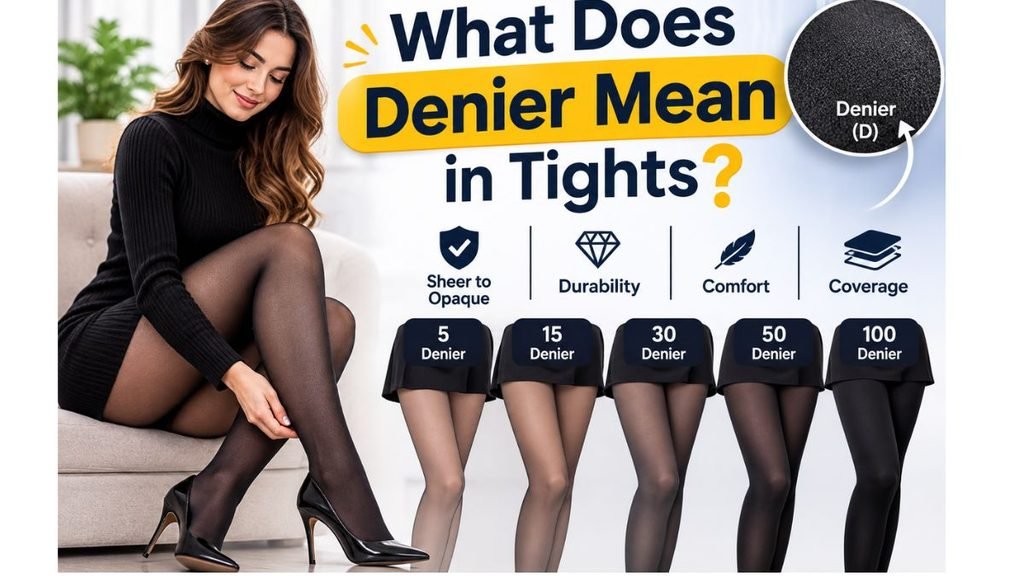
What Does Denier Mean in Tights?
Denier is a measurement used to describe the thickness of yarn in many hosiery products.
It measures the mass in grams of 9,000 meters of yarn.
In simple terms, denier helps explain how fine or thick the yarn is.
Tights with lower denier usually have a more transparent appearance. Higher-denier tights generally look thicker and provide more coverage.
Here is a general guide:
| Denier | Typical appearance |
|---|---|
| 5–10 | Very sheer |
| 10–20 | Sheer |
| 20–40 | Semi-sheer |
| 40–70 | More opaque |
| 70–100 | Opaque |
| 100+ | Very thick or heavy |
These ranges are general descriptions. Actual coverage depends on the yarn, knit construction, color, and fabric composition.
Denier does not measure overall garment quality. A high-denier product is not automatically more durable than every lower-denier product.
How Are Tights Manufactured?
Tights manufacturing involves several stages. The process begins with selecting suitable yarns and ends with inspection and packaging.
Understanding these steps helps clothing brands make better production decisions.
1. Material Selection
Manufacturers first select the yarns according to the product requirements.
Nylon, polyester, elastane, cotton, and wool are possible material choices.
The manufacturer considers stretch, thickness, comfort, appearance, and cost.
For example, sheer fashion tights may need fine nylon yarns. Winter tights may require thicker yarns or insulating fibers.
2. Yarn Preparation
The selected yarns are prepared for knitting.
Depending on the construction, manufacturers may combine different fibers or use covered elastane yarns.
Yarn quality affects the appearance, strength, and performance of the finished fabric.
3. Knitting
Tights are commonly produced using circular knitting machines.
These machines create knitted fabric with loops that provide flexibility and stretch.
Different knitting structures can produce different textures, thicknesses, and levels of coverage.
The knitting process must match the required size, shape, and fabric specifications.
4. Dyeing and Finishing
The fabric or garment may be dyed to achieve the required color.
Finishing processes can help improve the appearance and feel of the material. The exact methods depend on the fiber and manufacturing setup.
Color consistency is important, especially when producing multiple sizes or matching products.
5. Garment Shaping and Sewing
The knitted material is shaped and assembled into the final tights.
The production method depends on the product design and machinery.
Manufacturers pay attention to the waistband, seams, leg shape, and overall fit.
6. Quality Inspection
Finished tights should be checked against the approved specifications.
Quality checks may include:
- Fabric defects
- Uneven knitting
- Color differences
- Seam quality
- Waistband construction
- Size measurements
- Stretch and recovery
- General appearance
Inspection helps identify problems before products reach customers.
7. Packaging
After inspection, tights are folded and packed according to the buyer’s requirements.
Packaging may include product cards, labels, size information, barcodes, and retail packaging.
Brands should confirm all packaging details before production begins.
How to Choose the Best Material for Tights
The right material depends on how the tights will be worn.
A shopper looking for formal fashion tights may prefer a lightweight nylon blend. Someone buying winter tights may need a thicker fabric with better insulation.
Consider these factors before choosing.
Comfort
Comfort should be one of the first considerations.
The fabric should feel suitable against the skin. It should not create unnecessary irritation or restrict normal movement.
Softness depends on fiber type, yarn quality, fabric construction, and finishing.
Stretch and Recovery
Stretch allows tights to fit different body shapes and support movement.
Recovery helps the garment return toward its original shape after stretching.
Elastane is commonly used to improve these properties.
Breathability
Breathability affects how comfortable tights feel during extended wear.
Natural fibers such as cotton can offer a breathable feel. Some synthetic fabrics also provide suitable airflow through their construction.
The best option depends on the garment’s thickness and intended use.
Durability
Tights should maintain their appearance during regular use.
Nylon and polyester can provide useful durability, but fabric construction and yarn quality also matter.
Look for even knitting, strong seams, and suitable stretch recovery.
Warmth
For cold weather, consider thicker fabrics, wool blends, or fleece-lined designs.
The right material should provide the desired warmth without making the garment uncomfortable.
Price
Material choice affects manufacturing costs.
Specialized fibers, custom colors, and performance finishes may increase the price. Compare fabric performance and product requirements rather than choosing the cheapest option automatically.
Natural vs. Synthetic Materials for Tights
Tights can be made from natural fibers, synthetic fibers, or blends of both.
Each category offers different benefits.
| Feature | Natural fibers | Synthetic fibers |
|---|---|---|
| Examples | Cotton, wool | Nylon, polyester, elastane |
| Feel | Depends on fiber and construction | Often smooth and flexible |
| Stretch | Usually limited without blending | Elastane provides high stretch |
| Moisture behavior | Varies by fiber | Varies by fiber and construction |
| Common use | Casual and winter tights | Sheer, opaque, and performance tights |
| Care | Depends on fiber | Often easy-care, but varies |
Natural fibers may appeal to shoppers who prefer certain plant- or animal-based materials.
Synthetic fibers are widely used because they can provide stretch, durability, and different fabric finishes.
Blended fabrics combine properties from more than one fiber. For many tights, a blend offers a practical balance of comfort, flexibility, and performance.
How to Care for Different Types of Tights
Proper care can help tights maintain their appearance and fit.
Always follow the instructions on the garment’s care label. Different fibers and fabric constructions may require different treatment.
Washing Nylon and Polyester Tights
Use a gentle washing cycle when permitted by the care label.
A laundry bag can help reduce contact with zippers and rough clothing. Avoid harsh washing conditions that may damage delicate fabric.
Caring for Cotton Tights
Cotton tights may shrink if washed or dried incorrectly.
Follow the recommended temperature and drying instructions. Avoid assuming that every cotton blend can tolerate high heat.
Caring for Wool Tights
Wool products may require gentle washing or hand washing.
Use suitable detergent and avoid rough handling. Check the care label before washing or drying.
Protecting Delicate Sheer Tights
Sheer tights can snag easily.
Keep them away from sharp nails, jewelry, rough surfaces, and damaged footwear. Put them on carefully to reduce the risk of pulls and runs.
Common Mistakes When Buying Tights
Understanding fabric composition can help you avoid common buying mistakes.
Choosing Only by Appearance
A product may look attractive but feel uncomfortable when worn.
Check the material composition and product description before purchasing.
Ignoring the Fabric Composition
Two pairs of tights may look similar but contain different fibers.
Read the label to understand whether the product uses nylon, polyester, cotton, wool, elastane, or a blend.
Assuming Higher Denier Means Better Quality
Denier describes yarn thickness, not overall quality.
Consider construction, stretch, fit, and durability as well.
Buying the Wrong Style for the Weather
Thin sheer tights may not provide enough warmth in winter.
Similarly, thick thermal tights may feel uncomfortable in warm conditions.
Choose the fabric and thickness according to the intended use.
Ignoring Care Instructions
Incorrect washing can damage stretch fibers and delicate knitted structures.
Read the care label and follow the recommended instructions.
What Should Clothing Brands Consider When Sourcing Tights Materials?
Clothing brands need to evaluate fabric from both a design and manufacturing perspective.
The material must suit the product while meeting the brand’s budget and quality expectations.
Before sourcing tights materials, consider the following:
Define the product type: Decide whether you are developing sheer tights, opaque tights, thermal tights, or performance tights.
Choose the fiber composition: Compare nylon, polyester, elastane, cotton, and wool according to your product requirements.
Confirm fabric specifications: Record the fiber percentages, weight, construction, color, and other important details.
Request samples: Evaluate the material before approving bulk production.
Test performance: Check stretch, recovery, colorfastness, and durability where relevant.
Confirm minimum quantities: Ask about fabric and garment MOQs separately.
Plan production timelines: Include material sourcing, sampling, manufacturing, inspection, and shipping.
Approve packaging: Confirm labels, size information, and retail packaging before production.
These steps help reduce misunderstandings and support more consistent manufacturing.
How Fashion Soul International Supports Custom Clothing Manufacturing
Fashion Soul International is a factory-owned custom clothing manufacturer based in Sialkot, Pakistan.
The company offers private-label, OEM, ODM, white-label, cut-and-sew, and full-package apparel manufacturing.
Its services include product development, fabric and trim sourcing, sampling, bulk production, quality control, custom branding, packaging, export documentation, and international shipping.
For brands developing fitted clothing or other custom garments, choosing the right material is an important part of product development.
The company lists fabric options that include cotton, polyester, and stretch materials. The exact material composition and suitability should be confirmed for each product.
Fashion Soul International publishes a standard MOQ starting at 100 pieces. Actual requirements depend on the garment, material, color, and construction.
Brands can begin by sharing sketches, reference images, a design brief, or technical specifications. The manufacturing team can then discuss product requirements and the next steps for sampling.
If you are planning a custom clothing collection, visit the official website at https://fashionsoulintl.com/ to discuss your project.
Frequently Asked Questions
What material are tights made of?
Most tights are made from nylon and elastane. Some styles also use polyester, cotton, wool, or microfiber. The exact composition depends on the style, thickness, and intended use.
What are tights made from for everyday wear?
Everyday tights commonly use nylon blended with elastane. Opaque styles may also use polyester or microfiber. Cotton blends are another option for people who prefer a softer natural feel.
What fabric are tights made from in winter?
Winter tights may use thicker nylon or polyester blends, cotton blends, wool, or fleece-lined fabrics. These materials can provide additional warmth compared with lightweight sheer tights.
Are tights made from nylon?
Yes. Nylon is one of the most common materials used in tights. It provides a smooth, lightweight fabric and is often blended with elastane for stretch.
Is elastane the same as Lycra?
Elastane and spandex are names for the same type of stretch fiber. Lycra is a brand name associated with elastane fibers.
Are cotton tights better than nylon tights?
Neither is better for every purpose. Cotton tights offer a soft natural feel, while nylon tights are often smoother and lighter. Nylon blends may also provide a different level of stretch and durability.
Why do tights contain elastane?
Elastane helps tights stretch and fit closely to the legs. It also helps the fabric recover its shape after movement.
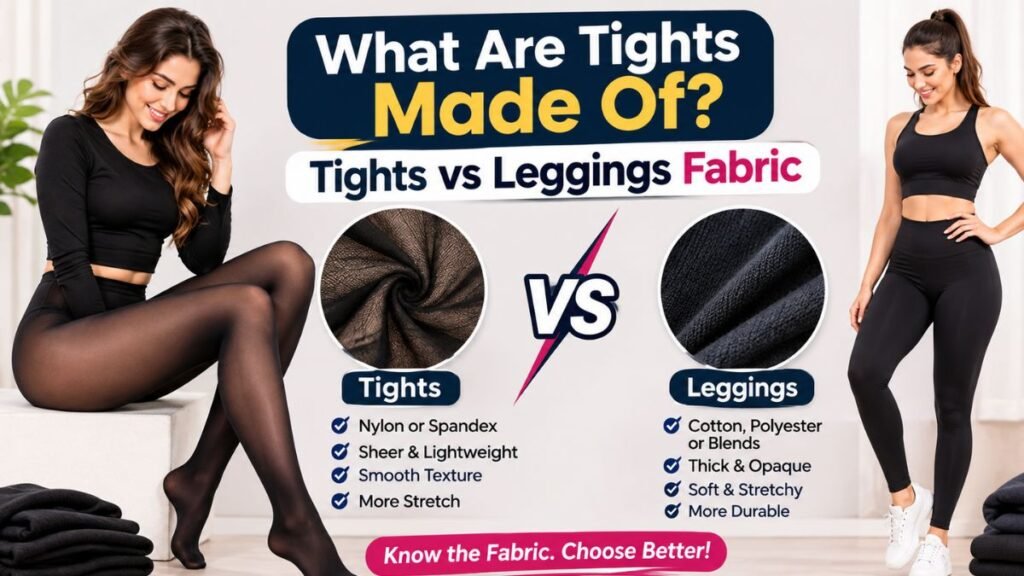
What is the difference between tights and leggings?
Tights are generally thinner and may be transparent or semi-transparent. Leggings are usually thicker and designed to provide more coverage. Their materials can overlap, but their construction and intended use often differ.
Are all tights made from synthetic materials?
No. Many tights use synthetic fibers, but some contain cotton, wool, or other natural materials. Blended fabrics are also common.
Final Thoughts
Understanding what material are tights made of helps shoppers choose products that match their comfort, style, and seasonal needs. Most tights use nylon and elastane, while other designs include polyester, cotton, wool, or microfiber.
The best fabric depends on the garment’s purpose. Sheer tights need lightweight yarns, winter tights need insulation, and performance tights need suitable stretch and recovery.
For clothing brands, material selection should include careful sampling, testing, and specification approval. By understanding the differences between fabrics, brands and shoppers can make more informed decisions about tights quality, comfort, and performance.