Fitted vs Compression: Understanding the Difference in Activewear
When choosing activewear, the difference between fitted and compression clothing can be confusing. Both styles sit closer to the body than regular clothing, but they are designed for different purposes. Understanding fitted vs compression clothing can help you select the right outfit for workouts, sports, running, and everyday activities.
Fitted clothing follows the natural shape of your body without necessarily applying strong pressure. Compression clothing, on the other hand, is designed to apply controlled pressure to specific areas. This difference affects how each garment feels, stretches, supports movement, and performs during physical activities.
Whether you are shopping for gym clothes or developing an activewear collection, knowing these differences is important. The right choice depends on your comfort preferences, activity level, fabric, and garment construction.
In this guide, we explain compression fit meaning, compression wear meaning, the main differences between fitted and compression clothing, and how to choose the right style.
What Does Fitted Clothing Mean?
Fitted clothing is designed to follow the body’s natural shape. It sits closer to the body than loose clothing but does not necessarily apply intentional compression.
A fitted garment provides a shaped appearance while allowing comfortable movement. It can be made from cotton, polyester, spandex blends, nylon, or other fabrics.
For example, a fitted T-shirt may follow the chest and waist without feeling tight. Fitted leggings may follow the legs while allowing the wearer to bend, stretch, and walk comfortably.
The main purpose of fitted clothing is to provide a comfortable shape and suitable appearance.
Main Features of Fitted Clothing
Fitted garments have several common features:
- Follow the natural body shape.
- Provide a closer fit than regular clothing.
- Allow comfortable movement.
- Usually apply little or no intentional compression.
- Come in different fabrics and stretch levels.
- Work for sportswear, casual wear, and everyday outfits.
The exact fit depends on the garment pattern, measurements, fabric properties, and design.
When Should You Wear Fitted Clothing?
Fitted clothing is suitable for people who want a shaped appearance without the tight feel of compression garments.
You can wear fitted clothing for:
- Everyday activities
- Walking and light exercise
- Gym sessions
- Yoga and stretching
- Casual sportswear
- Travel and leisure
- Layering under jackets or hoodies
For example, a fitted sports T-shirt can provide a neat appearance during a workout. It follows the body while allowing comfortable movement.
What Does Compression Clothing Mean?
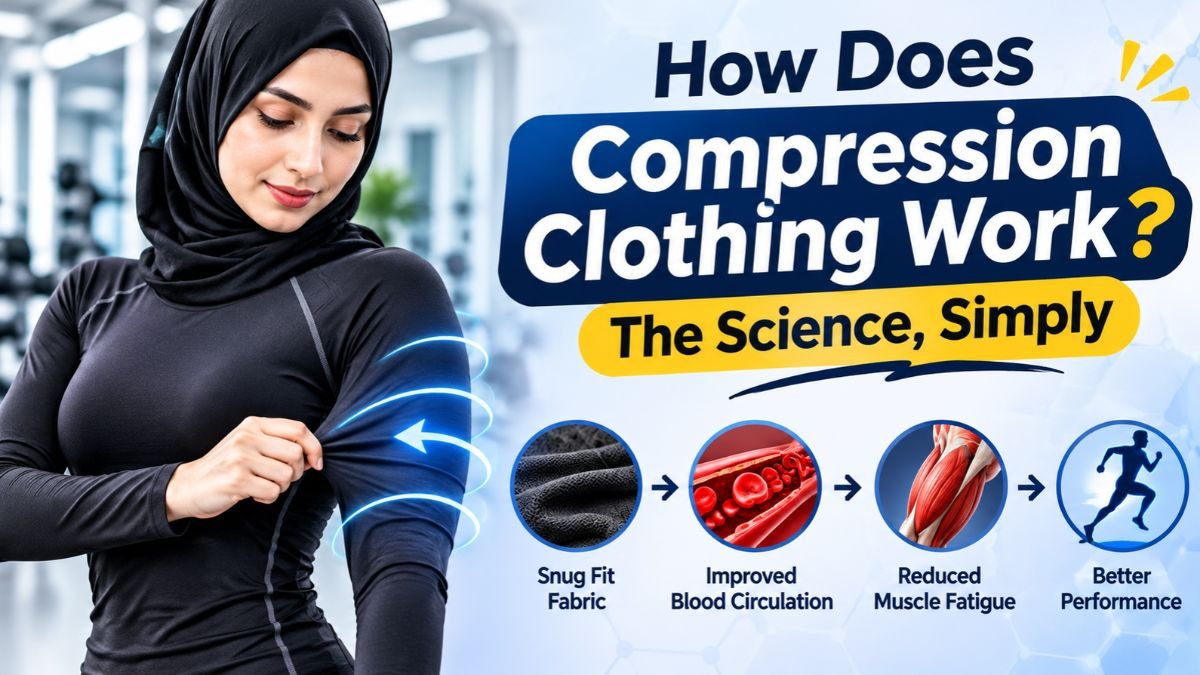
Compression clothing is designed to apply pressure to the body through close-fitting, stretch-based construction. It is commonly used in sportswear, activewear, and certain medical applications.
In athletic clothing, compression garments are made with fabrics and patterns intended to create a snug, supportive feel.
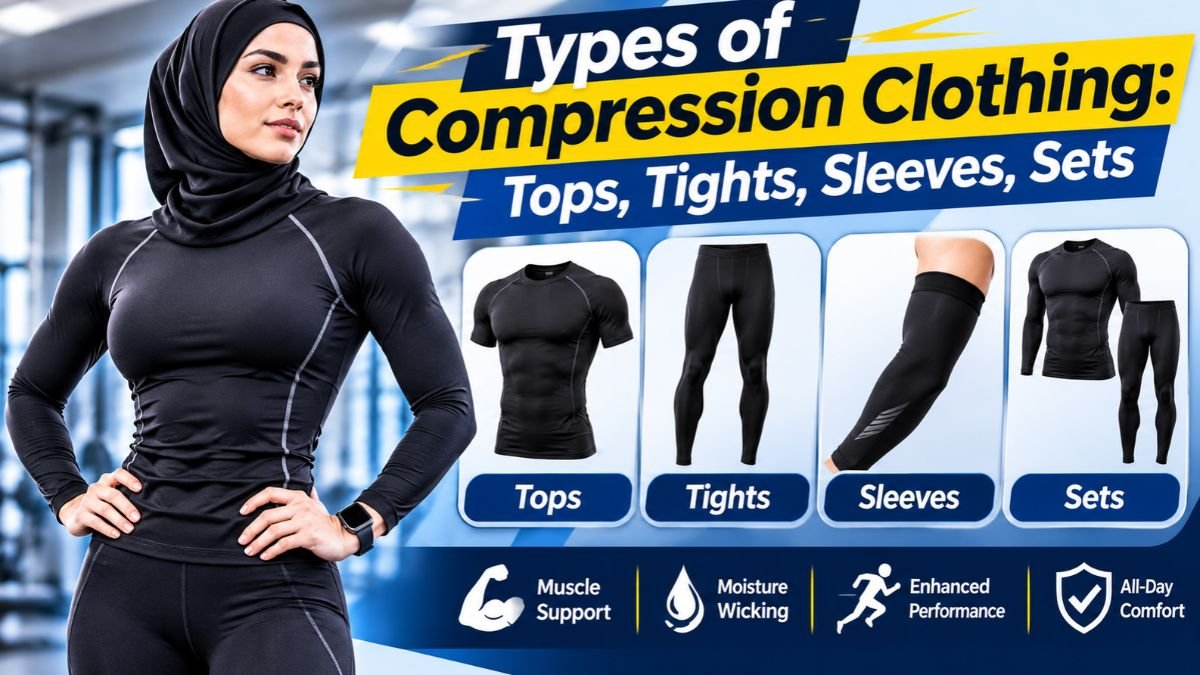
Common compression garments include compression leggings, sports tights, compression shirts, sleeves, and athletic base layers.
Unlike ordinary fitted clothing, compression wear is designed around the level and distribution of pressure. The garment should fit securely without causing discomfort or restricting normal movement.
Compression Fit Meaning
The compression fit meaning refers to a garment designed to fit tightly around the body and apply a controlled level of pressure.
This pressure comes from the fabric’s elasticity, garment dimensions, construction, and overall design.
Compression clothing may feel tighter than standard fitted activewear. It should still allow the wearer to move, breathe, and exercise comfortably.
A proper compression fit should not cause numbness, pain, tingling, or restricted circulation. If a garment causes these symptoms, stop wearing it and reassess the size and fit.
Compression Wear Meaning
The compression wear meaning refers to clothing designed to apply pressure to specific body areas through a close-fitting structure.
Compression wear is available in different styles and pressure levels. Some products are designed for athletic activities, while others are made for medical or recovery purposes.
Athletic compression wear may be used during exercise or as a base layer. Medical compression garments are different products and should be selected with appropriate professional guidance.
It is important not to assume that every tight sportswear garment provides medically meaningful compression.
Main Features of Compression Clothing
Compression garments commonly include:
- Snug construction around the body
- Stretch fabrics with good recovery
- Close-fitting patterns
- Secure waistbands and cuffs
- Smooth seams to reduce irritation
- Different pressure levels depending on the product
- Designs for particular sports or activities
The fabric and construction determine how the garment feels. A compression shirt, for example, should remain secure around the torso without making breathing uncomfortable.
Fitted vs Compression: What Is the Difference?
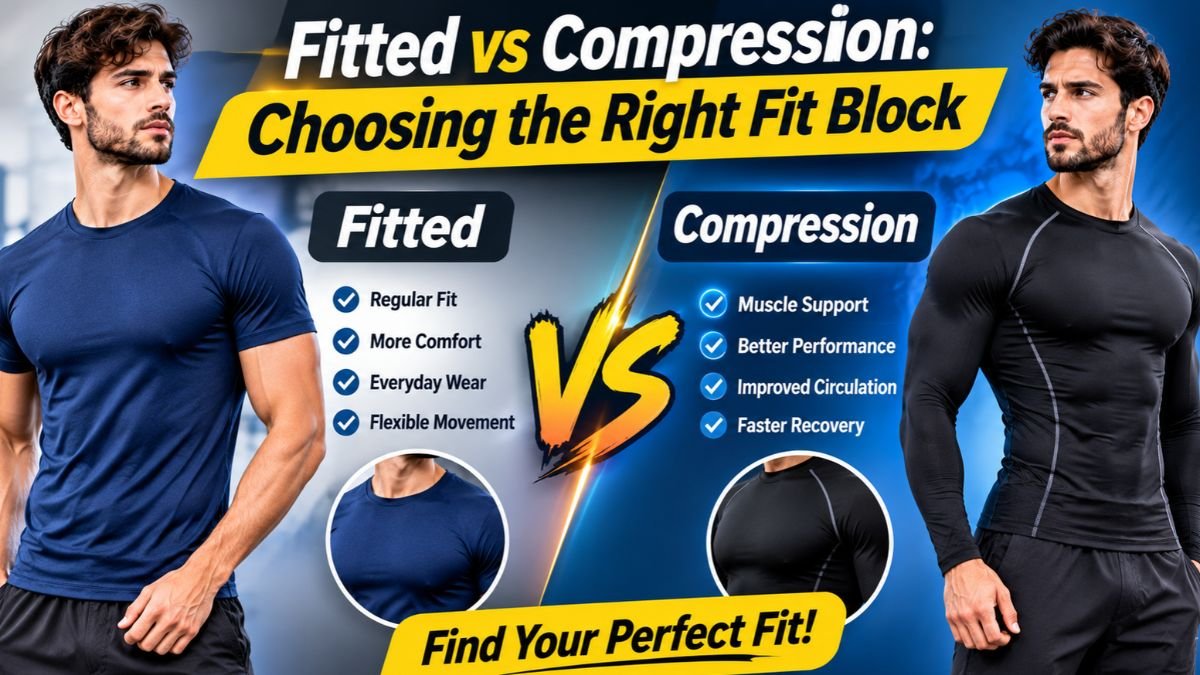
The biggest difference between fitted and compression clothing is the level of intended pressure.
Fitted clothing follows the body, while compression clothing is designed to apply controlled pressure.
Both styles can use stretchy materials and close-fitting patterns. However, they do not provide the same wearing experience.
| Feature | Fitted Clothing | Compression Clothing |
|---|---|---|
| Main purpose | Comfortable, shaped fit | Close fit with controlled pressure |
| Fit | Follows the body | Fits tightly around the body |
| Pressure | Usually minimal | Intentionally applied |
| Comfort | Often feels less restrictive | Feels snug and secure |
| Fabric | Cotton, polyester, blends, and stretch fabrics | Usually elastic performance fabrics |
| Common uses | Casual wear, gym, and daily activities | Sports, training, and athletic layering |
| Movement | Designed for comfortable movement | Designed for secure movement with pressure |
| Sizing | Regular fitted measurements | Requires attention to compression sizing |
A fitted garment is not automatically a compression garment. A tight T-shirt may simply have a close-fitting pattern. It does not necessarily provide the pressure associated with compression wear.
Fitted vs Compression: Which Is Better for Workouts?
Neither fitted nor compression clothing is automatically better for every workout. Your choice depends on the activity, personal preference, and garment design.
Fitted Clothing for Workouts
Fitted clothing is a practical choice for many types of exercise.
It allows you to move comfortably without the stronger pressure associated with compression garments.
Fitted sportswear may be suitable for:
- Weight training
- Walking
- Light jogging
- Yoga
- General gym sessions
- Stretching exercises
A fitted T-shirt and athletic joggers can provide a comfortable outfit for regular gym activities.
Compression Clothing for Workouts
Compression clothing is often selected for activities where a secure fit is preferred.
Examples include:
- Running
- Cycling
- Strength training
- Team sports
- High-intensity workouts
- Athletic base layering
Some athletes prefer compression garments because they stay close to the body and reduce loose fabric movement.
How to Decide
However, claims about improved performance or faster recovery should be treated carefully. Research findings vary depending on the garment, activity, and individual. Compression clothing should not be considered a replacement for proper training, rest, or medical treatment.
Choose fitted clothing if you prefer a comfortable, shaped fit with less pressure.
Choose compression clothing if you prefer a snug garment designed to apply controlled pressure.
For many people, comfort is the most important factor. A garment should support your activity without causing irritation or limiting movement.
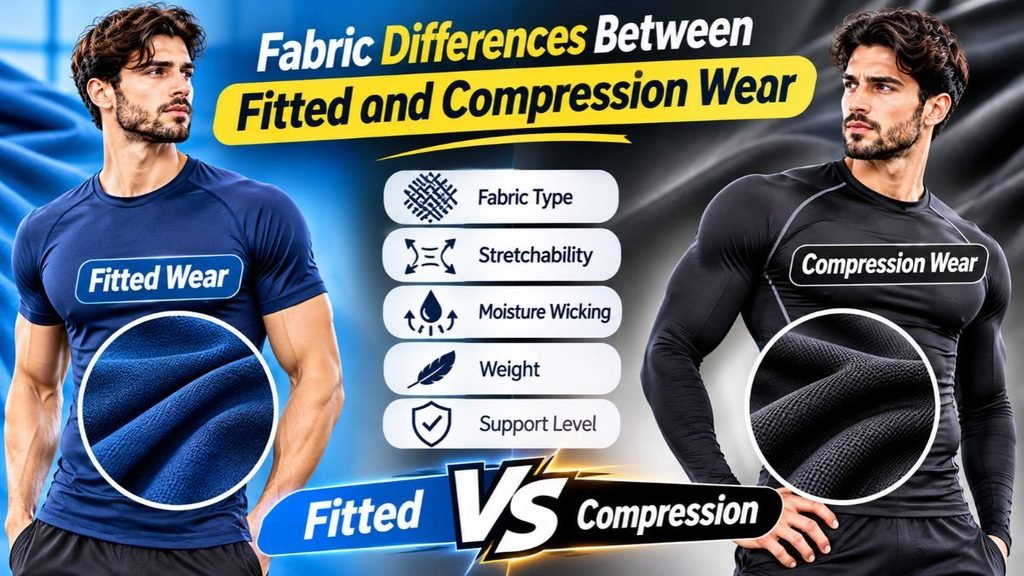
Fabric Differences Between Fitted and Compression Wear
Fabric plays an important role in the difference between fitted and compression clothing.
Although both styles can use stretch materials, compression garments generally require fabric with suitable elasticity and recovery.
Cotton
Cotton is a popular material for fitted T-shirts and casual activewear.
It feels soft and breathable and works well for everyday use. However, regular cotton may hold moisture during intense exercise and may not provide the same stretch recovery as specialist performance fabrics.
Cotton blends can improve comfort and durability depending on their construction.
Polyester
Polyester is commonly used in sportswear because it is lightweight and can dry relatively quickly.
It is suitable for fitted sports shirts, training tops, and many performance garments.
Polyester can also be blended with elastane to provide additional stretch.
Nylon
Nylon is often used in leggings, sports bras, and other performance clothing.
It can offer a smooth feel, durability, and good stretch when combined with suitable elastic fibres.
The exact performance depends on the yarn, fabric construction, and finishing.
Spandex or Elastane
Spandex, also known as elastane, is a stretch fibre used in fitted and compression garments.
It allows fabric to stretch and return towards its original shape.
The amount of elastane affects the fabric’s stretch characteristics, but it does not alone determine whether a garment provides compression. Pattern design, fabric construction, garment dimensions, and pressure testing also matter.
Fabric Comparison
| Fabric | Common use | Important property |
|---|---|---|
| Cotton | Fitted casual wear | Soft feel |
| Polyester | Sportswear | Lightweight and quick-drying options |
| Nylon | Leggings and performance wear | Smooth feel and durability |
| Spandex blends | Stretch activewear | Elasticity and recovery |
| Cotton-polyester blends | Casual and gym clothing | Combined comfort and performance properties |
When choosing fabric, consider the activity, climate, fit, washing requirements, and expected garment lifespan.
Benefits of Fitted Clothing
Fitted clothing is popular because it combines a shaped appearance with everyday comfort.
1. Comfortable Everyday Fit
Fitted clothing follows the body’s shape without necessarily applying strong pressure.
This makes it suitable for people who prefer clothing that is neither too loose nor too tight.
2. Suitable for Different Activities
Fitted garments can be worn for walking, casual workouts, gym sessions, travel, and daily activities.
Different fabric weights and designs make them suitable for different environments.
3. Easy to Style
Fitted T-shirts, leggings, joggers, and tops can be combined with jackets, hoodies, and other clothing.
They work well in both sportswear and casual fashion collections.
4. More Freedom From Strong Pressure
People who dislike the snug feel of compression clothing may prefer fitted garments.
The garment can follow the body without creating the same level of intentional pressure.
5. Wide Range of Designs
Fitted clothing is available in different cuts, sleeve lengths, necklines, colours, and fabrics.
This gives brands flexibility when creating products for different customer groups.
Benefits of Compression Clothing
Compression clothing offers a different wearing experience. Its main feature is the close-fitting construction designed to apply pressure.
1. Secure Fit During Movement
Compression garments stay close to the body.
This can be useful during activities where loose fabric may move around or interfere with equipment.
2. Suitable for Athletic Layering
Compression shirts and leggings are often worn as base layers.
Their close fit can make them easier to wear under team uniforms, training tops, and other sportswear.
3. Stretch and Recovery
Compression fabrics are designed to stretch and recover while maintaining a secure fit.
Good fabric recovery helps garments retain their shape after movement and use.
4. Reduced Fabric Movement
A close-fitting garment may move less during exercise than loose clothing.
Some athletes prefer this feeling when running, cycling, or performing other repetitive movements.
5. Different Garment Options
Compression wear is available in shirts, shorts, leggings, sleeves, and other athletic products.
Brands can develop different products based on the sport and customer requirements.
How Should Compression Clothing Fit?
Compression clothing should fit securely without causing discomfort.
It is normal for a compression garment to feel tighter than a regular fitted shirt or pair of leggings. However, excessive tightness is not a sign of better quality.
When trying compression clothing, check the following points:
- The fabric should sit close to the body.
- Seams should not dig painfully into the skin.
- The waistband should remain comfortable.
- You should be able to breathe normally.
- You should be able to bend and stretch.
- The garment should not cause numbness or tingling.
- The fabric should not create painful pressure points.
If the garment restricts movement or causes discomfort, consider a different size or product.
Always follow the manufacturer’s size guide. Compression sizing can vary between brands and garment types.
How to Choose the Right Size
Correct sizing is essential for both fitted and compression clothing.
A garment that is too large may not provide the intended shape or pressure. A garment that is too small may feel restrictive and uncomfortable.
Check Your Body Measurements
Measure the areas listed in the manufacturer’s size chart. These may include:
- Chest
- Waist
- Hips
- Inseam
- Thigh
- Arm length
Use the brand’s measurement instructions to ensure consistency.
Read the Product Size Guide
Do not assume that every brand uses the same sizing standards.
A medium size from one manufacturer may fit differently from a medium size from another.
Compression garments may also have separate sizing recommendations.
Consider Fabric Stretch
Fabric stretch affects how a garment fits.
A high-stretch fabric may fit differently from a cotton fabric with limited elasticity, even when both garments have similar measurements.
Check the Intended Fit
Product descriptions should clearly state whether the garment is regular, fitted, slim, or compression fit.
This helps customers understand what to expect before ordering.
Fitted vs Compression for Different Sports
Different activities may require different clothing features.
Running
Runners may prefer fitted or compression clothing depending on personal comfort.
Fitted running shirts offer a shaped appearance, while compression tights provide a closer feel around the legs.
Breathability, moisture management, and freedom of movement should remain priorities.
Weight Training
Both fitted and compression clothing can work for weight training.
Fitted shirts provide a comfortable option for lifting, while compression tops may appeal to people who prefer secure clothing.
The garment should not restrict shoulder movement or breathing.
Cycling
Cycling clothing often uses close-fitting construction to reduce loose fabric movement.
Some cycling garments are designed with compression features, but not every close-fitting cycling product is a compression garment.
Padding, seam placement, fabric stretch, and fit are also important.
Yoga
Many people prefer fitted leggings and tops for yoga.
These garments can make it easier to move through different positions without excess fabric getting in the way.
A comfortable stretch fabric is important. Strong compression is not required for every yoga outfit.
Team Sports
Compression garments are sometimes worn under sports uniforms.
They provide a close base layer and can help reduce loose fabric movement.
Fitted sportswear may also be suitable, depending on the uniform and player’s preference.
Common Mistakes When Choosing Fitted and Compression Clothing
Understanding the difference helps avoid common buying mistakes.
Assuming Tight Clothing Is Compression Wear
A garment can fit tightly without being designed to provide controlled compression.
Check the product specifications rather than judging only by appearance.
Choosing a Smaller Size for More Compression
Buying a size smaller does not guarantee better compression.
It can create excessive pressure, discomfort, and restricted movement. Always follow the manufacturer’s sizing recommendations.
Ignoring Fabric Quality
Stretch fabric quality affects comfort, shape retention, and durability.
A garment may lose elasticity after repeated washing if the fabric and construction are unsuitable.
Focusing Only on Appearance
A garment may look attractive but still feel uncomfortable during exercise.
Check fit, movement, fabric feel, stitching, and care requirements before making a decision.
Ignoring the Intended Activity
Different activities have different clothing needs.
A casual fitted T-shirt may be suitable for everyday wear but may not offer the features needed for intense training.
Fitted vs Compression: What Clothing Brands Should Know
For clothing brands, understanding fitted and compression construction is important when developing activewear products.
Although the two styles may look similar, they require different product specifications.
Define the Intended Fit
Start by deciding whether the product should be regular fitted, slim fitted, or compression fit.
This decision affects the garment measurements, pattern, fabric selection, and customer size guide.
Select the Right Fabric
Fitted activewear may use cotton, polyester, nylon, or stretch blends.
Compression garments need suitable elasticity, recovery, and construction to achieve their intended fit.
Brands should evaluate fabric samples before selecting materials for bulk production.
Develop Accurate Patterns
Pattern development is important because a garment’s fit depends on more than fabric stretch.
Compression products may require more careful consideration of body measurements, fabric tension, and pressure distribution.
A suitable pattern helps achieve consistent results across different sizes.
Create and Approve Samples
Before bulk production, brands should review physical samples.
Check measurements, comfort, movement, fabric recovery, stitching, and overall appearance.
For compression products, evaluate whether the garment provides the intended snug fit without excessive pressure.
Maintain Quality Control
Quality inspections can check measurements, stitching, fabric defects, trims, and garment construction.
For stretch garments, brands should also consider suitable stretch and recovery tests.
Clear product specifications help manufacturers maintain consistency throughout production.
Fitted and Compression Clothing Manufacturing at Fashion Soul International
Fashion Soul International is a factory-owned custom clothing manufacturer based in Sialkot, Pakistan. The company supports clothing brands with private-label, OEM, ODM, white-label, cut-and-sew, and full-package apparel manufacturing.
Its product categories include activewear, sportswear, tracksuits, T-shirts, hoodies, and other custom garments.
Brands planning fitted or compression activewear should provide clear product requirements. These may include the intended fit, fabric composition, stretch level, measurements, colours, stitching details, branding, and order quantity.
Fashion Soul International supports product development, fabric sourcing, sampling, bulk production, quality control, custom branding, packaging, and international shipping.
The company’s published standard MOQ starts at 100 pieces. Actual requirements depend on the product, fabric, colour, and construction. Buyers should confirm the quantity for their specific project.
Fabric Selection and Development
The fabric should match the garment’s intended purpose.
For fitted clothing, brands may consider cotton, polyester, or stretch blends. Compression products may require suitable nylon or polyester fabrics with elastane.
The final selection should be based on fabric performance, comfort, stretch recovery, and product specifications.
Sampling and Approval
A physical sample allows brands to check fit and construction before bulk production.
For fitted products, review the garment’s shape and comfort. For compression garments, pay close attention to the intended pressure and movement.
The approved sample should become the reference for bulk production.
Production and Quality Inspection
During manufacturing, garments should be checked against approved specifications.
Measurements, seams, fabric quality, print placement, and finishing are important inspection points.
For compression wear, the brand should define any additional stretch, recovery, or performance requirements before production.
Custom Branding and Packaging
Brands can discuss custom labels, logos, hang tags, and packaging for their collections.
These details help create a consistent product identity across fitted and compression activewear ranges.
Frequently Asked Questions
What Is the Main Difference Between Fitted and Compression Clothing?
Fitted clothing follows the natural body shape without necessarily applying pressure. Compression clothing is designed to fit tightly and apply controlled pressure to specific areas.
What Is Compression Fit Meaning?
Compression fit meaning refers to a close-fitting garment designed to apply pressure through its fabric, measurements, and construction. It should feel secure without causing pain or restricting normal movement.
What Is Compression Wear Meaning?
Compression wear meaning refers to clothing designed to apply pressure to selected body areas. It is available in athletic and medical products, which have different purposes and requirements.
Is Fitted the Same as Tight?
No. Fitted clothing follows the body’s shape, but it does not have to feel tight. Compression clothing is designed to provide a closer and more secure fit.
Is Compression Clothing Better for the Gym?
Not necessarily. Both fitted and compression clothing can be suitable for gym workouts. The best option depends on the exercise, garment design, and personal comfort.
Can You Wear Compression Clothing Every Day?
Some people wear athletic compression clothing during everyday activities. However, the garment should fit correctly and remain comfortable. Medical compression products should be used according to appropriate professional guidance.
Does Compression Clothing Improve Athletic Performance?
Compression clothing may provide a secure feel and reduce fabric movement. Research on performance and recovery benefits varies. Results depend on the product, activity, and individual.
Should Compression Clothing Feel Very Tight?
Compression clothing should feel snug, but it should not cause pain, numbness, tingling, or breathing difficulties. Excessive tightness can indicate an unsuitable size or garment.
Which Fabric Is Best for Compression Clothing?
Nylon and polyester blends with elastane are commonly used in compression garments. The best choice depends on stretch, recovery, durability, comfort, and the intended activity.
Can a Manufacturer Produce Both Fitted and Compression Activewear?
Yes. A custom clothing manufacturer can develop both styles when the brand provides suitable fabric specifications, measurements, patterns, and construction requirements.
Final Thoughts
Understanding fitted vs compression clothing makes it easier to choose the right activewear for different needs. Fitted garments follow the natural body shape and provide a comfortable, shaped appearance. Compression garments are designed to apply controlled pressure through specialised fabric and construction.
Both styles have useful applications in sportswear, gym clothing, and everyday fashion. The best choice depends on the activity, fabric, fit, and personal preference.
For clothing brands, the difference matters during product development and manufacturing. Accurate measurements, suitable stretch fabrics, careful pattern development, sample approval, and quality inspections help create reliable activewear.
By understanding compression fit meaning and compression wear meaning, both consumers and clothing businesses can make better decisions when selecting or developing fitted and compression garments.