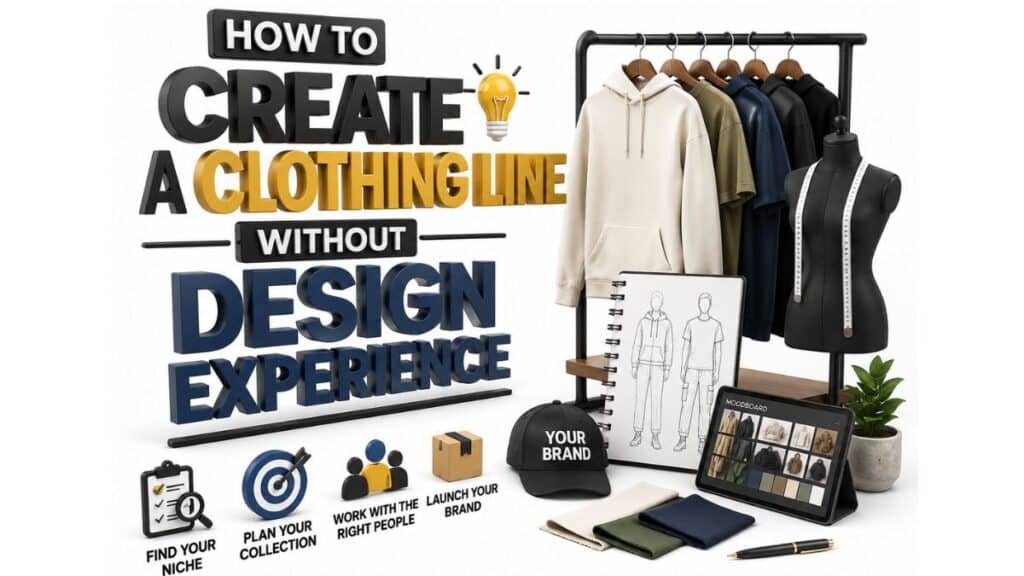
You don’t need a fashion design degree, pattern-making skills, or years of sketching experience to launch a real clothing brand. What you do need is an understanding of how ODM (Original Design Manufacturing) works — a production model built specifically for founders who have a strong brand vision but no formal design or technical background.
This guide explains exactly how to go from an idea to a finished, manufactured clothing line without design experience, using the manufacturing partnerships and processes that make this possible.
Fashion Soul International is a Sialkot, Pakistan-based manufacturer with 10+ years of experience supporting exactly this kind of founder — non-designers who’ve successfully built brands across 2,500+ companies served, using guided design support built into the manufacturing process itself.
Table of Contents
- You Don’t Need to Be a Designer to Start a Clothing Brand
- ODM vs. OEM vs. Private Label: Know the Difference
- How ODM Manufacturing Actually Works
- Step 1: Start With References, Not Sketches
- Step 2: Choose From Existing Base Styles and Customize
- Step 3: Let the Manufacturer Build Your Tech Pack
- Step 4: Focus Your Creative Input Where It Matters Most
- Step 5: Use Sampling as Your Real Design Tool
- Step 6: Add Customization to Make It Yours
- What You Actually Need to Provide (Even Without Design Skills)
- Common Concerns Non-Designers Have (and Why They’re Manageable)
- ODM Manufacturing Cost Considerations
- When You Might Eventually Need a Designer
- Case Example: A Non-Designer’s Path From Idea to Launch
- Frequently Asked Questions
- Final Thoughts
You Don’t Need to Be a Designer to Start a Clothing Brand
Some of the most successful clothing brands were started by people with no formal design background — founders who understood their audience, had a clear brand vision, and worked with manufacturers capable of turning that vision into a producible garment.
The skill that actually matters most isn’t sketching or pattern-making — it’s the ability to clearly communicate what you want, recognize it when you see it in a sample, and give focused feedback. Manufacturing partners experienced in ODM production are built to fill the technical design gap for exactly this reason.
ODM vs. OEM vs. Private Label: Know the Difference
These three terms get used loosely, but understanding the difference clarifies which model fits a no-design-experience founder best.
| Model | What It Means | Design Involvement Needed |
|---|---|---|
| ODM (Original Design Manufacturing) | Manufacturer designs and develops the product based on your brief/references | Low — you guide direction, manufacturer handles technical design |
| OEM (Original Equipment Manufacturing) | You provide complete original designs/specs, manufacturer produces them | High — requires your own tech packs and detailed specs |
| Private Label | Manufacturer’s existing base garment, customized with your branding | Very low — mainly branding/labeling decisions |
For a founder with no design experience, ODM is generally the best fit — it gives you far more customization and brand ownership than private labeling, without requiring the technical design skills OEM assumes you already have.
How ODM Manufacturing Actually Works
In an ODM relationship, the manufacturer’s design team translates your ideas, references, and feedback into a finished, technically sound garment. The process typically looks like this:
- You share your vision — reference images, competitor products you like, a rough sketch, or even just a written description
- The manufacturer proposes design options based on your input, often using existing base patterns as a starting point
- A tech pack is developed by the manufacturer’s team, translating your direction into technical specifications
- Samples are produced for your review and feedback
- You approve or request adjustments, refining the design through 2–3 sample rounds
- Bulk production begins once the final sample is approved
This process is explained in more detail in Fashion Soul International’s manufacturing process overview, which covers exactly how design input moves from concept to finished garment.
Step 1: Start With References, Not Sketches
You don’t need to draw anything. What you need is a clear reference library:
- Screenshots or photos of garments (yours or competitors’) that capture the silhouette, fit, or style direction you want
- Fabric references — even just describing “something like a heavyweight hoodie fleece” or pointing to a similar product’s fabric feel
- Color references — Pantone codes if you have them, or simply clear photo examples
- Notes on what you’d change — “like this hoodie but with a wider hood” or “similar fit but cropped length”
This kind of reference-based brief is exactly what an experienced ODM manufacturer’s design team is equipped to work from — it removes the need for you to translate your vision into technical language yourself.
Step 2: Choose From Existing Base Styles and Customize
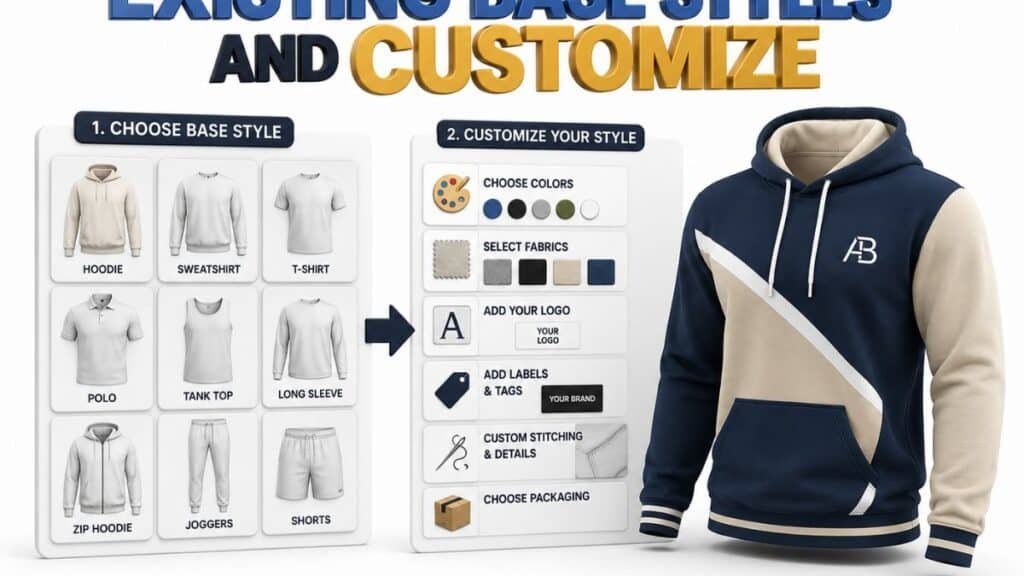
Most manufacturers maintain a library of proven base styles — patterns and constructions that have already been tested for fit and production reliability. Starting from a base style and customizing it is significantly faster and lower-risk than designing a garment entirely from scratch.
Browse existing product categories — including hoodies, polos, joggers, denim, activewear, and modest wear — to identify base styles close to your vision, then work with the manufacturer to customize fit, fabric, colorway, and details from there.
Customizable elements on a base style typically include:
- Fabric weight and composition
- Color and colorways
- Fit adjustments (slimmer, looser, cropped, oversized)
- Trim details (drawstrings, ribbing, zippers vs. pullover)
- Branding placement and customization
Step 3: Let the Manufacturer Build Your Tech Pack
A tech pack — the technical document specifying measurements, construction, and materials — is usually the biggest intimidation point for non-designers. In an ODM relationship, this is largely built by the manufacturer’s team based on your reference input and sample feedback, not something you’re expected to produce yourself from scratch.
Your role becomes reviewing and confirming details (fit, sizing, construction notes) rather than originating the technical specifications — a much more accessible starting point for someone without a design background.
Step 4: Focus Your Creative Input Where It Matters Most
Without design training, trying to weigh in on every technical decision can be overwhelming and unnecessary. Focus your input on the decisions that actually shape your brand identity:
- Overall silhouette and fit — oversized vs. fitted, cropped vs. standard length
- Color palette — this is often the single most brand-defining decision
- Fabric feel and weight — lightweight and breathable vs. heavyweight and structured
- Branding and customization — logo placement, embroidery vs. print, label style
Leave the more technical construction decisions — seam types, exact grading increments, stitch specifications — to the manufacturer’s technical team, who handle this daily and understand what will hold up in production.
Step 5: Use Sampling as Your Real Design Tool
Sampling is where a non-designer’s brand actually takes shape. Rather than trying to perfect every detail on paper, use the sample rounds themselves as your primary design refinement process:
- Proto sample — first physical version; assess overall silhouette and construction
- Fit sample — adjusted based on your feedback; focus on fit, length, and proportions
- Pre-production (PP) sample — final check before bulk cutting; confirm every detail matches your approved direction
Physically seeing and trying on a sample is often far more informative for a non-designer than reviewing a flat sketch or tech pack — trust this stage of the process and don’t rush through it.
Step 6: Add Customization to Make It Yours
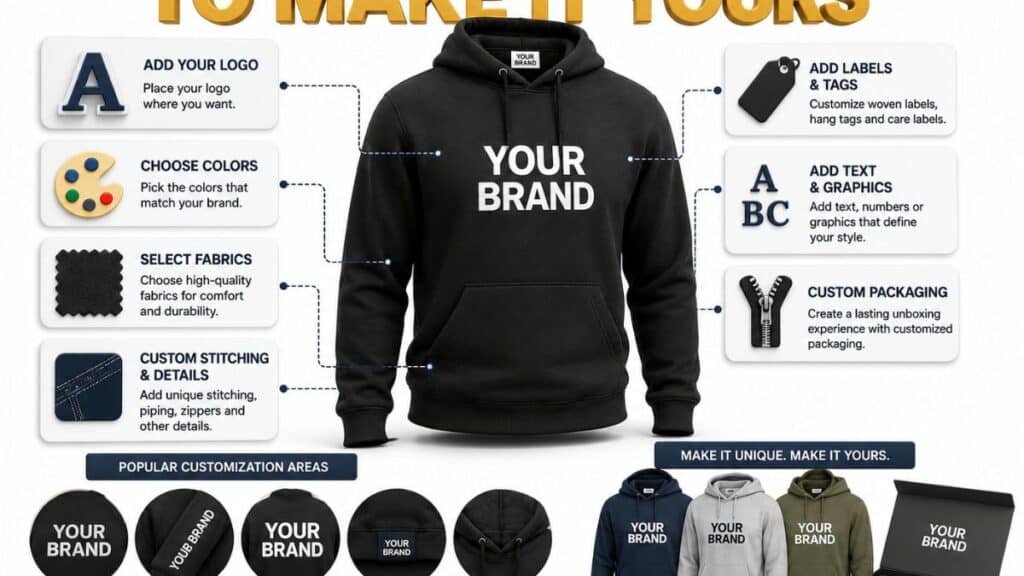
Once your base garment and fit are locked in, customization is what transforms a well-made blank garment into a genuine brand product:
- Printing — screen printing, DTG, or sublimation depending on your design complexity; see the best printing methods for custom clothing to understand which fits your design style
- Embroidery — a premium finish for logos on hoodies, polos, and caps, detailed in this custom embroidery design guide
- Labels and hang tags — private woven labels and custom hang tags are what make a garment feel distinctly yours rather than a generic base product
Explore the full range of customization options available at the sampling stage to understand what’s realistic for your first order.
What You Actually Need to Provide (Even Without Design Skills)
- A clear brand direction — who you’re designing for and what feeling the brand should convey
- Reference images — even 5–10 solid examples give a design team enough to work from
- Honest feedback on samples — specific (“the sleeve feels too long”) rather than vague (“something feels off”)
- Basic size range decisions — which sizes you plan to offer
- A realistic budget and MOQ understanding — so the manufacturer can guide design choices within your production reality
None of this requires design training — it requires clarity and communication, which is a very learnable skill regardless of creative background.
Common Concerns Non-Designers Have (and Why They’re Manageable)
“What if I can’t communicate exactly what I want?” Reference images solve most of this — a manufacturer’s design team is used to interpreting visual references far more than written descriptions alone.
“What if the sample doesn’t match my vision?” This is exactly what the multi-round sampling process is for. It’s normal and expected to need 2–3 rounds of adjustment before a design is fully dialed in.
“Will my brand look generic if I’m not designing from scratch?” Customization — fabric choice, colorway, fit adjustments, branding, and trims — is what differentiates a brand far more than whether the base pattern was drafted from zero. Many well-known brands build on proven base styles with strong customization rather than reinventing construction from scratch.
“How do I know if a design direction is even manufacturable?” This is precisely the value of working with an experienced manufacturer’s design and technical team — they’ll flag manufacturability issues (unrealistic construction, incompatible fabric choices) before you invest in a sample, not after.
ODM Manufacturing Cost Considerations
ODM development support is typically included as part of the standard sampling and production process with an experienced manufacturer, rather than billed as a separate “design fee” — though highly complex custom design work may involve additional development time. When budgeting:
- Factor in 2–3 sample rounds as a normal part of the process, not a sign something went wrong
- Understand that customization complexity (multiple colorways, intricate embroidery) affects both cost and development time, same as it would in a fully custom OEM process
- Confirm with your manufacturer what’s included in your quote versus billed separately, particularly around sample costs
When You Might Eventually Need a Designer
ODM manufacturing can take a brand a long way, but there are points where bringing in dedicated design support (freelance or in-house) becomes valuable:
- When you want to move beyond customizing base styles toward fully original silhouettes
- When your product range grows complex enough that coordinating design direction across many styles becomes time-consuming
- When you want a distinct technical design language (proprietary construction details) as a competitive differentiator
Many brands operate successfully on an ODM model far longer than founders initially expect — there’s no fixed timeline requiring you to “graduate” to an in-house designer.
Case Example: A Non-Designer’s Path From Idea to Launch
A hypothetical (but realistic) example: a founder with a strong social media following and clear aesthetic sense, but no design background, wants to launch a streetwear hoodie brand.
- Reference gathering — pulls 8 reference images of hoodie styles and fits they like, plus 3 color references
- Base style selection — manufacturer proposes 2 existing base hoodie patterns matching the desired silhouette
- Sample round 1 — proto sample produced; founder notes the fit is too boxy
- Sample round 2 — fit adjusted; founder approves silhouette, requests a fabric weight change
- PP sample — final version approved, embroidered logo placement confirmed
- Bulk production — 100-unit first order produced to the approved PP sample
At no point did this founder need to draft a pattern, build a tech pack from scratch, or have any formal design training — the manufacturer’s ODM process carried the technical development throughout.
Frequently Asked Questions
Can I start a clothing brand with zero design skills? Yes — using an ODM (Original Design Manufacturing) model, a manufacturer’s design and technical team develops the garment based on your reference images, feedback, and direction, removing the need for you to have formal design or pattern-making skills.
What’s the difference between ODM and private label? Private label typically means customizing an existing, largely unchanged base garment with your branding, while ODM involves more active design collaboration — adjusting fit, fabric, construction details, and style based on your input, resulting in a more distinct, brand-specific product.
How do I explain my design ideas without technical knowledge? Reference images are the most effective tool — photos of existing garments, fits, or styles you like communicate design direction far more clearly and reliably than written descriptions alone, especially for someone without design vocabulary.
Is it more expensive to use ODM manufacturing instead of designing myself? Not necessarily. ODM development support is typically built into the standard manufacturing and sampling process rather than charged as a separate large design fee, though highly complex or heavily customized designs may involve additional development time and cost.
How many sample rounds does it usually take to get the design right? Most designs go through 2–3 sample rounds (proto, fit, and pre-production sample) before final approval — this is a completely normal part of the process, regardless of the founder’s design background.
Final Thoughts
A lack of formal design experience isn’t a real barrier to starting a clothing brand — it’s a solvable gap, and ODM manufacturing exists specifically to solve it. What matters most is clear brand direction, honest sample feedback, and a manufacturing partner experienced enough to translate your vision into a well-constructed, producible garment.
Fashion Soul International has supported non-designer founders across its 2,500+ client base with exactly this kind of guided ODM development, backed by 10+ years of manufacturing experience, ISO 9001 and ISO 14001 certification, and a 250+ person skilled workforce in Sialkot, Pakistan — capable of taking a reference image and a clear vision through sampling to a finished, market-ready garment.
If you have a brand idea but no design background, get in touch with the Fashion Soul International team to start with a reference-based design conversation, or browse the full clothing catalogue to find base styles close to your vision before your first sample request.