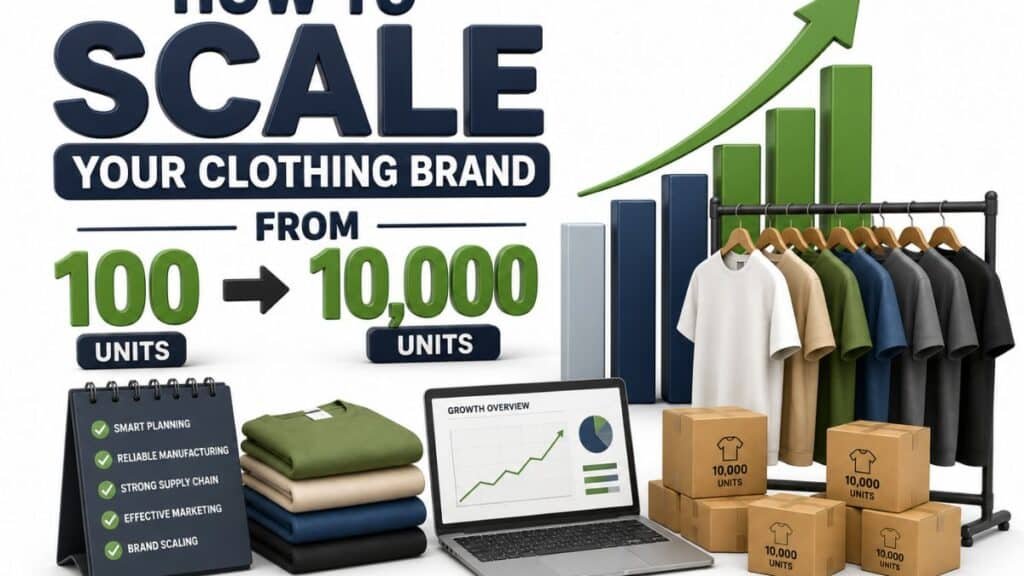
Launching with a 100-unit test batch is the easy part. Scaling from there to 1,000, 5,000, or 10,000 units is where most brands run into problems nobody warned them about — fabric sourcing bottlenecks, quality control breaking down under bigger runs, cash flow gaps, and manufacturers that simply weren’t built to handle the volume increase.
This guide is about the operational side of scaling: what actually changes in your manufacturing relationship, your production planning, and your supply chain as your order sizes grow from a test batch to a serious production run.
Fashion Soul International is a Sialkot, Pakistan-based manufacturer with 10+ years of experience taking brands through exactly this growth curve — supporting 2,500+ brands from their first 100-unit order through production runs into the tens of thousands, with a facility capacity of 100,000+ garments per month.
Table of Contents
- Why Scaling Breaks More Brands Than Launching Does
- The Real Differences Between Small-Batch and Large-Scale Production
- Step 1: Validate Before You Scale
- Step 2: Choose (or Confirm) a Manufacturer That Can Actually Handle Scale
- Step 3: Rethink Your Fabric Sourcing Strategy
- Step 4: Scale Your Quality Control Process
- Step 5: Plan Your Cash Flow for Bigger Orders
- Step 6: Adjust Your Production Timeline Expectations
- Step 7: Rebuild Your Logistics and Shipping Strategy
- Step 8: Strengthen Your Tech Pack and Documentation
- Growth Stage Benchmarks: 100 → 1,000 → 5,000 → 10,000 Units
- Common Reasons Brands Fail to Scale Successfully
- Signs You’re Ready to Scale (and Signs You’re Not)
- How to Negotiate Better Terms as You Scale
- Frequently Asked Questions
- Final Thoughts
Why Scaling Breaks More Brands Than Launching Does
A 100-unit order forgives a lot of small mistakes — minor fit inconsistencies, a slightly delayed shipment, or an underprepared tech pack rarely sink a brand at that volume. At 5,000 or 10,000 units, those same small gaps become expensive, visible problems: a sizing issue affects hundreds of customers instead of a dozen, a fabric shortage delays an entire season instead of one drop, and a cash flow miscalculation can genuinely threaten the business.
Scaling successfully isn’t just “ordering more of the same thing” — it requires rebuilding several parts of your production and financial process to handle volume your original systems weren’t designed for.
The Real Differences Between Small-Batch and Large-Scale Production
| Factor | Small Batch (100–300 units) | Large Scale (5,000–10,000+ units) |
|---|---|---|
| Fabric sourcing | Often from in-stock rolls | May require dedicated fabric orders/dye lots |
| Quality control | Manageable with standard spot checks | Requires structured AQL sampling protocols |
| Lead time | Shorter, more flexible | Longer, requires advance planning |
| Cash flow | Lower capital commitment | Significant upfront capital required |
| Manufacturer fit | Most manufacturers can handle it | Requires a factory with real production capacity |
| Margin for error | Higher (mistakes are cheaper) | Lower (mistakes are expensive at volume) |
Understanding these shifts before you scale — rather than discovering them mid-order — is what separates a smooth growth phase from a costly one.
Step 1: Validate Before You Scale
Before committing to a 10x or 50x volume increase, confirm your data actually supports it:
- Consistent sell-through across at least 2–3 production cycles, not just one lucky drop
- Stable size and color distribution — scaling a style whose demand pattern is still unpredictable risks overproducing the wrong sizes
- Positive fit and quality feedback, since scaling a design with unresolved fit issues just multiplies the problem
- Repeat purchase behavior, which signals demand beyond a single hype-driven launch
Reviewing your data this closely before scaling connects directly to the small-batch validation approach — if you’re still in the early testing phase, it’s worth reviewing how staged, low-MOQ production builds this evidence before a larger commitment.
Step 2: Choose (or Confirm) a Manufacturer That Can Actually Handle Scale
This is the single biggest point of failure in the 100-to-10,000 journey. Many manufacturers that comfortably handle a 100-unit order simply don’t have the machinery, workforce, or fabric sourcing relationships to reliably deliver 5,000+ units on schedule.
What to confirm before scaling with your current manufacturer (or choosing a new one):
- Verified production capacity — a factory producing 100,000+ garments per month with 250+ skilled workers has meaningfully more headroom than a smaller operation already near its own capacity limits
- Certifications that support consistency at scale — ISO 9001 (quality management) specifically addresses process standardization across larger production runs, not just small batches
- In-house customization capability — printing, embroidery, and labeling handled internally reduces the coordination risk of managing multiple vendors at higher volume
- Export credentials — REX certification and proper business registration (such as SECP verification) become more important at scale, where customs and compliance issues have a bigger financial impact if mishandled
Reviewing a factory’s manufacturing process in detail — not just its marketing claims — is the clearest way to confirm it’s genuinely built for larger production runs, not just advertised as capable of them.
Step 3: Rethink Your Fabric Sourcing Strategy
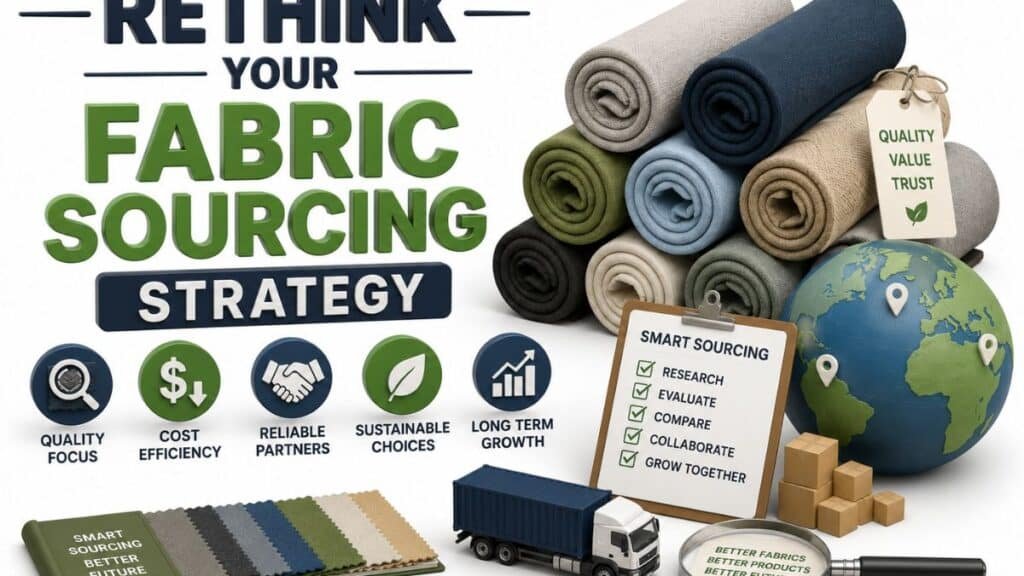
At small volumes, in-stock fabric usually covers your needs. At scale, fabric sourcing becomes a more active part of your planning:
- Dye lot consistency — larger orders may require dedicated dye lots to avoid slight color variation across batches, which is far more noticeable at 5,000+ units than at 100
- Fabric lead time — custom or specialty fabric orders at scale often need to be placed weeks ahead of cutting, requiring earlier production planning
- Fabric cost negotiation — larger fabric purchase volumes typically unlock better per-yard pricing, which should be reflected in your scaled per-unit cost
- Backup sourcing options — at scale, a single fabric mill delay can hold up an entire production run, making secondary sourcing relationships more valuable
Understanding your manufacturer’s fabric selection process — including what’s stocked in-house versus externally sourced — helps you plan realistic timelines as your fabric needs grow with your order size.
Step 4: Scale Your Quality Control Process
Spot-checking a handful of units out of 100 is very different from ensuring consistency across 10,000. At scale, quality control needs to become more structured:
- AQL (Acceptable Quality Level) sampling — a statistically-based inspection method that determines how many units to inspect based on total order size, rather than a fixed small sample
- In-line inspection during production, not just a final check, to catch issues early before they compound across the full run
- Documented inspection reports tied to each production batch, giving you a clear record if issues need to be traced back to a specific stage
- Pre-shipment inspection covering measurements, print/embroidery placement accuracy, and packaging consistency across the full order
A manufacturer with a documented quality inspection process — backed by ISO 9001 certification, which specifically requires auditable quality systems — is significantly better positioned to maintain consistency as your order size grows.
Step 5: Plan Your Cash Flow for Bigger Orders
Scaling requires meaningfully more upfront capital, and payment structures at this volume typically follow standard industry terms (commonly a 30/70 or similar deposit-to-balance split). Plan for:
- Larger deposit amounts — even at the same percentage split, a deposit on a 5,000-unit order is a much bigger absolute number than on a 100-unit order
- Extended cash flow runway — production lead time plus shipping time means capital is tied up longer before revenue comes back in
- Freight cost planning at volume — sea freight becomes significantly more cost-efficient per unit at scale, but requires longer lead-time planning than air freight
- Reserve buffer for reorders or corrections — unexpected demand spikes or minor production adjustments are more expensive to absorb without a cash buffer at higher volumes
Understanding standard payment structures in advance — including what each deposit stage covers — helps you plan financing or working capital needs before your scaled order is due, rather than scrambling mid-negotiation.
Step 6: Adjust Your Production Timeline Expectations
Lead times generally extend as order volume increases, though not always proportionally. A rough scaling guide:
| Order Volume | Typical Production Lead Time |
|---|---|
| 100–300 units | 3–5 weeks |
| 500–1,000 units | 4–6 weeks |
| 2,000–5,000 units | 6–10 weeks |
| 10,000+ units | 8–14 weeks (may require phased delivery) |
At higher volumes, many manufacturers offer phased or staggered delivery — shipping completed portions of a large order as they’re finished, rather than waiting for the entire 10,000-unit run to complete before any shipment leaves. This can meaningfully improve your cash flow and inventory timing compared to a single large shipment date.
Step 7: Rebuild Your Logistics and Shipping Strategy
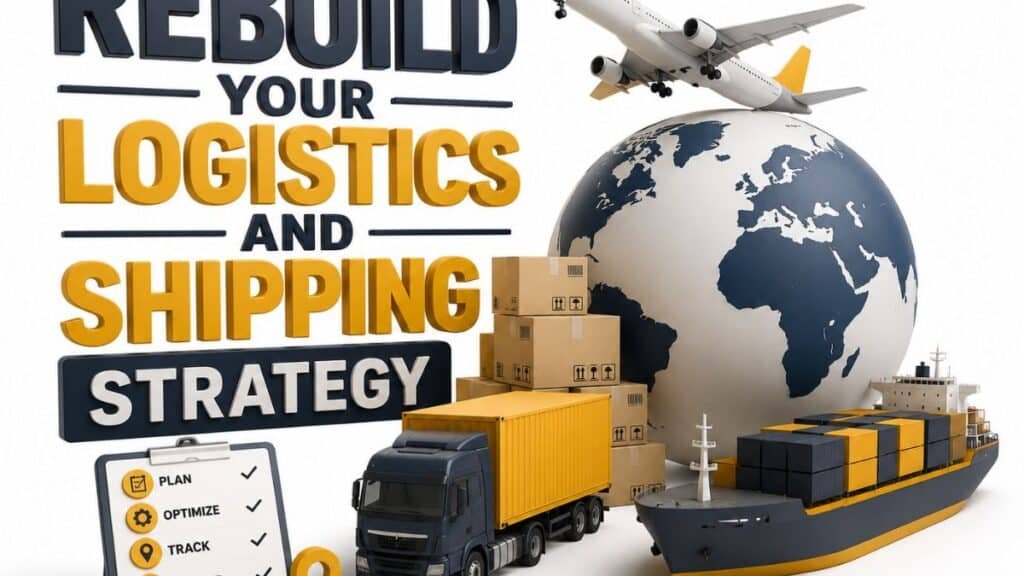
Shipping strategy that worked for a 100-unit parcel doesn’t scale directly to a container-level order:
- Air freight becomes cost-prohibitive at large volumes and is typically reserved for smaller orders or urgent restocks
- Sea freight (LCL or FCL) becomes the standard method at scale — Less-than-Container Load for mid-size orders, Full-Container Load once volume justifies it
- Customs and duties planning matters more at scale, since errors in HS code classification or documentation affect a much larger shipment value
- Warehousing and fulfillment planning — receiving, storing, and distributing 10,000 units requires different logistics than a garage-based fulfillment setup that worked at 100 units
Working with a REX-certified exporter can help streamline origin documentation for shipments into markets with preferential trade agreements, which becomes more financially significant as your shipment value grows with scale.
Step 8: Strengthen Your Tech Pack and Documentation
At small volumes, minor tech pack gaps can often be resolved with a quick message to the factory. At scale, incomplete documentation causes bigger, more expensive delays:
- Fully graded size charts for every size in your range, not just sample sizes
- Detailed construction and stitch specifications, reducing ambiguity across a larger cutting and sewing run
- Comprehensive fabric and trim specs, including approved alternates in case of sourcing delays
- Clear customization placement guides for printing, embroidery, and labeling, ensuring consistency across thousands of units rather than relying on case-by-case clarification
Investing time in tightening your documentation before scaling is one of the highest-leverage steps in this entire process — it directly reduces the risk of costly errors across a large production run.
Growth Stage Benchmarks: 100 → 1,000 → 5,000 → 10,000 Units
| Stage | Focus |
|---|---|
| 100 units | Validate design, fit, and market demand |
| 500–1,000 units | Confirm manufacturer can scale, tighten QC and documentation |
| 2,000–5,000 units | Formalize fabric sourcing, cash flow planning, and logistics strategy |
| 10,000+ units | Phased delivery planning, dedicated dye lots, potential dedicated production line |
Each stage isn’t just “more of the same” — it requires a proportional increase in planning, documentation, and financial structure to match the increased risk and complexity.
Common Reasons Brands Fail to Scale Successfully
- Scaling before validating demand, based on early hype rather than consistent sell-through data
- Staying with a manufacturer that can’t actually handle the new volume, leading to missed deadlines or inconsistent quality
- Underestimating cash flow requirements, especially the gap between deposit payment and revenue from sold inventory
- Not tightening tech pack documentation, causing costly errors that compound across a larger run
- Ignoring fabric sourcing lead times, resulting in production delays that weren’t accounted for in the launch timeline
- Applying small-batch quality control methods to large orders, missing consistency issues that only appear at volume
Signs You’re Ready to Scale (and Signs You’re Not)
Clue you’re ready:
- Multiple consecutive sell-through cycles with consistent demand
- Stable, well-understood size and color distribution
- A manufacturer relationship with a track record of on-time, quality-consistent delivery
- Sufficient cash flow or financing to cover a larger deposit and extended production timeline
Signs you’re not ready yet:
- Only one successful drop, without repeat validation
- Ongoing unresolved fit or quality issues in your current small-batch runs
- Uncertainty about your manufacturer’s true production capacity
- Cash flow that would be significantly strained by a bigger deposit and longer lead time
How to Negotiate Better Terms as You Scale
As your order volume grows, you gain real negotiating leverage that wasn’t available at 100 units:
- Better per-unit pricing, since fixed setup costs spread across a much larger run
- More favorable payment terms, as an established order history builds trust with your manufacturer
- Priority production scheduling, particularly valuable during peak seasons
- Dedicated fabric sourcing or reserved dye lots, reducing variability across future orders
Manufacturers with strong production capacity are generally more willing to extend these terms to brands with a proven, growing order history — another reason maintaining a consistent, well-documented relationship with your manufacturer through the early stages pays off directly at scale.
Frequently Asked Questions
At what order size should I start planning for scale? Most brands should begin formal scale-planning — fabric sourcing strategy, cash flow structuring, quality control upgrades — once they’re consistently reordering above roughly 1,000 units per style, even if their eventual target is much higher.
Do I need a different manufacturer to scale from 100 to 10,000 units? Not necessarily, if your current manufacturer has genuine large-scale production capacity (such as 100,000+ garments per month). Staying with the same manufacturer across your growth curve avoids re-sampling and re-approving fit with a new factory, preserving product consistency.
How much more capital do I need to scale a clothing order? Capital requirements scale roughly with unit volume, though per-unit cost typically decreases at higher volumes. A useful planning approach is to calculate your full landed cost per unit at your target volume, then multiply by your planned order size, including deposit and balance payment timing.
What’s the biggest operational challenge in scaling apparel production? Quality consistency at volume is typically the biggest challenge, followed closely by cash flow timing between deposit payment and revenue from sold inventory. Both are manageable with proper planning but frequently underestimated by growing brands.
How long does it take to scale from a 100-unit order to a 10,000-unit order? This varies significantly by brand, but a realistic, sustainable growth path — validating demand, tightening documentation, and building manufacturer trust — typically spans multiple production cycles over 6–18 months, rather than a single large jump.
Final Thoughts
Scaling from 100 to 10,000 units isn’t just a bigger version of your first order — it requires rebuilding your fabric sourcing, quality control, cash flow planning, and logistics strategy to match the increased complexity and risk of larger production runs. Brands that scale successfully treat this as a deliberate, staged process, not a single leap.
Fashion Soul International supports brands through this entire growth curve, from a first 100-unit test order through production runs into the tens of thousands, backed by ISO 9001 and ISO 14001 certification, REX export certification, SECP verification, and a 100,000-garment monthly production capacity across a 250+ person skilled workforce in Sialkot, Pakistan — serving 2,500+ brands across the USA, UK, Australia, Canada, and Europe.
If you’re preparing to scale your production and want a clear, realistic plan for your next order size, get in touch with the Fashion Soul International team or browse the full clothing catalogue to review production categories before requesting a volume-specific quote.