What is Linen Fabric? There was a time when not everyone had linens at the table. Over the past several thousand years, no other natural fabric has been able to match its durability, breathability and versatility. To most people, luxury and linen are synonymous but also its arguably more known for being a practical sort of material to work from. So, what is linen exactly and how do we make it? And why oh why has this fabric stood the test of time?!
In this blog post we will reveal the secrets behind linen fabric — its amazing properties, typical applications and a magical journey flax undergoes from being planted to turning into the durable material used by our ancestors. For both linen lovers and those who are just curious, this compilation walks you through every poignant detail of linen.
Table of Contents
What Is Linen Fabric?
Linen fabric is made from flax plant which makes it one of the most natural fabrics there have. Among them is the flax plant Linum usitatissimum, which prefers cool moist climates that are found in many parts of Europe and North America. Linen is a natural material with its strength and texture coming from the fibers extracted from flax stalks.
Linen belongs to the family of fibers called bast fibers, and it is derived from flax plants via a process that involves extensive harvesting. The crispy cloth made by processing flax into fabric or linen has properties appreciated for their purity, environmental compatibility and longevity. Linen has captivated us for centuries, and we see no sign of stopping anytime soon– even better with the rise in eco friendly textiles!
Characteristics Of Linen Fabric
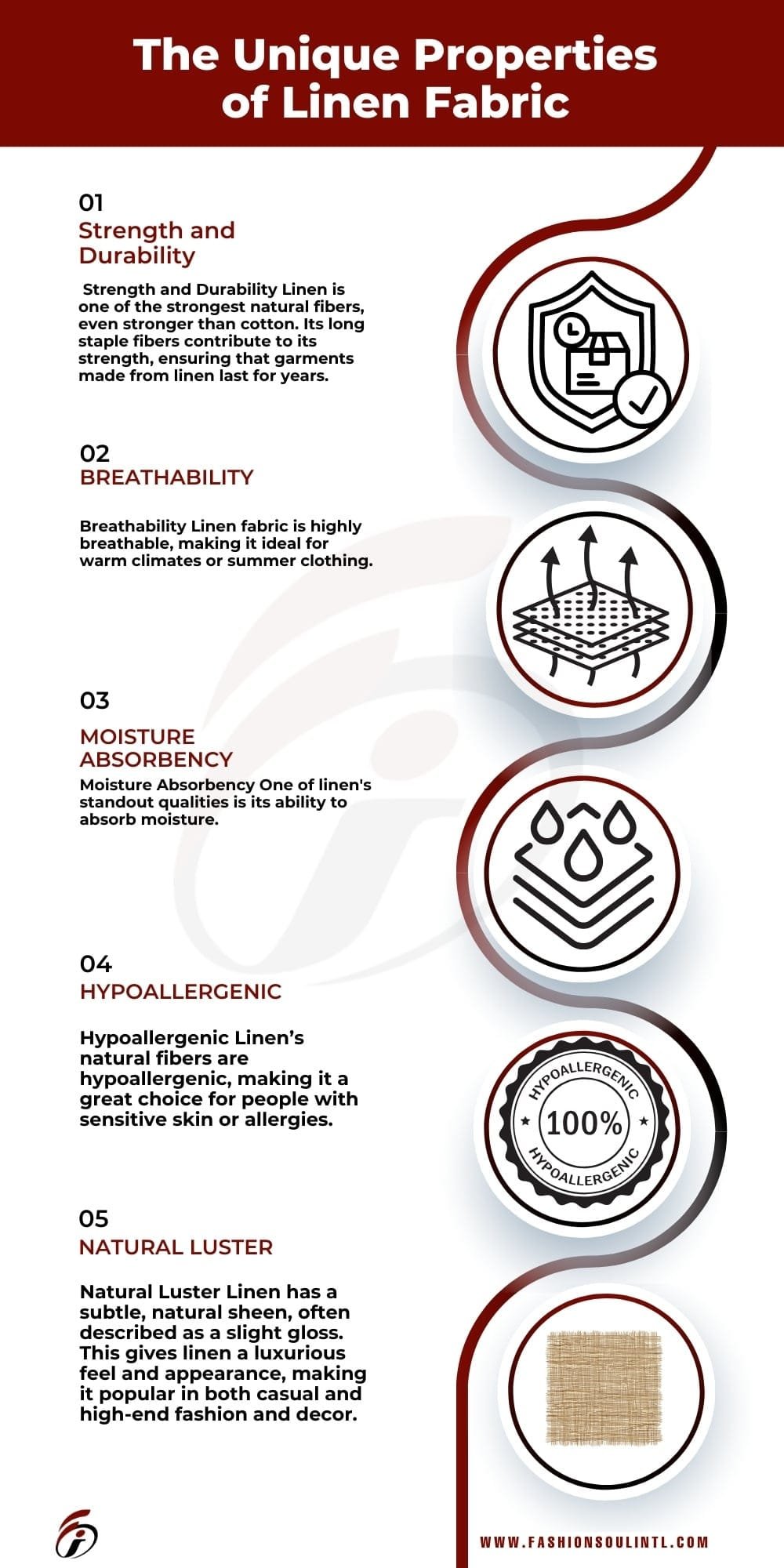
Wonderful natural properties that make it a best seller for many applications is the uniqueness of linen. Here we look at the main features that define linen as a unique fabric.
Durability and Strength
In fact, linen is much stronger than cotton. This tensile strength also significantly aids it in its wear resistance, which guarantees longer use. Linen has good shape stability and does not wrinkle too easily after washing.
Breathability
One of the highlights about linen is that it can absorb and release perspiration quickly, enabling air to circulate around your body. As the name suggests, this fabric is perfect for absorbing sweat or moisture so that you do not feel drenched in them, making it a great choice especially when worn during hot climates like summer.
Hypoallergenic Qualities
Since linen comes from all-natural fibers, and has a natural resistance to fungus, bacteria or any other allergens making it hypoallergenic material that prevents many allergic skin rashes people with sensitive skins generally face. This is an all-natural product which means that it will resist most bacteria and fungi better than any synthetic fiber can ensuring a healthier environment for the wearer.
Eco-Friendliness
The natural fiber plant is flax, and as a result linen fabric is also 100% biodegradable. Linen is made from flax, which grows faster and yields a higher amount of usable fibre per acre than most comparable plants (no competition needed), not to mention the water it uses for growth or pesticides with its cultivation.
Comfort with Age
Linen, unlike other materials that deteriorate over time actually softens each wash. The fibres become more supple, which is meant to improve the feel and comfort of your garment.
Wrinkle Resistance
If you like the look of slightly rumpled fabrics (as we all should), an increase in wrinkles shouldn’t necessarily be a non-starter—anecdotally, many find flat irons essential only because other people expect not to see any creasing. This somewhat rumpled look creates an appearance for linen that seems more authentic, and lived-in than sleek silk or any synthetic fabrics; therefore the best addition to a minimal aesthetic.
Common Uses of Linen Fabric
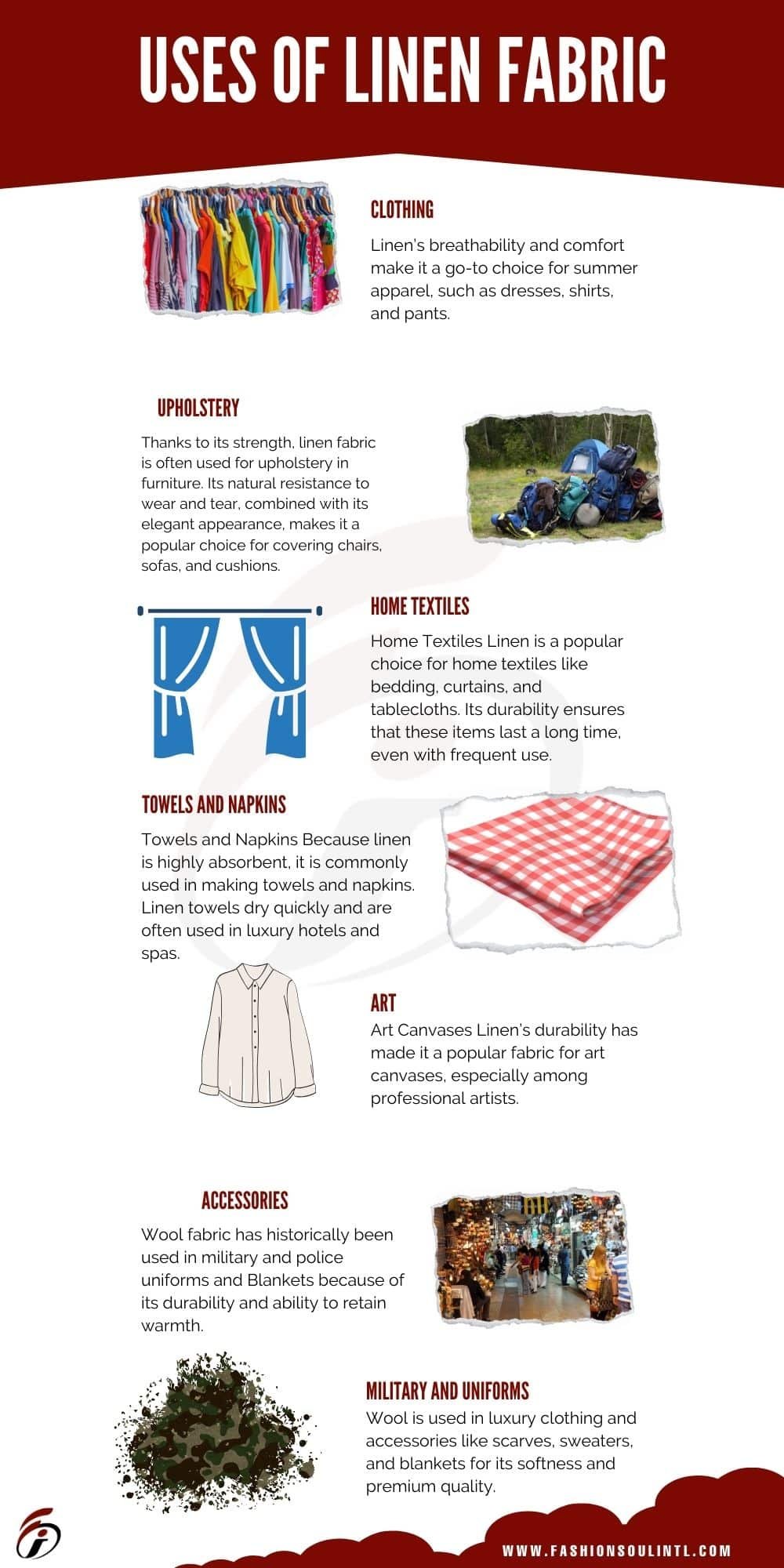
5 — Linen is another fabric that can be found in a plethora of different products. Linen is useful in so many applied areas, ranging from fashion to the home décor. Read more bamboo Fabric.
Apparel
Linen Fabric wear is most popular in tropical climates due to its excellent breathability and being a natural heat regulator. Linen is commonly found in summer dresses, pants, blouses and shirts. The light, breathable nature of linen and the relaxed drape means it is a popular choice for summer fashion.
Home Textiles
At home, linen is revered for its visual beauty and durability. Linen bed sheets and curtains, tablecloths or towels has successed due to natural texture that makes them long living: linen is 2-3 times more durable than cotton. Linen bedding, in particular is known for how wonderfully cool and breathable it feels (even when the mercury rises).
Upholstery and Furnishing
Because of its durability, linen is also a top choice for upholstery and furnishing fabrics. Its touch of natural texture makes it add just another level of elegance to sofas, chairs and other furniture pieces. Linen is a popular choice for throw pillows and even some decor elements like bedding because it has this rustic look but quite an elegant touch on the side.
Industrial Applications
Though not as widely known, linen is also used in industry. Its robust fibers are good for creating artist canvases, as well as bookbinding and paper products that need some tough love. The fact that linen can take a beating and its natural materials make it perfect for many reasons to use in commercial products.
How Linen Is Made: From Flax to Fabric
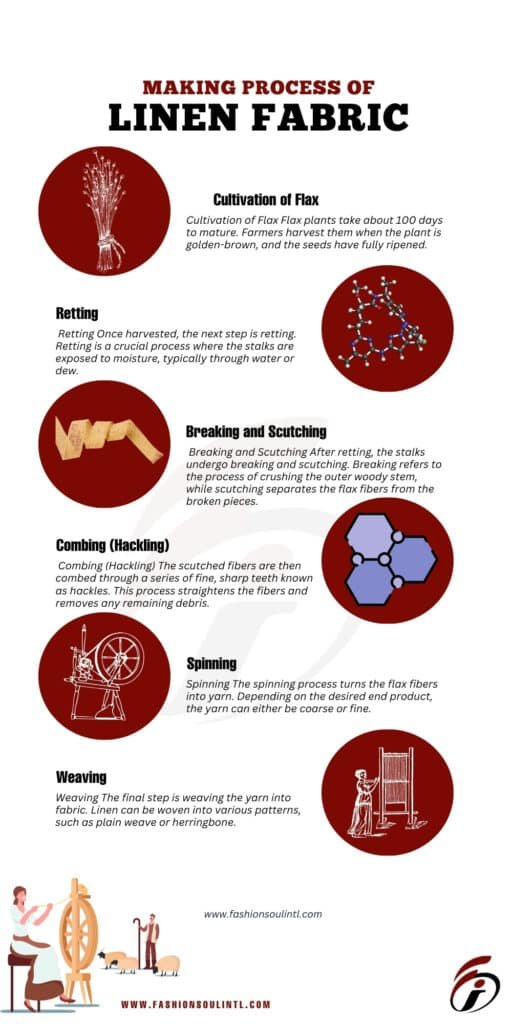
Converting flax into linen is a long and laborious process. This is a step by step guide showing the most important stages of linen production:
Guide to Growing Flax and Harvesting
Flax plants are pretty hardy and like well-drained soil in cooler climates. The flax plants are harvested when the mature either by hand or machine. They must pull the flax from the ground instead of cutting it down when its time to harvest, because this keeps long fibers.
Retting the Flax
The flax stalks are then harvested and retted, a process that detaches the fiber from its woody stem. This is achieved using means such as dew retting, which involves letting the plants rot out in a field or gathering water and ponding it with enzymes.
Breaking and Scutching
The fibers have to be separated first, and after they break down. The flax stalks are fed through rollers that crush the woody portion to reveal very fine, long fibers. Scutching removes the last bits of woody stem from fibers.
Hackling
Hackling — the turning if lin to a bundle of straight parallel fibers by passing it through metal pins. The fibers that are produced become finer and smoother, which make them more ready to be spun into thread.
Spinning into Yarn
These flax fibers are spun out to be converted into yarn. It can be done by hand, or on a machine. Flax is harder to spin than cotton because the fibers are stiff… this makes a strong, sleek yarn which ultimately creates linen fabric.
Weaving the Fabric
Lastly, the spun flax yarn is woven to make linen fabric. The most typical choice is that traditional looms are woven, and the weave may vary depending on how the fabric will be used. The linen is then ready to be dyed,bleached or used in its natural color for an aged look.
The Benefits of Choosing Linen Fabric
Due to the many advantages that come with linen, it is also a suitable option both for individual and environmental causes as well.
Sustainability
One of the best things about linen is sustainable features. It grows faster and with fewer resources than cotton or synthetic fibers so there is less strain on the environment. The best part is that linen can be recycled whereas synthetic fabrics take hundreds of years to biodegrade.
Longevity
Linen is long-lasting and will not require as frequent of a change out. It is more cost effective solution in the long term, albeit at a higher initial price.
Timeless Appeal
From the classic style to a rich history, linen is timeless. Whether it is for a clothes fabric or home textile products, linen natural texture and light colors can make your house stylish.
Health Advantages
The last but not the least, linen and breathable so that it is good for both skin health issue and comfort. Linen is a great fabric for people that have allergy, as well and those prone to sensitive skin.
Maintaining and Caring for Linen Fabric
To extend the life of linen fabrics, proper care is essential. While linen is a durable material, it does require specific attention to preserve its quality and appearance.
Washing Tips
Use milled detergent, and stay away from hot water when washing linen. Opt for gentle detergents as harsh chemicals and bleaches will weaken the fibers. Linen will also become softer as it ages, making the overall experience on your bed much more cozy.
Drying Linen
Dry: Air-dry or tumble dry on low. But be warned–hang dry those babies quickly to avoid excess wrinkling. If the fabric is tumble dried, let it dry until almost completely dry then press with an iron to remove wrinkles.
Ironing
It does wrinkle, but can easily be ironed when damp to keep the look crisp. Most of us love the natural, easy crinkle linen takes on from fabric being flexible and malleable, but pressing will get you that structured look.
Linen Is Timeless
The tale of linen is enough to entangle an anthropologist for eons, but the material still beguiles us. Among the various cultures and ages, linen has been used as a fabric of choice: from ancient Egyptian tombs to modern-day runways. The most relevant stone today are the stones that have been used as a building material in antiquity by being both beautiful, strong and durable. More than just an investment into quality, opting for linen is taking strides towards a more eco-friendly way of living.
Conclusion
A piece of linen fabric is more than just a textile; it offers us the key to our past, an environmentally conscious future and guarantee for comfort materialised in time. Choose linen whenever you want a summer outfit or home textile that will stand the test of time, as well as an eco-friendly fabric. For thousands of years, the metal has been a timeless staple thanks to its unique properties and structural benefits; this article will take you through why those attributes mean aluminium is here for good.
FAQs
Why should you choose linen as opposed to cotton based fabric?
Linen is more durable, airier and has a sweat-wicking quality better than cotton. It also boasts a more coarse texture that will soften with wear time.
Is linen a year-round fabric?
Linen, yes it is very breathable so you will love wearing linen this summer but did we mention that Linen layering works amazingly well in winter as its warm akin to cotton?
Can linen be dyed easily?
While linen is dyeable, it takes dyes differently than other textiles. It tends to make a muted, natural color — which adds to its rustic charm.
Linen is more durable, airier and has a sweat-wicking quality better than cotton. It also boasts a more coarse texture that will soften with wear time.
Linen, yes it is very breathable so you will love wearing linen this summer but did we mention that Linen layering works amazingly well in winter as its warm akin to cotton?
While linen is dyeable, it takes dyes differently than other textiles. It tends to make a muted, natural color — which adds to its rustic charm.