Sourcing a custom tracksuit manufacturer is one of the highest-stakes decisions a clothing brand makes. A tracksuit isn’t a single garment — it’s a matched jacket-and-pant (or jogger) set that has to coordinate perfectly in fabric weight, dye lot, fit, and finishing across two separate pattern pieces. Get the sourcing wrong and you end up with mismatched colors, shrinking fleece, or a factory that can’t hold your MOQ commitment past the first order.
In short: custom tracksuit manufacturing is the end-to-end process of turning a brand’s design concept — fabric, fit, colorway, and branding — into a finished, private-labeled tracksuit or jogger set ready for retail, produced to a agreed minimum order quantity (MOQ) and delivered internationally.
This guide explains what to consider before choosing a tracksuit manufacturer. It covers custom, private label, and wholesale production, jogger set manufacturing, realistic MOQs, fabric and construction options, and the key certifications for overseas sourcing.
Fashion Soul International has over 10 years of manufacturing experience. We have produced activewear and streetwear for 2,500+ brands worldwide. This guide is based on our real production expertise, not generic industry theory.
What Is Custom Tracksuit Manufacturing?
Custom tracksuit manufacturing means a factory builds a tracksuit — typically a zip-up or pullover jacket paired with matching joggers or straight-leg pants — entirely to a brand’s specifications rather than selling a pre-made, generic design. That includes:
- Fabric selection — polyester tricot, interlock, cotton fleece, French terry, nylon, or blended performance fabrics, chosen by GSM (grams per square meter) weight and stretch requirement
- Pattern and fit customization — slim, regular, relaxed, or oversized/baggy cuts for both the jacket and the pant
- Branding — embroidered or printed logos, custom woven neck labels, hang tags, and printed or poly-bag packaging
- Trims — zipper type (YKK or equivalent), ribbed cuffs and waistbands, drawstrings, pocket styles
- Decoration — screen printing, sublimation, embroidery, or puff print for logos and graphics
This differs from buying blank stock tracksuits and simply adding a label — that’s closer to private labeling — and it differs from ordering a factory’s existing catalog design in bulk, which is wholesale manufacturing. Most brands actually need a blend of all three depending on budget and timeline, which is why the three terms get used almost interchangeably in supplier searches. The next section breaks down exactly where each one starts and ends.
Private Label vs. Custom Manufacturing vs. Wholesale Tracksuit Manufacturer: What’s the Real Difference?
These three terms get thrown around loosely across the industry, and understanding the distinction changes how you brief a factory, what you’ll pay, and how fast you can launch.
| Model | What It Means | Best For | Typical Lead Time |
|---|---|---|---|
| Private label tracksuit | Factory’s existing base pattern and fabric, your logo/label/packaging applied | Fast launch, lower budget, testing a new line | 2–4 weeks |
| Custom tracksuit manufacturer | Fully bespoke pattern, fabric, fit, and trims built from your spec or tech pack | Established brands with a defined identity, product differentiation | 4–7 weeks including sampling |
| Wholesale tracksuit manufacturer | Bulk production of a manufacturer’s stock design, minimal customization | Retailers and distributors buying to resell as-is or with light branding | 3–5 weeks |
A jogger set manufacturer focuses on jogger-based apparel rather than full tracksuits. Jogger sets often use lighter fabrics and simpler construction. If your collection is jogger-focused, ask whether the supplier offers a dedicated jogger production line. Pricing and MOQ may differ from full tracksuit sets.
Practical takeaway: if you want a genuinely differentiated product with your own fit block, go custom. If you need to launch fast and validate demand, start private label and move to custom once you have sales data. Fashion Soul International runs both models under one roof, so brands can start private label and graduate to a fully custom line without switching suppliers — see our private label clothing supplier and private label sportswear manufacturer pages for how each track works.
The Custom Tracksuit Manufacturing Process, Step by Step
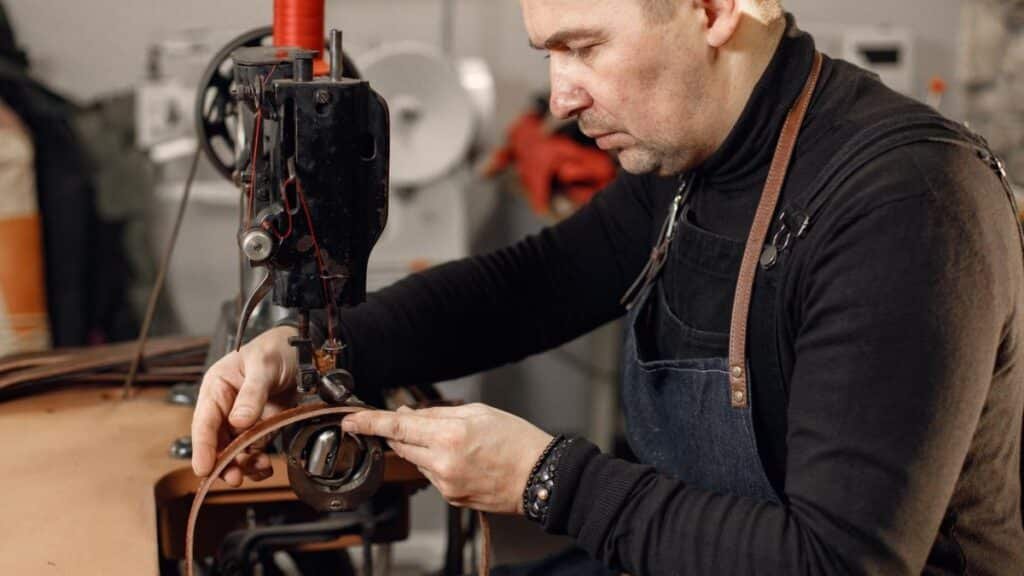
A properly run tracksuit manufacturing program follows a defined sequence. Skipping steps — most commonly sampling or lab-dip approval — is the single biggest cause of bulk-order defects in this category.
- Design brief and tech pack submission. You provide sketches, reference images, or a full tech pack with measurements, fabric requirements, and trim details. If you don’t have a tech pack, an experienced manufacturer’s design team should be able to build one from a reference garment or description.
- Fabric sourcing and lab dips. The factory sources or knits the fabric to your specified GSM and composition, then submits lab dips (small dyed swatches) for color approval before committing to bulk fabric.
- Pattern making and grading. ntation, customs clearance, and freight forwarding to your destination country.
For a closer look at how each stage is actually run on the factory floor, see our full manufacturing process breakdown and quality inspection standards.
Fabric Options for Tracksuits and Jogger Sets
Fabric choice is the single biggest lever on both cost and end-use performance. Here’s how the main options compare:
| Fabric | Feel & Weight | Best For | Typical GSM |
|---|---|---|---|
| Polyester tricot / interlock | Lightweight, smooth, quick-dry | Performance and athletic tracksuits | 150–220 GSM |
| Cotton fleece | Soft, warm, brushed interior | Casual/streetwear tracksuits, everyday wear | 280–380 GSM |
| French terry | Looped interior, breathable, mid-weight | Athleisure, transitional-season sets | 240–320 GSM |
| Nylon | Durable, wind-resistant, slight sheen | Retro/track-style jackets, outdoor use | 180–260 GSM |
| Cotton-poly blends | Balance of stretch, durability, and cost | All-season, budget-friendly programs | 220–300 GSM |
| Spandex-blended stretch fabrics | High stretch, athletic fit | Gym and training-focused tracksuits | 200–280 GSM |
Heavier GSM fleece gives a premium, substantial hand-feel that many streetwear and athleisure brands specifically request, while lighter interlock and tricot fabrics suit performance-oriented lines where breathability and quick-dry properties matter more than weight. Brands unsure which fabric fits their positioning should request swatch cards before committing — a reputable manufacturer will send physical samples rather than only digital specs, since GSM and hand-feel are difficult to judge from a screen. See our full fabric selection guide for a deeper breakdown of composition and sourcing.
MOQ for Custom Tracksuits: What’s Realistic in 2026
Minimum order quantity is consistently the top objection new brands raise, and the range across the industry is wide — from around 20–30 pieces per design at the low end up to 200+ sets per style at factories built primarily for large retail programs.
A few things affect where a factory sets its MOQ:
- Fabric minimums — if a factory has to order fabric from a mill rather than stocking it, the mill’s own minimum yardage often drives the garment MOQ up
- Complexity of customization — a fully custom fabric blend or a unique color that has to be dyed to order raises the floor compared to using an in-stock fabric
- Per-design vs. per-order counting — some factories count MOQ per colorway/size-run combination, effectively multiplying the real minimum if you want multiple colors
Fashion Soul International offers a 100-piece MOQ per style. It is ideal for startups testing new designs without large production commitments. This MOQ also helps maintain consistent fabric sourcing and quality control. With a production capacity of 100,000+ garments per month, we efficiently handle both small trial orders and large bulk reorders.
Branding and Private Labeling Options for Tracksuits
Private labeling is what actually turns a manufactured tracksuit into your brand’s product. The core elements:
- Woven neck labels — your brand name and size woven directly into fabric, sewn into the neckline
- Printed or heat-transfer labels — a lower-cost alternative to woven labels, still fully customizable
- Hang tags — printed, embossed, or die-cut cardstock tags attached by string or plastic loop, often the first branding touchpoint a retail customer sees
- Care and content labels — required for compliance in most markets, listing fabric composition and care instructions
- Custom packaging — printed poly bags, branded boxes, or tissue-and-sticker combinations depending on whether the product ships direct-to-consumer or to retail
For logo application on the garment itself, the decoration method matters as much as the design:
- Embroidery — most durable, premium look, best for logos under roughly 15,000 stitches; ideal for chest logos or sleeve branding
- Screen printing — cost-effective for large graphic prints, works well on both jackets and pant legs
- Sublimation — allows full-color, all-over prints without the weight or feel of screen ink, though it works best on polyester rather than cotton
- Puff print — adds raised texture to logos, popular in streetwear-positioned tracksuit lines
See our full custom embroidery design options and best printing methods comparison, plus custom hang tags for apparel if packaging and tagging haven’t been finalized yet.
Quality Control and Certifications That Actually Matter
When sourcing internationally — particularly from Pakistan, which remains one of the largest global garment export hubs alongside Bangladesh, China, and Vietnam — certifications are the clearest proxy a brand has for verifying a factory’s actual operating standards before placing a large order.
The certifications worth specifically asking about:
- ISO 9001 (Quality Management System) — confirms the factory runs documented, repeatable quality control processes rather than ad hoc inspection
- ISO 14001 (Environmental Management System) — confirms environmental impact controls are in place across production, relevant for brands with sustainability commitments to their own customers
- REX (Registered Exporter) certification — required for exporters to claim preferential tariff treatment under the EU’s Generalized Scheme of Preferences (GSP), directly relevant for brands shipping into European markets
- SECP verification (Securities and Exchange Commission of Pakistan) — confirms the company is a legally registered, verifiable business entity rather than an unregistered trading intermediary
Fashion Soul International is ISO 9001 and ISO 14001 certified. We are also a REX-certified exporter and an SECP-verified company based in Sialkot, Pakistan. Over the past 10+ years, we have served 2,500+ brands worldwide. Our 250+ skilled team produces over 100,000 garments each month. This allows us to deliver consistent quality for both 100-piece trial orders and large-scale production.
What Actually Drives Tracksuit Pricing
Brands comparing quotes across manufacturers should know what’s actually moving the number, since sourcing on price alone without accounting for these factors is the most common way to end up with a supplier who cuts corners mid-order:
- Fabric composition and GSM — heavier fleece and technical stretch blends cost more per yard than basic polyester
- Order quantity — per-unit cost drops meaningfully as volume increases due to fixed setup costs being spread across more units
- Decoration complexity — multi-color embroidery or all-over sublimation costs more than a single-color screen print
- Trim quality — branded zippers (YKK) and reinforced cuffs cost more than generic equivalents but reduce return rates from product failure
- Packaging — custom printed poly bags or boxes add per-unit cost versus generic packaging
- Shipping method — air freight is faster but substantially more expensive per unit than sea freight for bulk orders
A manufacturer offering a price dramatically below competitors for the same fabric and decoration spec is usually cutting one of these variables — most often fabric GSM or trim quality — in ways that won’t show up until the goods arrive.
Shipping, Compliance, and Serving International Markets
Sourcing from Pakistan for the USA, UK, Australia, Canada, or continental Europe is standard practice across the sportswear and streetwear supply chain, but a few market-specific points are worth confirming with any manufacturer before ordering:
- USA — CPSIA compliance applies primarily to children’s apparel; adult tracksuits generally face standard customs and labeling requirements (country of origin, fiber content) rather than additional safety certification
- UK and EU — REX certification is what allows qualifying exporters to pass on preferential tariff rates under GSP arrangements, which can meaningfully affect landed cost
- Canada — textile labeling requirements under the Textile Labelling Act require bilingual (English/French) fiber content and care labeling
- Australia — Australian Consumer Law requires accurate care labeling and fiber content disclosure, similar in spirit to US and UK requirements
Fashion Soul International ships to the USA, UK, Australia, Canada, and Europe as our core export markets, with export documentation and REX-based tariff eligibility handled as part of the standard order process rather than an add-on.
How to Choose a Custom Tracksuit Manufacturer: A Practical Checklist
Before signing with any supplier, confirm the following:
- Sample availability — will they produce a physical sample before bulk production, and is sample cost credited toward the bulk order?
- Verifiable certifications — ISO, REX, or local business registration, not just claims on a website
- Realistic MOQ for your stage — a 20-piece MOQ sounds appealing but often signals a workshop-scale operation without the capacity for consistent reorders
- Fabric transparency — will they disclose exact GSM and composition, and send physical swatches?
- Communication and time zone responsiveness — sourcing internationally means confirming a manufacturer can turn around answers and revisions on a schedule that fits your launch timeline
- Documented QC process — ask specifically how they inspect: full inspection or AQL sampling, and at which production stages
- Track record at your order size — a factory built for 10,000-unit retail programs may deprioritize a 100-piece order; ask directly how smaller runs are scheduled against larger client production
Why Brands Choose Fashion Soul International for Tracksuit Manufacturing
Fashion Soul International is a clothing manufacturer based in Sialkot, Pakistan. With 10+ years of experience, we have served 2,500+ brands across the USA, UK, Australia, Canada, and Europe. Our 250+ skilled team produces over 100,000 garments per month. We are ISO 9001 and ISO 14001 certified, a REX-certified exporter, and an SECP-verified company.
For tracksuit and jogger sets, we offer a 100-piece MOQ per style. Brands can fully customize the fabric, fit, trims, and decoration. This keeps your first order flexible without requiring high volumes. You can also explore our wholesale sweatsuits, wholesale hoodies, white label hoodies, and fitness apparel for matching collections.
FAQs
It varies by manufacturer, typically ranging from 20–30 pieces at ultra-low-MOQ workshops up to 200+ sets at large-volume factories. Fashion Soul International’s MOQ is 100 pieces per style, balancing accessibility for growing brands with the consistency a larger facility provides.
A tracksuit manufacturer produces matched two-piece sets — a jacket and pant designed to coordinate in fabric and color. A jogger set manufacturer may focus specifically on the pant/bottom half, sometimes paired with a hoodie rather than a matching jacket, and often runs lighter fabric weights suited to standalone jogger production.
From tech pack approval to shipment, a typical timeline runs 4–7 weeks, including sampling, revisions, bulk cutting, sewing, decoration, and quality inspection. Private label orders using existing base patterns can move faster, often 2–4 weeks.
Yes — any reputable manufacturer should produce a physical sample for your review and approval before bulk fabric is cut. Skipping this step is one of the most common causes of bulk-order defects.
It depends on positioning: cotton fleece or French terry (280–380 GSM) suits casual and streetwear tracksuits, while polyester tricot or interlock (150–220 GSM) suits performance and athletic lines. Cotton-poly blends offer a middle ground for all-season, budget-conscious programs.
REX certification specifically affects preferential tariff treatment under the EU’s GSP scheme, so it’s most relevant for European imports. For USA shipments, standard customs documentation and country-of-origin labeling apply instead, though REX status is still a useful general indicator of an exporter’s compliance standing.
Pakistan is one of the largest global garment and sportswear export hubs, with Sialkot specifically recognized for sportswear, gloves, and apparel manufacturing. Reliability comes down to the individual factory’s certifications, track record, and communication — not the country alone.
Fashion Soul International offers a 100-piece MOQ, full private label and custom manufacturing options, and export experience across the USA, UK, Australia, Canada, and Europe. Contact our team to request a quote or begin sample development.