

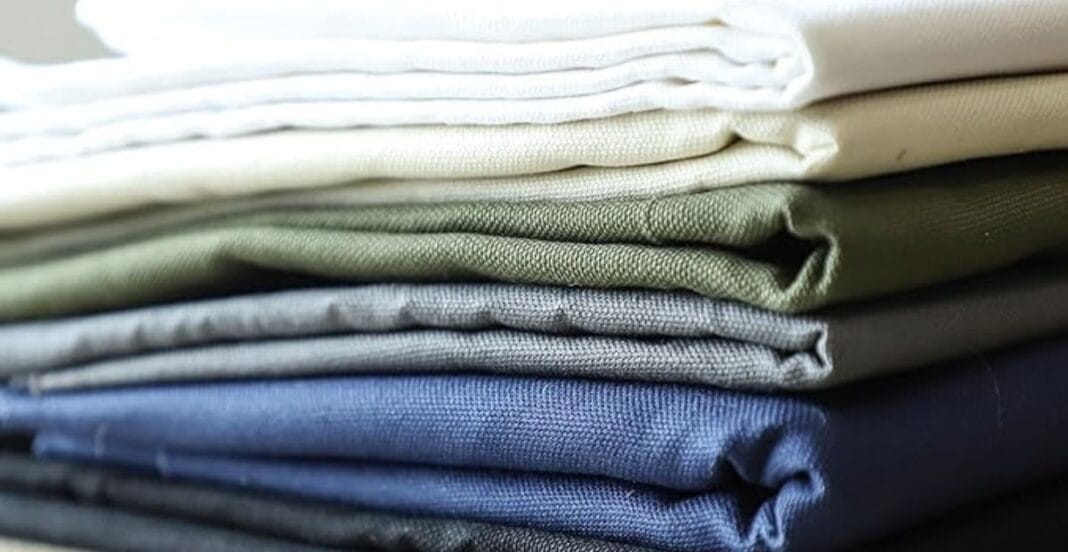
Fashion trends come and go, but these days cotton is high on the list in fine fashions. Designers love duck cotton as it is a combination of durability and luxury appeal. Moreover, consumers in the shopping market are more inclined to use fabrics as an amalgamation between comfort and structure. Therefore, cotton duck fabric gains massive popularity among the global fashion markets. This blog describes the reasons why duck cotton is the best textile trend and appeals to modern buyers.
Table of contents
Why Is It Called “Duck” Cotton Fabric?
The name duck comes from Dutch meaning doek that means nothing more than cloth. English-speaking countries adopted this term by the Dutch traders. As time progressed the doek evolved to duck and it remained.
The name paid tribute to its utilitarian roots and strong weave. Today, the name still signals a tough and dependable fabric.
Common Uses and Popularity
Duck Cotton is a favorite material among professionals as well as hobbyists because cotton fabric is extremely stable with good strength. You can find duck cotton in utility cloths, boat covers, backpacks and even the canvases of artists.
Moreover, industries that need long-lasting textiles always rely on cotton duck fabric for long-lasting performance. In addition, growing levels of eco-awareness has added to duck cotton’s popularity, as it offers versatility for all home projects as well as heavy-duty applications.
Characteristics of Duck Cotton Fabric
Heavy and Long life Duck Cotton Characteristics
Weight is one of the characteristic of cotton. It is medium to very heavy which makes it solid and substantial.
It has weight not in terms of thickness, but in the toughness as well. Duck fabric is not tearable and not frays even when stressed. It is so strong it is the popular choice of both outdoor and work equipment.
Strict Plain Weave Form Duck Cotton
Due to the tightly woven structure of duck cotton, it is very durable and refined. Since cotton duck fabric has very little space between the threads, it has a much longer lifespan than normal textiles.
In addition, this tight weave gives cotton a smooth texture and polished appearance. As a result, cotton duck fabric resists dust and moisture far better than a lot of other cotton materials which makes it both practical and stylish.
Wear-resistance and high Thread Count
Compared to regular canvas, cotton duck has a higher thread count. This density gives it its toughness and durability. It doesn’t wear out easily, even with frequent use.
High thread count also enhances the fabric’s structure. It holds its shape well and doesn’t sag or stretch under pressure.
Moisture resistant, naturally breathable
Despite being rather heavy, duck cotton remains breathable because of natural cotton fibers. Therefore, cotton fabric does not overheat clothes and equipment. In addition, some varieties of duck cotton, not least the waxed varieties, resist moisture very well.
Even untreated cotton duck fabric would provide a moderate level of water resistance due to its dense weave. Consequently, duck cotton works perfectly for outdoor purposes and changing outdoor weather conditions.
Types of Duck Cotton Fabric
By Weight
Light Duck (Less than 10 oz/yd 2)
This color best suits light-weight trimmings and fabrics, bags and picture canvases. It is sews and operates easily. It is light as well but nonetheless remains sturdier than regular cotton.
Medium-weight Duck (1015 oz/yd 2)
Used in tote bags, shoes, and slipcovers, this is the most versatile range. It balances strength and manageability well.
Super Heavyweight Duck (More than 15 oz/yd 2)
It is heavy and possibly will have to use special tools to sew. The additional weight provides outstanding strength.
By Finish
Unbleached (Natural Tan/ Beige)
This is the most eco-friendly form of duck fabric. It hasn’t been dyed or treated and keeps a rustic appearance. Often used in artist canvases or rustic decor.
Bleached (White)
A clean, bright white version of cotton duck. It’s often used when color consistency is important. Common in home furnishings and painted projects.
Waxed (Water-resistant)
Waxed duck fabric is treated with paraffin or beeswax. This makes it highly water-repellent and suitable for outdoor applications. Bags and coats often use this type.
Duck Cotton Specialty Types
Labeled Duck (e.g. No. 8, No. 10)
These figures refer to the weight and the thickness. No. 10 weighs less than No. 8 etc. This system aids buyers to make suitable decisions on what kind to use in certain applications.
How Is Cotton Duck Fabric Made?
Yarn Preparation
Cotton duck starts with coarse, high-quality cotton yarns. These yarns are tightly twisted to improve strength. The cotton used is often carded and combed for uniformity.
Steps to a Plain Weave
This produces a smooth even surface with reduced gaps. The end product is a solid and tight fabric.
Treatments
After weaving, manufacturers treat the fabric for specific purposes. They dye, bleach, or wax it to improve performance and water resistance. Sometimes, producers use mercerization to enhance dye absorption and reduce shrinkage.
Common Uses of Cotton Duck Fabric
Fashion & Accessories
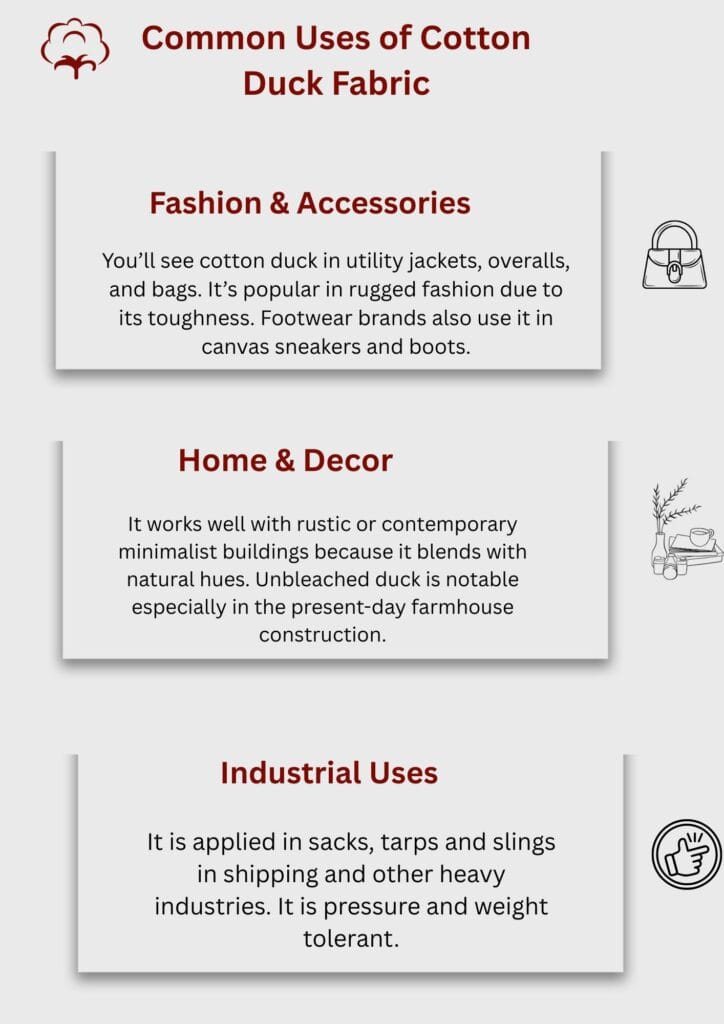
You’ll see cotton duck in utility jackets, overalls, and bags. It’s popular in rugged fashion due to its toughness. Footwear brands also use it in canvas sneakers and boots.
It gives accessories some character with its textured appearance. It has become a meal of ethical and sustainable designers.
Home & Decor
Its firmness assists it to hang well and retain a shape. It also does not fade and pull apart easily with every use.
It works well with rustic or contemporary minimalist buildings because it blends with natural hues. Unbleached duck is notable especially in the present-day farmhouse construction.
Industrial Uses
Factories and warehouses use duck fabric for conveyor belts, aprons, and essential utility covers. Artists also choose this material to create stretched canvases. Due to its paint retention quality it is ideal in oil and acrylic mediums.
It is applied in sacks, tarps and slings in shipping and other heavy industries. It is pressure and weight tolerant.
Outdoor Gear
Duck fabric is applied in tents, hammocks, and tarps created by outdoor brands. This makes it reliable because it is weather resistant and durable. Duck, in particular waxed duck, is ideal in waterproof, outdoor clothing.
Designers craft backpacks from duck cloth that withstand harsh conditions and heavy loads. Manufacturers also use it for boat covers and trailer coverings.
Cotton Duck vs. Canvas: What’s the Difference?
Comparison of Weave and Count of Threads
Both are plain weaving however the cotton duck has superior thread count. This makes it into a finer finish and stronger.
In contrast, canvast may appear looser in a weave and also rough.
Variation in Strength and Durability
Cotton duck tends to be quite rough and sturdy as compared to regular canvas. It can withstand adverse weather conditions or extreme bodily stress. There are fewer chances of fraying or stretching.
Although canvas will still be weak in high weights, duck will be the best in long-term. It maintains longer when subjected to repeated use and washing.
Most Ideal Applications of each
Use cotton duck in gear, upholstery or work wear. Buy canvas to create carefree pieces of art or light-weighted bags, or household arts. Duck is the greatest in those instances when strength is the most important factor.
Pros and Cons of Cotton Duck Fabric
Pros
- Very durable: Resists wear and tear as well as rough usage
- Breathable: It causes the passage of air even though it is thick.
- Eco-friendly: Presented in organic and unbleached form
- Flexible: Applicable on clothes, equipment and accessories
- Waterproof: Particularly waxed or treatedƒland href` dated et masse; also called cassette
Cons
- Heavy: Cannot accept light clothing
- New condition: Inflexible, must be used in to become supple:
- May shrink: It will have to be machinewashed before using as it tends to contract in size
How to Care for Cotton Duck Fabric
Washing Tips
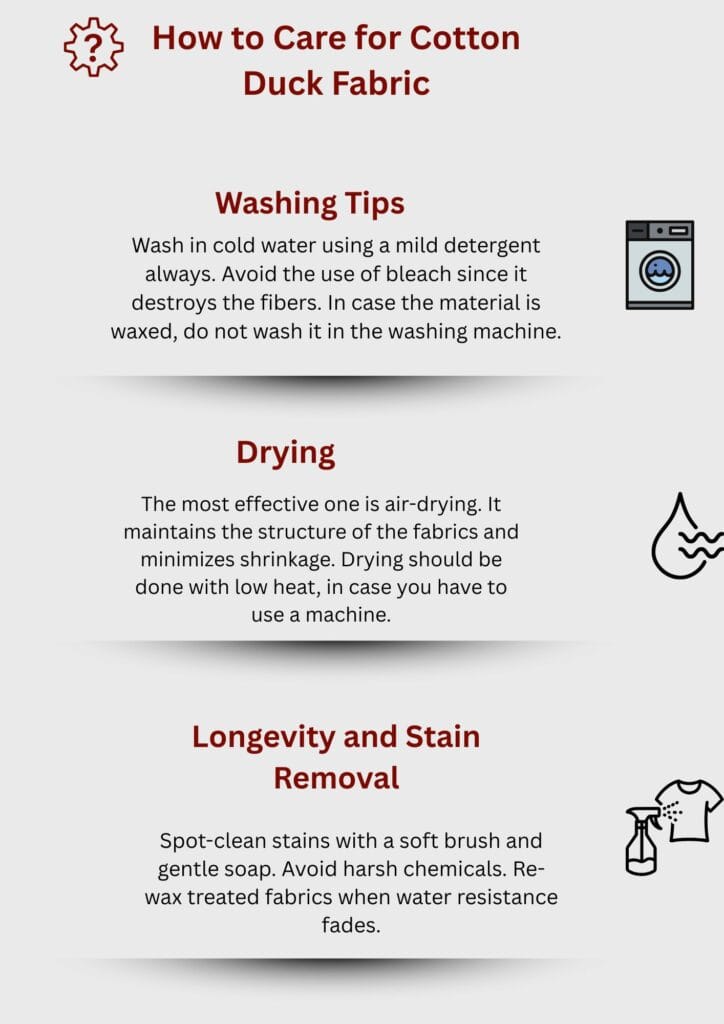
Wash in cold water using a mild detergent always. Avoid the use of bleach since it destroys the fibers. In case the material is waxed, do not wash it in the washing machine.Turn articles inside out so as to avoid excessive wearing.
Drying
The most effective one is air-drying. It maintains the structure of the fabrics and minimizes shrinkage. Drying should be done with low heat, in case you have to use a machine.
Dry it in the fresh air avoiding direct sun-exposure.
Longevity and Stain Removal
Spot-clean stains with a soft brush and gentle soap. Avoid harsh chemicals. Re-wax treated fabrics when water resistance fades.
When you take good care of your items made out of cotton duck they will last in years.
Where to Buy Cotton Duck Fabric?
Famous Companies and Manufacturers
Ottertex, Big Duck Canvas, Fairfield are some of the brands that supply good quality of duck fabrics. Like most of them, they deal in organic and industrial grades.
Online Marketplaces
Amazon, Etsy, and eBay are stores where you can buy cotton duck. Before buying always see reviews.
Specialty Stores
For industrial-grade fabric, visit upholstery or marine supply shops. These stores offer heavy-duty duck fabric suitable for large-scale projects.
Conclusion
The cotton duck cloth is an energy powerhouse, as it is durable, stylish, and has potential of being environmentally friendly. Having learnt what cotton fabric is, you will go ahead and use it on your next project with confidence.