
Viscose is popular in textile manufacturing across the globe. It is used in clothing, home textiles, and accessories. Viscose is chosen for its softness and silk-like shine. When it comes to the textile world, people are confused about what Viscose is and where it comes from. A common question is: Is Viscose a Natural Fiber? This confusion comes because while Viscose is made from natural sources, it uses major chemicals in its manufacturing and therefore, occupies a gray area in textile classification.
The purpose of this article is to provide information on Viscose, where it comes from, how it is made, how it is classified, the environment, and how it will break down when disposed of. It will also contribute information regarding Viscose’s venture into the fashion world and the sustainability concern with textile manufacturing today.
What Is Viscose?
Viscose is classified as a fiber made from cellulose, it is classified as a Natural Fiber, and is also classified as Semi-synthetic. It is mainly made from the cellulose that comes from wood pulp. A commonly used wood for the pulp is Beech wood. The cellulose made from the wood is then collected and made into fibers via a chemical process. Since the base cellulose is made from wood, it is considered a natural fiber, but what Viscose is, is classified as semi-synthetic. The chemical process that the fibers go through to become Viscose changes the cellulose structure completely. This is one of the reasons Viscose stands out in the textile world.
Due to its smooth texture and beautiful appearance, people often refer to Viscose as Artificial Silk. Because Viscose fabrics have a beautiful drape and smooth feel, Viscose fabrics have become a favorite for many fashion designers. To reach a proper conclusion to the question Is Viscose A Natural Fiber, you must consider both the origin and the way the fiber is processed. If you want to k now more about what is viscose read our article : What Is Viscose Material Eco Friendly Or Not Explained?
How Viscose Is Manufactured in the Textile Industry
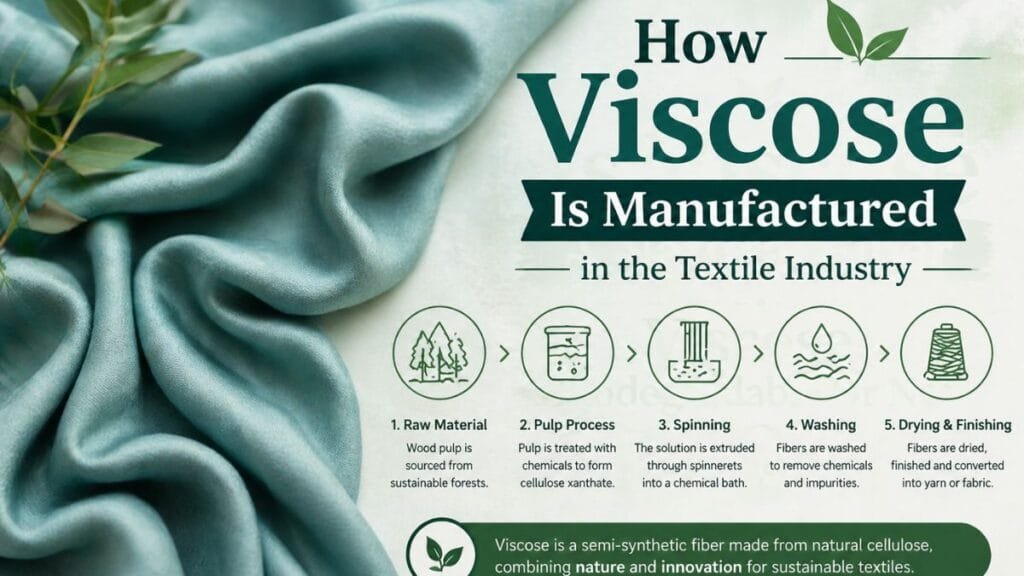
To produce Viscose, several chemical and mechanical procedures are required. The first step in producing Viscose is to derive the cellulose from wood pulping. The purified cellulose then goes through the first chemical change of the production process when it is treated with sodium hydroxide. The treated cellulose is then converted to a thick viscous solution by being exposed to carbon disulfide. The viscous solution is then aged and to a filter to ensure consistency before being converted to fibers by being forced through a spinneret into a chemical bath. The chemical bath is where the solution solidifies.
After being spun into fibers, the yarn is then bleached, washed, and dried to complete the process. The natural state of the cellulose has been completely altered from its original state during the procedure. Because of the many changes and alterations of cellulose during the process, Viscose cannot be regarded as a raw natural fiber. To answer the question: Is Viscose A Natural Fiber when it comes to the science of textiles?
Is Viscose A Natural Fiber?
Viscose is derived from natural wood pulp, however, it goes through many more chemical processes before it can become a fabric. For this reason Viscose is quite different from fibers such as cotton and wool that are of natural origin. In textiles fiber classification, it is Viscose that occupies the space of being a semi-synthetic fiber.
No, Viscose is not a natural fiber. It originates from natural cellulose but goes through a chemical process to create a new fiber. This is relevant for manufacturers and fashion brands for a variety of reasons including how they market, sustainability, and how their customers engage with their brand.
Is Viscose A Natural Fiber or Synthetic Textile Material
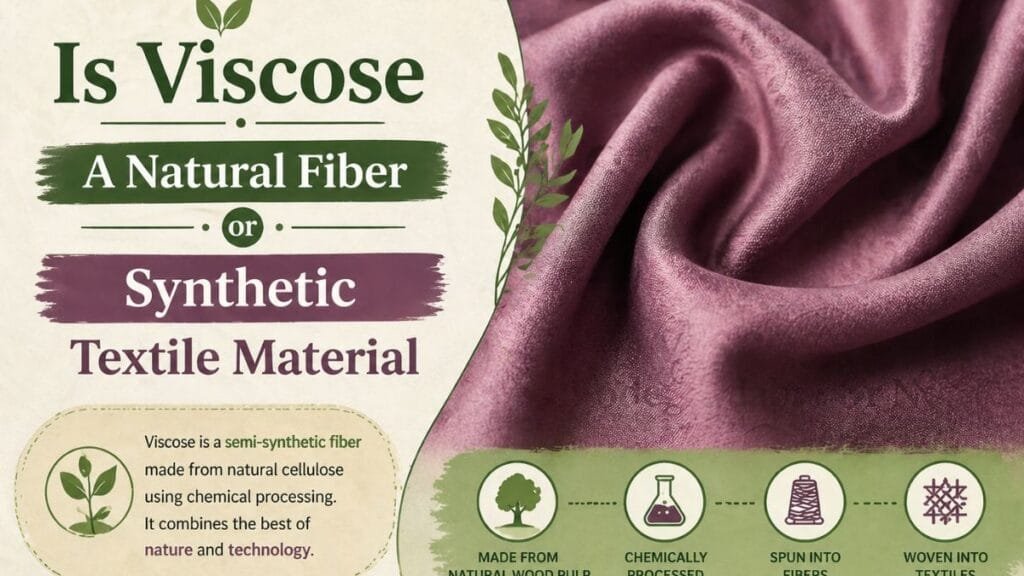
In order to distinguish Viscose, we need to examine how it is formed in comparison to natural and synthetic fibers. Natural fibers, in comparison to synthetic fibers, come from nature and require minimal presence of chemicals. Synthetic fibers come from the chemicals that are a byproduct of the petroleum industry. Viscose, in contrast to both natural and synthetic fibers, comes from natural cellulose fibers, but is formed through a chemical process. Thus, the best classification of Viscose involves both natural and synthetic fibers.
Is Viscose A Natural Fiber or Synthetic Textile Material, the answer is regenerated fiber. Viscose mimics both natural fibers and synthetic textiles. The versatility of Viscose makes it a heavily used fiber in the industry.
Physical Properties of Viscose Fabric
Viscose is considered a luxurious textile for a variety of reasons. Viscose can take on the form of a variety of materials, and is very smooth and provides comfort. It is a highly breathable textile. It is also very absorbent, which can keep a person comfortable in a variety of climates.
Viscose is drapes that creates flow for garments. Because of drape, it is ideal for dresses, formal attire, and skirts. Viscose is also weakened and damaged by water.
These characteristics of viscose highlight the reason the fiber is popular and the discussions regarding Is Viscose A Natural Fiber are still ongoing.
Is Viscose A Natural Fiber in Sustainable Fashion Industry
There is a rise in the priority of sustainability in the fashion industry. A number of companies are beginning to assess materials against the environmental impact they have. Viscose is in the center of these discussions. Viscose is produced with the aid of wood pulp and the chemicals used in the production of viscose are harmful to the environment, and from a resource standpoint, these chemicals are also obtained from the environment. The production of viscose, however, has become more sustainable as companies are now employing a closed-loop system in which the chemicals used in the production is recycled and there is waste.
Sustainably managed forests can also be used to source the managed forests. This has led to the answer in the assessment of Is Viscose A Natural Fiber in Sustainable Fashion Industry to be that the production methods make viscose.
Environmental Impact of Viscose Production
Viscose has a serious effect on the environment and the sustainability of the methods used in the production of viscose is a serious concern. Chemicals such as sodium hydroxide and carbon disulfide are used in the traditional viscose production and these chemicals can be viscose. The production of viscose can also have an impact on the environment because it consumes a spike of water. If You want to know about the Viscose toxicity read our article Is Viscose Toxic? Understanding the Environmental Impact in 2026
Bane of Sustainability: Deforestation
Factory settings of wood pulp production also offer sustainability issues, as deforestation is a concern. These issues are analyzed when determining if ‘Is Viscose A Natural Fiber’ worries about sustainability, and also about certainties in sustainability, about certified production systems that are less harmful to the environment.
How Viscose Fiber – the Composition of Natural Fiber
The production method is one of the major reasons Viscose is in the grade. The process starts from wood pulp, which is a natural resource. It extracts cellulose and chemically alters its integrity by dissolving cellulose and regenerating it as fiber by adding a viscous solution. The process alters the integrity of cellulose. The process alters the integrity of cellulose and completely transforms it. Cellulose and completely transforms it, becoming Visorse, a material of artificial fiber, with the process being a manufacturing one. The process illustrates that the manufacturing of viscose is extensively more than its fibers of natural cellulosic raw material.
Can Viscose Biodegrade?
The answer to this question is ‘yes’, cellulose is its origin and the answer to the question is ‘yes’. Compared to them, cellulose will disperse their disadvantages, as cellulose will disperse their disadvantages, being a natural fiber that cellulose will disperse their disadvantages against cellulose. Production quality and chemical composition will affect this quality. They will affect this quality. For instance, negatively impact this quality and impede its.
In optimal conditions, it will take cellulose between a few months to several years to break down. Compared to cellulose, it is considered more natural fiber. However, the question of ‘Is Viscose A Natural Fiber’ cannot be fully answered by biodegradability, production quality and impact must be considered.
Benefits of Viscose Fabric
With its inventory of benefits, Viscose is a popular choice among fabrics on the international fashion market. It is a soft fabric that allows the body to breathe and is comfortable to use on a daily basis. In apparels that require the exhibit of luxury, viscose offers an alternative to the high costs of silk. Viscose’s ability to color and dye with precision translates to bolder options and patterns in visual designs. The fashion market for elegant clothing styles also considers Viscose fabrics because they take designs that require draping well.
The factors mentioned above highlight the need for Viscose fabrics, especially in the informal and formal fashion market.
Disadvantages of Viscose Fabric
There are also notable limitations of fabrics made from Viscose, that require consideration. Viscose is a fabric that can lose its shape and become very malleable when wet. Clothes made of Viscose also need special washing and care due to the structure of the fabric. The viscose production process is also toxic to the environment. The chemical process and resource use of the traditional production techniques are not safe for the environment.
Setting aside the benefits of Viscose like high comfort and soft texture, the factors mentioned above need to be considered regarding Is Viscose a Natural Fiber discourse that define today’s textile industry.
Addressing the Issues on Viscose
The confusion around Is Viscose a Natural Fiber is due to the assumption that viscose is purely natural due to the use of wood pulp in its production. The confusion is also extended to the belief that viscose can be classified among the synthetic fibers like polyester, which lie at the other extreme of the fiber production process. Viscose begins with natural cellulose, therefore, its production can be traced to naturally occurring resources.
Due to the arguments above, education regarding Is Viscose a Natural Fiber is necessary in order to eliminate the confusion in the industry. If you want to know more issues on viscose read our article : Why is Viscose Bad For Clothing And Daily Use
Taking Care of Viscose Fabrics
Viscose needs to be treated gently when it’s cleaned and dried. Wash with cold water and tack on drying. Wringing or twisting it after it is cleaned is a big no. High temperatures at the iron are also not accepted.Caring for viscose is important because it keeps the quality of the way it looks and keeps it around longer.
There’s still some of the Viscose Future.
Viscose and some other fabrics are connected. With time and the years improving and increasing, the environment and eco-friendliness will grow ever so gradually. Comfort, affordability, and versatility are all things that viscose and some other more promising fabrics have.
Final Thoughts
There will never be a true yes or no for the answer for the Is Viscose A Natural Fiber question. With Viscose being cellulose based from beginning to end. If a person were to think of it, it is a collection of many things, fabused to be how natural or how synthetic. With the things mentioned above being on the spectrum, it is a larger priority to think of the environmental. Why is because the women’s or used fabrics and textiles bring newer understanding. If You need more information on viscose read our article : Is Viscose a Good Fabric Compared To Cotton