

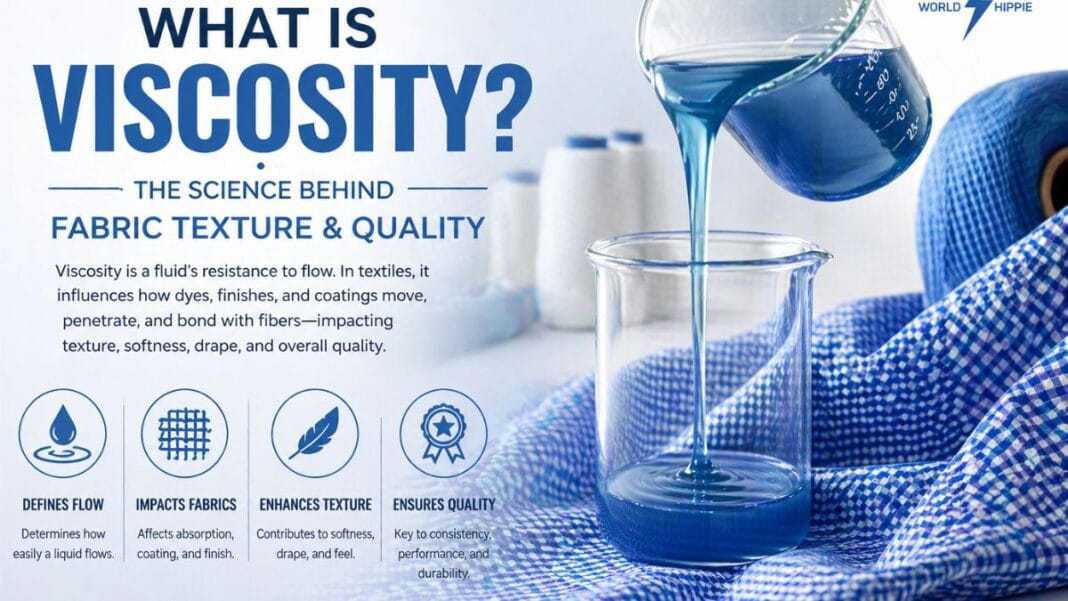
For those involved in fabric and garment design and production, understanding material properties is essential for creating quality products. One key property is viscosity. Knowing what is viscosity helps explain how fabrics respond to different stimuli. Whether you are a designer, textile manufacturer, or customer, understanding viscosity and its role in fabric texture improves knowledge of material behavior and the quality of the final product.
This article will define viscosity and its contribution to the characteristics of fabrics, as well as its importance in the field of textiles. It will also provide real life examples and applications as well as the misconceptions surrounding the topic to ensure you come away with a comprehensive understanding of the subject.
Table of contents
What is Viscosity?
The term viscosity describes a liquid’s internal resistance to flow. Simply put, viscosity is the degree of thickness or thinness of a liquid. A viscous liquid will be of higher thickness and will flow at a slower rate compared to a liquid with lower viscosity. This concept is important across various sectors ranging from production and manufacturing to the food industry, and more so in the fashion and textile sectors.
Viscosity is important in textile production during activities such as dyeing, coating and applying finishing agents to fabrics. This is due to the fact that dye, coating or finishing agents are all liquids and their viscosity will determine the warping of the fabric, as well as how even the application and ultimately, how the fabric will feel. If you need information on viscose material read our article : What Is Viscose Material Eco Friendly Or Not Explained?
The Effect of Fabric Viscosity
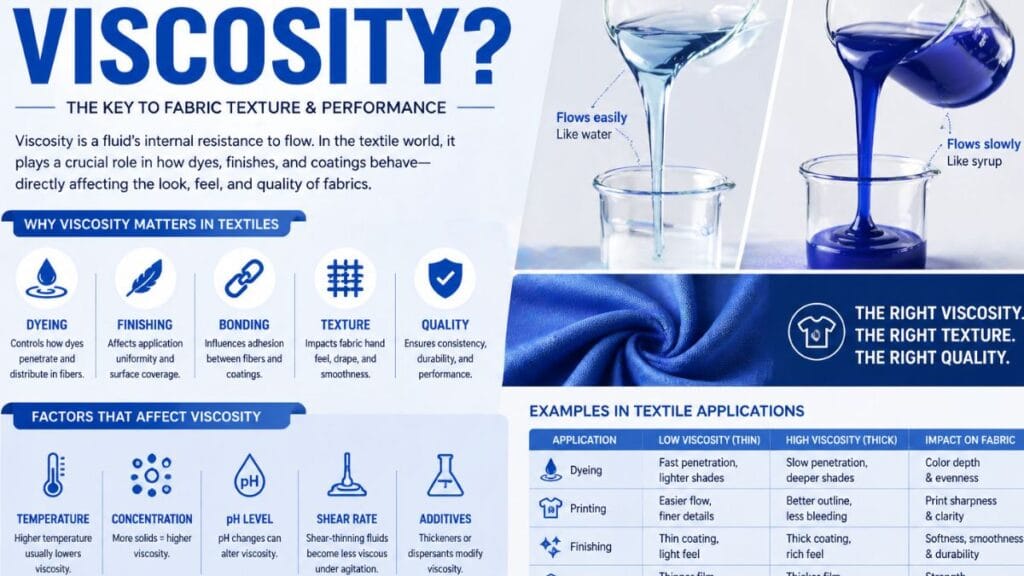
Viscosity will alter the final fabric texture. The finish of the fabric is entirely dependent on the viscosity of the coating liquid (Dyes/Sealers/Resins), etc. The performance of the fabric is also based on its viscosity.
Dye and Coloration:
The viscosity of the dying solution determines how deep the dying solution will go. Thicker dye (high viscosity) will be almost impossible to penetrate, leading to having splotchy and blotchy spots in the fabric. Dyes with low viscosity will penetrate deeper, but the dye solution will go uncontrollably deep, which gets you a much deeper back color.
Coating and Finishing:
The fabric state is determined by the viscosity of the coating solution. High viscosity coating solutions leads to a rigid fabric feel. A low viscosity coating solution leads to a soft fabric.
Drapability and Softness
Finishing agents and fabric viscosity go hand in hand in degree of fabric drapability and softness. High viscidity coating solutions will stiffen the fabric and low viscidity solutions will leave the fabric soft and flexible, which retains the fabric more wearable and usable. Want to know about viscose natural fiber or not read our article : Is Viscose A Natural Fiber Viscose Biodegradable Or Not
Printing:
When printing onto fabric, the viscosity of the ink or paint being used is extremely important. Low viscidity ink may result in bleeding, where the print is not confined to the intended area, while ink that is too viscous may result in uneven, blotchy prints.
Viscosity and Fabric Texture
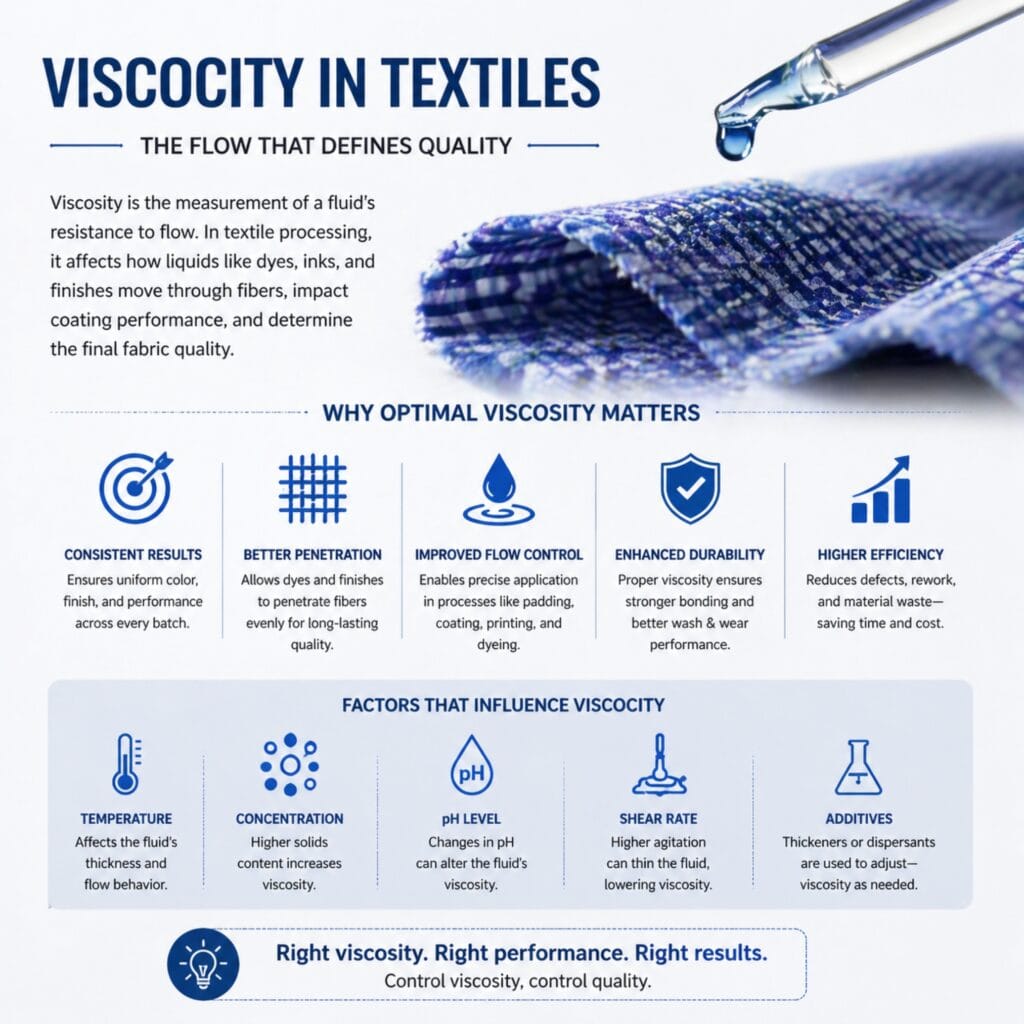
Not all fabric textures will be affected in the same way; while viscosity is important, the type of fabric is equally as important. Here are two of the most common examples of fabric types.
Natural Fibers:
Natural fibers such as cotton, wool, and silk, are often extremely absorbent. Because of this, viscosity will impact a fabric’s ability to absorb colors, dye, or finishing agents. As an example, if a high-viscidity dye is used to color a cotton fabric, the result will be a rich, full-color cotton. On the contrary, dye with lower viscidity will be better suited to silk, where high viscidity may end up ripping the fabric. If you want to know more about viscose read our article : Why is Viscose Bad For Clothing And Daily Use
Synthetic Fabrics:
Fabrics such as polyester, nylon, and spandex are often made from a mastery of synthetics. Synthetic fabrics are also often less absorbent (which is often a desired end result), and will impact the viscosity of the dye or coating being used to color them. For high viscidity fabrics, that may result in a less even coloration. To avoid this, a streak may result from this fabric undesired viscidity.
Blended Fabrics:
Using both synthetic and natural fibers to make blended fabrics calls for careful testing with respect to viscosity when treating them. Various fibers will respond differently to the liquid solutions. Hence, viscidity must be optimized to ensure uniformity of treatment and optimal end results. Dont know the difference between viscose and cotton read our article : Is Viscose a Good Fabric Compared To Cotton
Practical Applications in Textile Production
Handling the viscosity of solutions in the textile industry has benefits in many processes. A few cases that reveal the role of viscidity in textile production follow:
Dyeing and Colorfastness:
Viscosity aids in controlling the ease and retention of the dye. Thus, it relates closely to the degree of colorfastness. High viscidity may end up resulting in dye that remains primarily in fiber surface regions, even if the fiber is of acceptable color. Similarly, the use of low viscidity dye can ensure that the dye penetrates the fiber more easily, resulting in better quality colorfastness and retention.
Textile Coating for Waterproofing:
The degree of viscosity in the waterproofing agent dictates the quality of coverage, as well as the quality of the finish. A high viscidity agent may offer a stiffer coating, while a low viscidity agent may end up coating the fibres to a degree sufficient for providing a water resistant quality, but with a flexible finish.
Non-Woven Fabrics:
Viscosity is a key player in the consistency of the texture in non-woven fabrics. Low viscidity can cause bubble formation, reducing fabric strength and lowering overall product quality.
Long Standing Myths of Viscosity in Textiles
Misleading press has portrayed viscosity in regard to fabric texture for decades. These are some of the misconceptions:
An assumption of high viscosity is considered to be a good quality.
It is by design that a solution with a high viscidity is thick. A coating that is stiff and uncomfortable when misapplied is a coating that is high viscidity and thick. The fabric and the application dictate the viscidity and the fabric quality.
Dye alone is the only fabric process that involves viscosity.
Viscosity is related to more than color application. An understanding of viscidity is applicable to coating, printing, finishing, and a host of other processes.
Potential Benefits of Viscosity in Fabric Production
- Improve the Control of Color Application of Dye: By knowing and understanding viscosity, fabrics can be dyed evenly and be less likely to become patchy.
- Enhance the Durability of Fabrics: Proper viscidity of coatings and finishes is required for the adequate treatment of fabrics which increases their durability.
- Increase the Comfort of Products and the Wearability: The control of viscosity can also soften fabrics and even make them more pliable.
Conclusion
Viscosity affects textile properties like strength, durability, usability, and appearance. It also predicts fabric performance and lifespan, making it important for both high-end and fast fashion. Striking the right viscidity can ensure manufacturability and aesthetic appeal of fabrics when integrated with a dye, coating, and print.
Understanding viscosity in textile production supports better material and technique choices in fashion design. It expands creative possibilities in the textile industry. So, do keep forging and forming ahead with the eternal passion to explore and create. Are you searching about viscose toxicity red our article : Is Viscose Toxic? Understanding the Environmental Impact in 2026
FAQ’s
Viscosity in textile production refers to the thickness or flow resistance of liquids, such as dyes and coatings, used in fabric treatments.
Viscosity influences how dye, coatings, and finishes interact with the fabric, affecting its color, feel, and durability.
Not necessarily. High viscosity gives more control but can make fabric stiff if misused.
Yes, viscosity is adjusted based on the fabric’s absorbency and desired finish, improving results in dyeing, coating, and printing.
Cotton fabrics work best with medium-viscosity dyes for even, consistent color without bleeding.