


Viscose, a fabric with a luxurious texture and affordability, has become a staple in the fashion and textile industries. It’s known for its soft, silky feel and versatility, often being used as an alternative to silk. But have you ever wondered what is viscose made from and why it’s considered a sustainable choice? In this blog post, we’ll take an in-depth look at the raw materials that make up viscose, how it’s produced, and the key benefits that make it a popular choice in the fashion industry.
Table of contents
Introduction: What Is Viscose Made From?
Viscose, often called rayon, is a semi-synthetic fiber made from regenerated cellulose. Unlike purely synthetic fabrics like polyester, which are derived from petroleum, viscose is made from natural materials like wood pulp, cotton, and other plant-based cellulose. However, the production process involves turning this cellulose into fibers using chemical treatments. This blend of natural and synthetic elements gives viscose its unique qualities, such as its softness, breathability, and silk-like texture.
While many may associate viscose with being a purely natural fabric, the key question remains: what is viscose made from? Understanding the origins of this fabric helps clarify its environmental impact, benefits, and its place in the sustainable fabric movement. If you want to know that is viscose read our article : What Is Viscose Material Eco Friendly Or Not Explained?
What Is Viscose Made From: The Raw Materials

The raw materials for viscose come from natural cellulose, primarily sourced from wood pulp or cotton. Here’s how the process works:
1. Wood Pulp
The most common source for viscose is wood pulp. The cellulose in the wood is extracted from trees, usually from fast-growing trees like pine or bamboo. This cellulose is then processed into a pulp. The pulp is treated with chemicals that make it easier to turn into fibers. This step is crucial for creating the smooth, silky texture that viscose is known for.
2. Cotton Linters
Cotton linters, the short fibers left after cotton harvesting, are another source of cellulose. These fibers are used to make viscose, contributing to the fabric’s smooth finish and lightweight properties. Cotton-based viscose is often softer and has better moisture-wicking properties, which make it ideal for summer clothing. Dont know about viscosity read our article : What is Viscosity and How It Influences the Texture of Fabrics
What Is Viscose Made From: The Environmental Impact
Viscose is made from natural cellulose, primarily derived from wood pulp, which is often sourced from sustainable forests. Understanding what is viscose made from and its environmental impact is crucial for consumers seeking eco-friendly fabrics. The production process can be harmful to the environment if not managed responsibly, but modern techniques, such as Lyocell, aim to reduce waste and pollution, making viscose more sustainable. If you dont know about viscose natural fiber or not read our article : Is Viscose A Natural Fiber Viscose Biodegradable Or Not
The Viscose Production Process: From Wood to Fabric
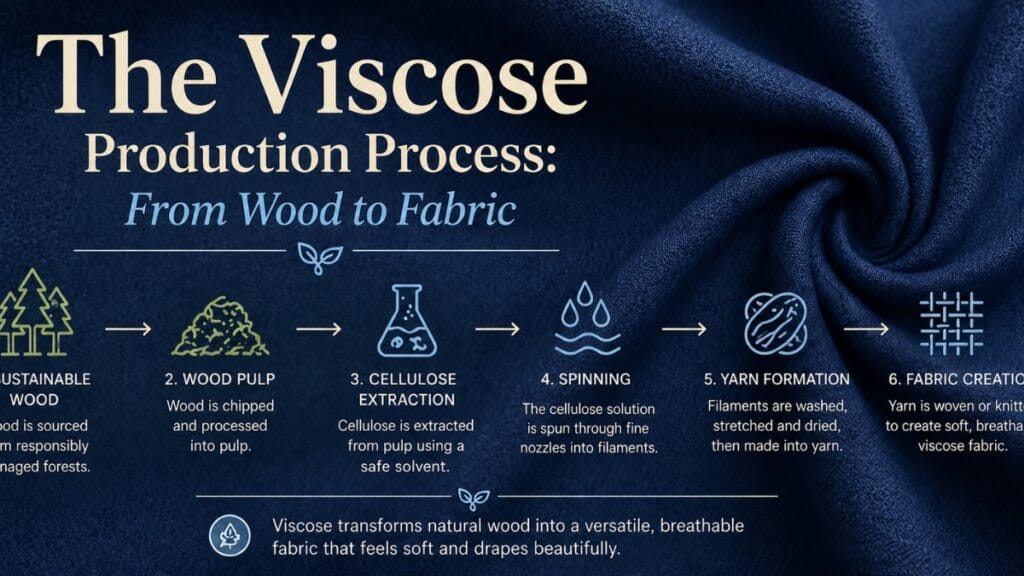
Once the raw cellulose is extracted, it undergoes several steps to transform it into viscose fabric. The process is chemical-intensive but allows for mass production of the material. Why do people think that viscose is not good for clothing if you have any type of confusion read our article : Why is Viscose Bad For Clothing And Daily Use
Step 1: Wood Sourcing and Pulping
The process begins with sustainably sourcing wood from managed forests. The wood is then chipped into small pieces and processed into pulp, which is treated with sodium hydroxide to break it down into a more usable form.
Step 2: Chemical Treatment and Cellulose Solution
The pulp is dissolved into a solution of sodium hydroxide and carbon disulfide, which transforms it into a sticky, viscous liquid known as “viscose.” This is where the material gets its name. The cellulose solution is then aged to allow it to become more stable.
Step 3: Spinning into Fibers
Once the viscose solution is ready, it is forced through spinnerets—tiny holes—into a coagulating bath, which solidifies the fibers. This is the step that converts the viscose solution into actual threads. The fibers are then washed, dried, and cut into the desired length.
Step 4: Weaving and Dyeing
The fibers are spun into yarn, which can be woven or knitted into fabric. The fabric is then dyed, treated, and finished to give it its final form. The ability to dye viscose easily makes it an attractive choice for fashion, as it holds color beautifully and can be made in a wide range of shades.
Benefits of Viscose: A Sustainable Fabric Choice
Viscose offers several benefits that make it stand out in the textile industry. But what makes it a sustainable fabric choice? Here’s why viscose is becoming more popular as a conscious fabric for designers and consumers alike:
1. Renewable Resources
Viscose is made from cellulose, a natural resource found in wood and cotton. These materials are renewable, meaning that they can be replenished over time. This makes viscose a more sustainable option compared to petroleum-based fabrics like polyester. If you want to know more about viscose toxicity read our article : Is Viscose Toxic? Understanding the Environmental Impact in 2026
2. Biodegradable
Viscose is biodegradable, which means it breaks down naturally when discarded. This is a significant advantage over synthetic fibers, which can take centuries to decompose. When produced responsibly, viscose has less environmental impact, making it a better alternative to many non-biodegradable fabrics.
3. Less Water Usage (with Closed-Loop Systems)
The traditional viscose production process uses a significant amount of water and chemicals. However, newer manufacturing methods, such as the closed-loop process used in Lyocell production, have drastically reduced water and chemical use. This makes modern viscose production more eco-friendly, with water being recycled and chemicals being captured and reused.
4. Low Carbon Footprint
Viscose generally has a lower carbon footprint compared to synthetic fabrics like polyester, which are derived from fossil fuels. By using plant-based cellulose, viscose production reduces reliance on non-renewable resources and helps lower greenhouse gas emissions.
What Is Viscose Made From and Its Role in Sustainable Fashion?
As sustainability becomes a top priority in the fashion industry, what is viscose made from becomes a critical question for eco-conscious consumers. Viscose, when produced with care and responsibility, is an excellent choice for sustainable fashion. Designers are increasingly turning to viscose for its low environmental impact, particularly when made from sustainably sourced wood or cotton and using closed-loop processes that reduce waste and pollution.
What Is Viscose Made From: Key Benefits for Fashion
When wondering what is viscose made from, it’s essential to know why it’s such a popular choice in fashion. Viscose offers a luxurious feel similar to silk, providing an affordable alternative without compromising on comfort or elegance. Its softness, breathability, and ability to hold vibrant colors make it ideal for clothing like dresses, blouses, and scarves.
Viscose vs. Other Fabrics: How It Compares
When comparing viscose to other popular fabrics, it stands out in several ways.
Viscose vs. Polyester
Polyester is a synthetic fiber made from petroleum, which makes it less eco-friendly than viscose. What is viscose made from compared to polyester? While polyester has a more durable structure, viscose is softer, more breathable, and biodegradable. Viscose is also a better alternative in terms of comfort, as it mimics the feel of silk.
Viscose vs. Cotton
Cotton is a natural fabric, but unlike viscose, it doesn’t have the same smooth texture and drape. What is viscose made from compared to cotton? Viscose offers a more luxurious look and feel, with the added benefit of being breathable and more absorbent than polyester. However, cotton is generally more durable and resistant to wear.
What Is Viscose Made From and How It’s Different From Rayon
Many people confuse viscose with rayon, but what is viscose made from differs slightly from rayon in the way it’s processed. While both are made from cellulose, viscose undergoes a chemical treatment that makes it more flexible and suitable for fashion. Rayon, a broader term, refers to any fiber made from regenerated cellulose, with viscose being one specific type.
Common Myths About Viscose
Despite its benefits, there are some misconceptions about viscose that can create confusion. Let’s clear them up.
1. Viscose is 100% Natural
Although viscose comes from natural cellulose, the production process involves chemicals that make it a semi-synthetic fiber. It’s not purely natural like cotton or linen.
2. Viscose Is Not Durable
Some believe that viscose isn’t as durable as other fabrics, but that’s not true. Viscose can last a long time when treated properly. It’s just more delicate than polyester or nylon.
3. Viscose is Bad for the Environment
While traditional viscose production did harm the environment, advancements in sustainable practices like Lyocell production have made it a much more eco-friendly option.
Conclusion
To wrap up, what is viscose made from? It’s a semi-synthetic fabric derived from natural cellulose, typically sourced from wood pulp or cotton. Its eco-friendly qualities, such as biodegradability and use of renewable resources, make it an attractive choice for both fashion designers and environmentally conscious consumers. As the fashion industry shifts toward sustainability, viscose stands out as a fabric that combines luxury, comfort, and environmental responsibility, ensuring it remains a key player in the textile world for years to come. For more information read our article : What Material Is Viscose and How It Shapes the Fashion Industry
FAQ’s
Viscose is used in various clothing items such as dresses, tops, skirts, and scarves. It’s a popular choice for both casual and formal wear.
Viscose is a type of rayon. Rayon is the end product, while viscose refers to the process used to make it.
Viscose can be sustainable when made using eco-friendly practices. Look for brands that use closed-loop production methods and sustainably sourced cellulose.
Viscose requires delicate care. Hand wash or machine wash on a gentle cycle with cold water, and avoid wringing. Air dry or dry clean when needed.