


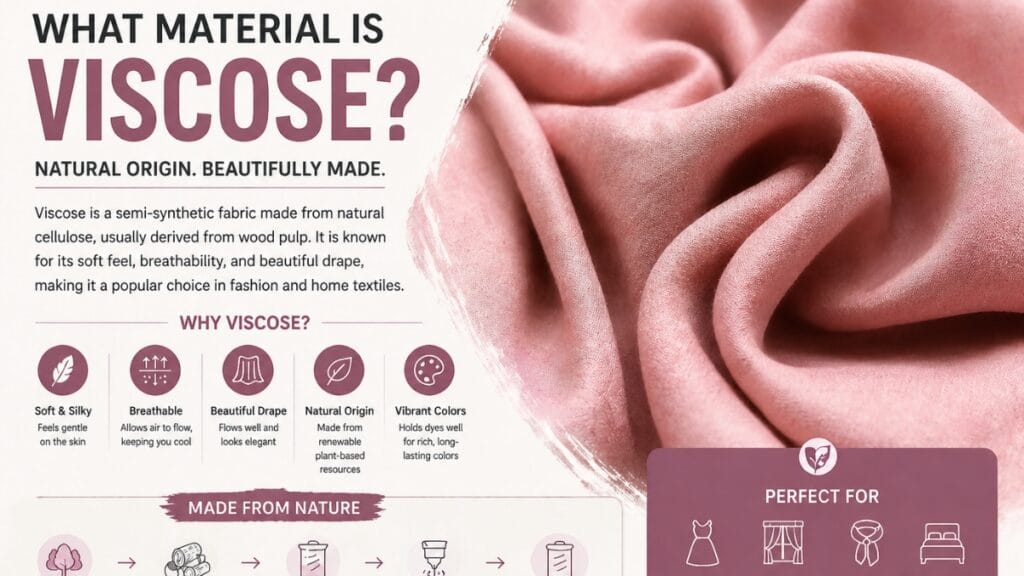
Viscose is a fabric that has become popular in the fashion world. Known for its silky texture, it offers a luxury feel without the high cost. If you’ve ever wondered, what material is viscose and why it’s so widely used, this post will explain everything you need to know about it. From its origins and properties to its growing role in sustainable fashion, we’ll break it all down.
Table of contents
- What Material Is Viscose? Understanding the Basics
- What Material Is Viscose in the Context of Fashion?
- What Material Is Viscose? Its Environmental Impact
- How Does Viscose Compare to Other Fabrics?
- What Material Is Viscose and Why It’s So Popular in Fashion
- What Material Is Viscose and Its Role in Sustainable Fashion?
- What Material Is Viscose in High-Performance Activewear?
- Common Misconceptions About Viscose
- Conclusion: What Material Is Viscose and Its Future in Fashion
- FAQ’s
What Material Is Viscose? Understanding the Basics
Viscose, also called rayon, is a semi-synthetic fiber. It’s made from regenerated cellulose, which comes from wood pulp or cotton. The process of turning this cellulose into viscose involves dissolving it with chemicals, then spinning it into fibers. So, what material is viscose? It’s a blend of natural and synthetic elements, which gives it unique qualities like softness, breathability, and shine.
How Is Viscose Made?
The production of viscose starts with extracting cellulose from trees or cotton. After that, chemicals dissolve the cellulose into a solution. This solution is pushed through tiny holes, forming fibers. These fibers are then turned into yarn, woven, or knitted into fabric. The process is cost-effective, which is why viscose is so common in the textile industry. If you want to know more about viscose material read our article : What Is Viscose Material Eco Friendly Or Not Explained?
What Material Is Viscose in the Context of Fashion?

So, what material is viscose when we think about fashion? Viscose is often used as an affordable alternative to silk. It feels soft and smooth against the skin, and its luxurious texture makes it popular for dresses, blouses, and evening wear. Viscose fabric can also be dyed easily, making it perfect for colorful designs and patterns. This fabric’s ability to drape beautifully is why designers love using it for flowing garments like skirts and dresses.
What Material Is Viscose? Its Environmental Impact
When you ask what material is viscose, it’s also important to consider its environmental impact. Viscose comes from renewable resources, like trees and cotton. This makes it an eco-friendly option compared to synthetic fabrics like polyester. However, traditional viscose production uses harsh chemicals, which can harm the environment.
Luckily, the process has improved. More sustainable methods are being used, like Lyocell, which requires fewer chemicals and recycles water during production. This means viscose can be a much greener option if produced responsibly, helping the fashion industry move toward more eco-friendly choices. Searching about viscosity read our article : What is Viscosity and How It Influences the Texture of Fabrics
How Does Viscose Compare to Other Fabrics?
If you’re wondering what material is viscose compared to other fabrics, let’s break it down. Viscose has many advantages, but it’s good to know how it stacks up against other materials commonly used in fashion.
Viscose vs. Silk
Fabric Viscose is often compared to silk because both fabrics feel luxurious. However, silk is a natural fiber, which makes it more expensive. What material is viscose compared to silk? Viscose gives you a similar look and feel at a much lower cost. However, silk tends to last longer and is more breathable than viscose.
Viscose vs. Polyester
Polyester is a popular synthetic fabric known for its durability and low cost. What material is viscose compared to polyester? Viscose is softer and feels more natural. It’s breathable, but polyester is more resistant to wrinkles. Polyester is also easier to care for, whereas viscose requires gentle handling to keep it in good condition. If you dont know that viscose is natural or not read our article : Is Viscose A Natural Fiber Viscose Biodegradable Or Not
What Material Is Viscose and Why It’s So Popular in Fashion
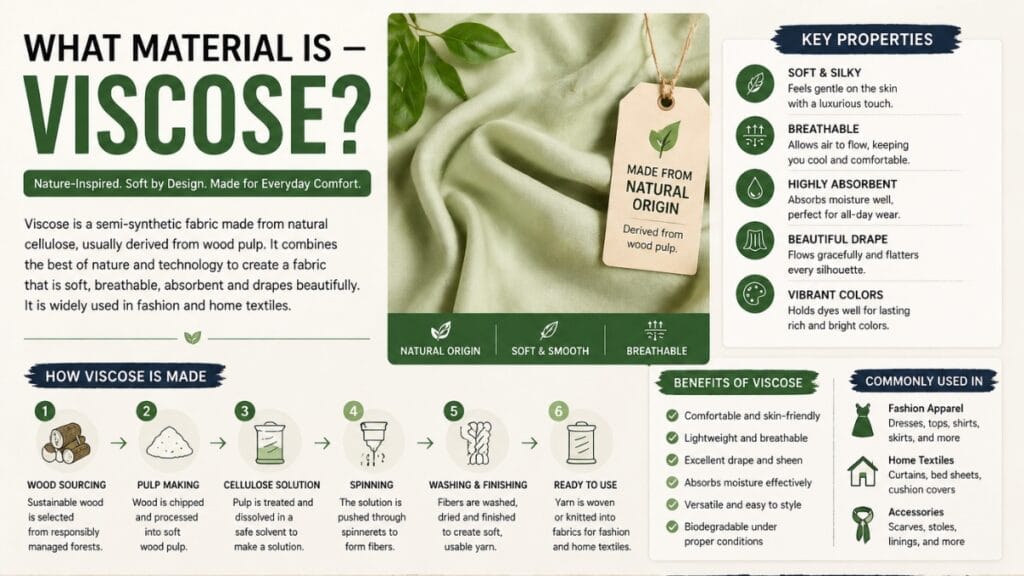
What material is viscose, and why is it so beloved by designers? The fabric has a luxurious feel but comes at an affordable price. This makes it accessible to a wider audience while still looking high-end. Viscose is also incredibly versatile. It can be blended with other fibers, like polyester or spandex, to enhance its properties. These blends make viscose a popular choice for a range of garments, from casual wear to formal attire.
Viscose’s ability to hold dye means it’s always on trend. It can be made into vibrant colors and patterns, making it perfect for fashion-forward collections. Its soft texture and beautiful drape make it a favorite for evening wear, while its breathability and lightweight nature also make it suitable for summer styles. If you want to know about the viscose toxicity read our article : Is Viscose Toxic? Understanding the Environmental Impact in 2026
What Material Is Viscose and Its Role in Sustainable Fashion?
Sustainability is a growing concern in the fashion industry, and what material is viscose in relation to this movement? Viscose, when produced using eco-friendly practices, can be a sustainable fabric. Its raw materials, such as wood pulp, come from renewable sources, and many brands are moving toward using closed-loop systems to recycle the chemicals involved in viscose production. This helps reduce the environmental impact of viscose and makes it a viable option for eco-conscious consumers.
By choosing brands that use sustainable production methods for viscose, consumers can support fashion that is both stylish and environmentally friendly. As more brands adopt greener practices, viscose’s role in sustainable fashion will continue to grow. Why people think viscose is bad for clothing for clearing your any confusion of it read our article : Why is Viscose Bad For Clothing And Daily Use
What Material Is Viscose in High-Performance Activewear?
Viscose is not just limited to formal or casual wear. What material is viscose in activewear? Due to its breathability, softness, and moisture-wicking properties, viscose is making its way into the world of activewear. Blended with fabrics like spandex or polyester, viscose helps create comfortable, breathable workout gear that still looks stylish. It can be used in everything from leggings to running tops, providing an affordable, yet high-performance alternative to traditional athletic fabrics.
Common Misconceptions About Viscose
When answering what material is viscose, there are a few misconceptions to clear up.
- Viscose is Completely Natural: While viscose comes from natural cellulose, the process involves chemicals, making it a semi-synthetic fiber.
- Viscose is Not Durable: Some people think viscose isn’t durable, but when properly cared for, it can last a long time. It’s just more delicate than other fibers like polyester.
- Viscose is the Same as Rayon: While viscose is a type of rayon, not all rayon is viscose. Viscose specifically refers to the production process used to make it.
Conclusion: What Material Is Viscose and Its Future in Fashion
To answer the question what material is viscose, it’s a semi-synthetic fabric made from cellulose. It’s affordable, soft, and has a luxurious texture. As the demand for sustainable fabrics grows, viscose is expected to continue playing a big role in fashion. With more eco-friendly production methods, viscose can become an even better choice for designers and consumers who want to create and wear beautiful, sustainable clothing. Dont Know the difference between viscose or cotton read our article : Is Viscose a Good Fabric Compared To Cotton
FAQ’s
Viscose is used in a variety of garments, including dresses, blouses, skirts, and scarves. It’s valued for its softness, breathability, and luxurious feel.
Viscose is a type of rayon. Rayon is the finished product, while viscose refers to the method used to create it.
Viscose can be eco-friendly if produced using sustainable practices. Look for brands that use Lyocell or closed-loop systems for greener options.
Viscose and cotton are both breathable, but viscose has a shinier appearance and drapes better. Cotton is more durable and absorbent.
Viscose is typically lightweight and suitable for warmer weather, but it can be blended with wool to make it suitable for winter.