


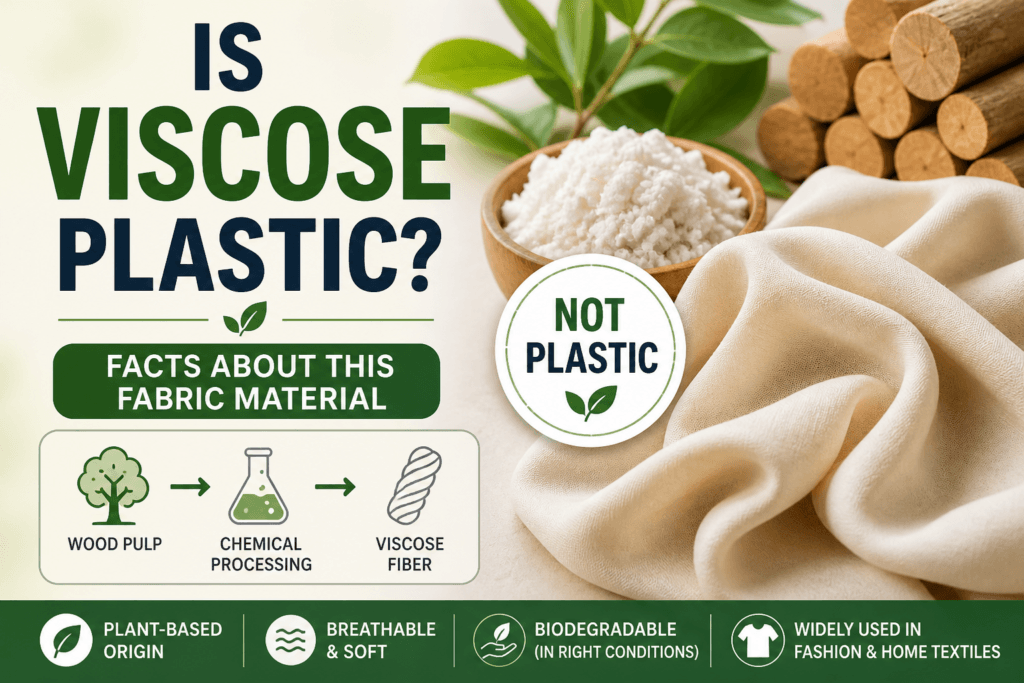
Many people ask a simple question: is viscose plastic? The answer is not as direct as it seems. Viscose looks soft like cotton. It feels smooth like silk. Yet, some people link it with synthetic materials. This confusion often leads to wrong choices.
In today’s world, people care more about fabric safety. They also think about the environment. So, knowing what viscose really is matters a lot. This guide explains everything in a clear and simple way.
You will learn what viscose is, how it is made, and whether it acts like plastic. You will also see how it compares to other fabrics. By the end, you will understand if viscose is a good choice for you.
Table of contents
- What Is Viscose and How Is It Made
- Is Viscose Plastic and Why People Think So
- Is Viscose Plastic or a Natural Fiber Alternative
- Is Viscose Plastic in Terms of Environmental Impact
- Is Viscose Plastic Compared to Polyester and Nylon
- Properties of Viscose Fabric
- Common Uses of Viscose in Daily Life
- Benefits of Choosing Viscose Fabric
- Common Myths About Viscose Fabric
- How to Care for Viscose Clothing
- Conclusion
- FAQ Section
What Is Viscose and How Is It Made
Viscose is a semi-synthetic fabric. It comes from natural sources. The main source is wood pulp. Trees like beech, pine, and bamboo are often used.
The process starts with wood. Workers break it down into pulp. Then, they treat it with chemicals. These chemicals turn the pulp into a thick liquid. After that, they push this liquid through tiny holes. This step forms thin fibers.
Finally, these fibers turn into yarn. The yarn becomes fabric.
This process makes viscose different from both natural and synthetic fabrics.
Key points about viscose production:
- It starts from natural wood pulp
- It uses chemical processing
- It turns into soft fibers
- It creates a silk-like fabric
Because of this mix, viscose sits between natural and synthetic materials.
Is Viscose Plastic and Why People Think So
The question is viscose plastic comes from confusion. Many people think all processed fabrics are plastic. That is not true.
Plastic comes from petroleum. Materials like polyester and nylon fall into this group. These fabrics do not break down easily.
Viscose does not come from petroleum. It comes from plants. However, it goes through chemical treatment. That is why people mistake it for plastic.
Here are the main reasons for confusion:
- It is not fully natural
- It involves chemical steps
- It feels smooth like synthetic fabrics
- It looks similar to silk or polyester
Still, viscose is not plastic. It behaves differently in many ways.
Is Viscose Plastic or a Natural Fiber Alternative
When people ask is viscose plastic, they often want to know if it is natural. The answer is both yes and no.
Viscose starts as a natural material. Wood pulp is fully natural. But the process changes it. Chemicals alter its structure. So, it becomes semi-synthetic.
Compared to natural fibers:
- Cotton grows directly as fiber
- Wool comes from animals
- Linen comes from plants
Viscose does not exist as fiber in nature. Humans create it from pulp.
Still, it remains closer to natural fibers than plastic ones. It also feels breathable and soft. That makes it a strong alternative.
Is Viscose Plastic in Terms of Environmental Impact
Many users ask is viscose plastic when they think about the environment. This is an important concern.
Viscose breaks down faster than plastic. That gives it an advantage. Plastic fabrics can stay for hundreds of years. Viscose does not last that long in waste.
However, its production has issues:
- It uses strong chemicals
- It may pollute water if not managed well
- It can lead to deforestation
Some brands now use better methods. They recycle chemicals and protect forests.
So, viscose is not plastic. But it is not fully eco-friendly either. It depends on how companies produce it.
Is Viscose Plastic Compared to Polyester and Nylon
To answer is viscose plastic, it helps to compare it with real plastic fabrics.
Polyester and nylon come from oil. They are fully synthetic. They resist wrinkles and last long. However, they trap heat and release microplastics.
Viscose behaves differently:
- It feels softer
- It absorbs moisture
- It allows airflow
- It breaks down faster
Here is a simple comparison:
- Polyester: strong, not breathable, plastic-based
- Nylon: durable, elastic, plastic-based
- Viscose: soft, breathable, plant-based origin
This shows viscose is not plastic. It sits closer to natural fabrics.
Properties of Viscose Fabric
Viscose has many useful qualities. These features make it popular in clothing.
Main properties include:
- Soft texture
- Smooth finish
- Lightweight feel
- Good breathability
- High moisture absorption
It also drapes well. That means it flows nicely on the body. Designers often use it for dresses and shirts.
However, viscose has some limits:
- It wrinkles easily
- It weakens when wet
- It needs gentle care
Even with these limits, many people prefer viscose for comfort.
Common Uses of Viscose in Daily Life
Viscose appears in many products. You may already use it without knowing.
Common uses include:
- Clothing like dresses and shirts
- Linings in jackets
- Home textiles like curtains
- Bed sheets and pillow covers
Fashion brands use viscose for its soft feel. It also works well in hot weather.
Because it breathes well, it suits summer wear. It keeps the body cool and dry.
Benefits of Choosing Viscose Fabric
Viscose offers several benefits. These advantages explain its popularity.
Key benefits:
- Comfortable for daily wear
- Affordable compared to silk
- Lightweight and airy
- Good color absorption
- Smooth and stylish look
It also blends well with other fabrics. This improves strength and durability.
For people who want soft fabric at a lower cost, viscose is a good choice.
Common Myths About Viscose Fabric
Many myths surround viscose. These myths create confusion.
Let’s clear some of them:
- Myth: Viscose is plastic
Fact: It comes from plant pulp - Myth: Viscose is fully natural
Fact: It is semi-synthetic - Myth: Viscose harms skin
Fact: It is usually skin-friendly - Myth: Viscose is not durable
Fact: It lasts well with proper care
Understanding these facts helps you make better decisions.
How to Care for Viscose Clothing
Proper care keeps viscose in good shape. It needs gentle handling.
Follow these simple tips:
- Wash in cold water
- Use mild detergent
- Avoid strong wringing
- Air dry instead of machine drying
- Iron at low heat
If you treat it well, viscose can last a long time.
Conclusion
So, is viscose plastic? The clear answer is no. Viscose does not come from petroleum. It starts from natural wood pulp. However, it goes through chemical processing. That makes it a semi-synthetic fabric.
Viscose stands between natural and synthetic materials. It offers comfort like cotton and a smooth feel like silk. At the same time, it avoids many problems linked with plastic fabrics.
Still, its impact depends on how companies produce it. Responsible production makes viscose a better option.
If you want a soft, breathable, and affordable fabric, viscose can be a smart choice.
FAQ Section
Viscose is semi-synthetic. It comes from natural pulp but uses chemicals.
No, viscose does not contain petroleum-based plastic.
Yes, it is soft and usually safe for sensitive skin.
Can viscose biodegrade?
Is viscose better than polyester?