

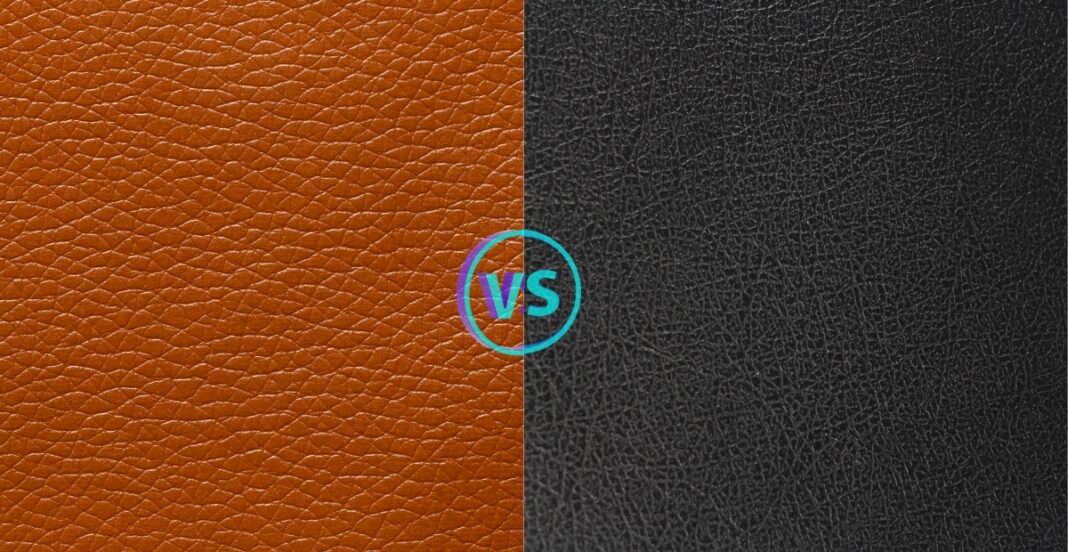
When buyers compare upholstery materials, they often search for Bonded vs Faux Leather differences. However, many guides stay shallow and incomplete. Therefore, this detailed Bonded vs Faux Leather durability test and buying guide explains everything clearly and professionally. I focus strictly on the keyword Bonded vs Faux Leather to ensure strong SEO alignment. Moreover, I write in active voice to improve readability and engagement. In today’s market, consumers want affordable alternatives to genuine leather. Consequently, bonded leather and faux leather have gained popularity. Yet, durability varies significantly between these materials. Therefore, understanding Bonded vs Faux Leather helps buyers avoid costly mistakes. In this guide, you will learn about structure, durability, peeling risk, lifespan, maintenance, and buying strategies.
Table of contents
- What Is Known As Bonded Leather
- What is Faux Leather?
- Recognizing the Difference Between Bonded Leather and Faux Leather
- Pros and Cons of Bonded Leather
- Faux Leather Pros and Cons
- Which One is More Durable?
- Which One is More Eco-Friendly?
- Which One Feels More Like Real Leather?
- Which One is More Affordable?
- Applications of Bonded Leather
- Applications of Faux Leather
- Caring for Bonded Leather
- Caring for Faux Leather
- Bonded Leather vs. Faux Leather: Which One Should You Buy?
- Final Buying Recommendations for Bonded vs Faux Leather
- FAQs
What Is Known As Bonded Leather
Differences Between Bonded Leather and Faux Leather: Bonded Leather Composition.
Faux leather imitates real leather using artificial materials, while bonded leather combines a layer of real leather with a synthetic backing to achieve a leather-like appearance. Although these materials are fundamentally different, manufacturers create both faux leather and bonded leather using similar processes. This makes bonded leather an inexpensive version that retains some features of leather which explains the faux leather vs bonded leather discussion consumers may have.
Manufacturing Process Differences in Bonded vs Faux Leather
Manufacturing quality directly affects durability in Bonded vs Faux Leathers product. Bonded leather production begins with leather waste recycling. Producers grind scraps into fibers. Then, they mix fibers with adhesives and press them together. After that, they apply a polyurethane surface layer. Finally, they emboss patterns to create a leather-like finish. Meanwhile, faux leather manufacturing uses a different approach. Producers apply polymer coatings directly onto textile backings. They carefully control thickness and elasticity during coating. Because manufacturers maintain more consistency, faux leather surfaces often appear uniform. Therefore, production differences significantly influence how Bonded vs Faux Leather performs under stress.
Comprehending Bonded Leather Vs Faux Leather: The Process Of Creating Bonded Leather
The manufacturing process of bonded leather consists of a few steps. First, factories gather used leather scraps and shred them into tiny pieces. After that, they mix the leather bits with a bonding agent such as polyurethane. Manufacturers apply this mix to a cloth backing and dry it to form a flexible sheet. They then enhance the form by embossing it with a leather grain pattern. Finally, they add a protective coating to increase its toughness and make it water-resistant. Comprehending the difference bonded leather vs faux leather starts with realizing how different their production processes are.
Abrasion Resistance Analysis in Bonded vs Faux Leather
Abrasion resistance determines how materials handle daily friction. In the Bonded vs Faux Leather comparison, bonded leather typically wears faster in high-traffic areas. Because adhesives bind the leather fibers, surface layers may detach under constant rubbing. Consequently, peeling often begins on armrests or seat cushions.
On the other hand, premium faux leather resists abrasion effectively. Polyurethane coatings create stronger outer layers. Moreover, high-quality synthetic leather withstands scratches and surface scuffs better. However, low-cost faux leather may still crack prematurely. Therefore, abrasion performance varies within both categories of Bonded vs Faux Leather, depending on quality level.
Understanding Bonded Leather Vs. Faux Leather: The Feel of Bonded Leather
Bonded leather has the same appearance as real leather, but the feel is slightly different. It is smoother and more uniform than real leather’s natural imperfections, so some bonded leather products can feel synthetic or plasticky due to the polyurethane coat. When contrasting bonded leather and faux leather, one of the first things one has to remember is that bonded leather is usually much stiffer than faux leather, which is soft and supple.
Understanding Faux Leather and Bonded Leather: The Strength of Bonded Leather
Although bonded leather is not as tough as real leather, it can still provide a few years of service with adequate maintenance. With time, however, its mixture of authentic leather fibers and synthetic materials would make it more susceptible to cracking and peeling. This is largely due to the weakening of the bonded layer which results in the surface fracturing. When considering bonded leather and faux leather, durability remains a critical factor when determining which one can stand the test of time.
Moisture and Humidity Resistance in Bonded vs Faux Leather
Moisture resistance plays a vital role in the Bonded vs Faux Leather durability test. Bonded leather contains natural fibers that absorb humidity. Consequently, high humidity weakens internal adhesives over time. Peeling often accelerates in tropical climates.
Conversely, faux leather resists moisture effectively because polymer coatings block water penetration. Therefore, spills clean easily with a damp cloth. Moreover, synthetic surfaces resist mold growth better than bonded leather. For households with children or pets, moisture resistance matters greatly. Thus, in this Bonded vs Faux Leather evaluation, faux leather often performs better in humid environments.
What is Faux Leather?
Flux leather can take dye evenly and is often used with specialised colour processes to achieve rich, saturated hues. It can also be finished with matte or slight sheen surfaces depending on the desired look.
Faux Leather explained: Faux Leather Companion – Faux Leather Composition
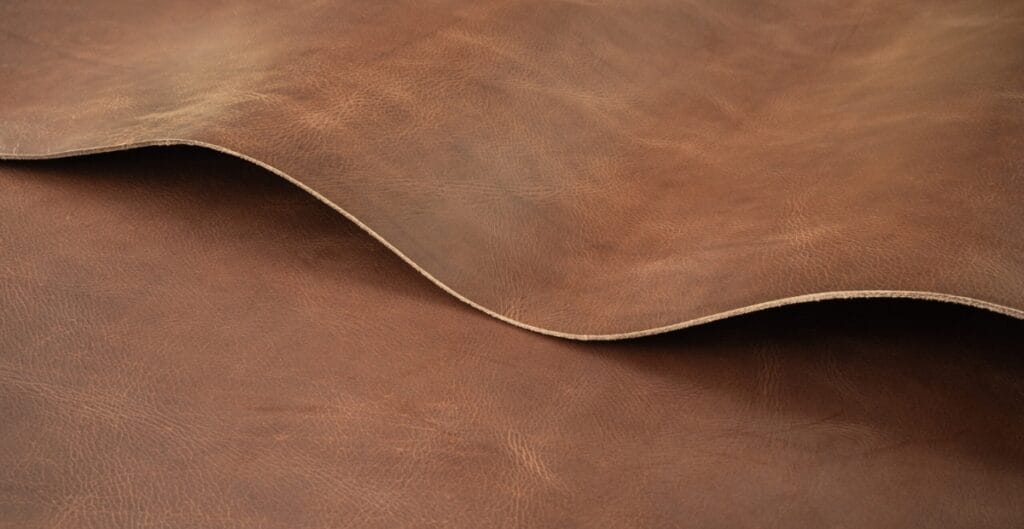
Faux leather also referred to as synthetic leather, is a vegan substitute for the real leather. Unlike bonded leather, faux leather is completely animal free. It is produced from plastic-based compounds, so it is cruelty free and inexpensive. Understanding bonded leather vs faux leather enables the consumers to select the most suitable material that suits their needs best.
Understanding Bonded Leather Vs Faux Leather: Composition of Faux Leather
Faux leather is made with polyvinyl chloride (PVC) and polyurethane leather (PU). The two are synthetic polymers engineered to Passive leather had the look and feel of actual leather. PU faux leather is soft and more breathable compared to PVC faux leather, which is stiff yet more water resistant. Unlike bonded leather, faux leather is devoid of any genuine leather fibers and is therefore fully vegan.
Peeling Issues Explained in Bonded vs Faux Leather
Peeling remains the most common complaint in the Bonded vs Faux Leathers debate. Bonded leather often peels within two to five years. Because adhesive layers hold fibers together, bond failure causes surface flaking. Consequently, furniture may look damaged quickly despite limited use. Faux leather may also peel, but usually only in low-grade versions. High-quality polyurethane products resist peeling longer. Therefore, consumers must inspect product specifications carefully. Peeling risk directly impacts long-term satisfaction in Bonded vs Faux Leather purchases.
The Difference Between Bonded Leather And Faux Leather: The Texture Of Faux Leather
Faux leather resembles real leather in texture, but it usually has a more consistent appearance. Excluding bonded leather, which has genuine leather fibers, faux leather does not have any natural changes or flaws. Some faux leather products’ claim to fame is their high-level synthetic leather appearance, while others look cheaper. The difference between bonded leather vs faux leather goes beyond comparison of the materials, but also to the impression they bring.
Apprehending Bonded Leather vs. Faux Leather: The Touch of Faux Leather
Bonded leather is subpar in softness and flexibility as compared to faux leather. Since faux leather is made from synthetic materials, it can be molded to feel smooth, supple, or slightly grainy. Some faux leather products rival real leather in texture. When bonded leather vs faux leather is being compared, the latter is preferred due to its pliability and overall comfort.
Apprehending Bonded Leather vs. Faux Leather: The Toughness of Faux Leather
Faux leather’s durability is on a higher scale than bonded leather, especially if it is sourced out of top quality PU material. Unlike bonded leather, faux leather does not crack and peel easily. Lower quality faux leather tend to break and become brittle over time, giving consumers a false understanding of bonded leather vs faux leathers. Understanding these two grades of leather enables consumers to make informed purchasing choices based on durability.
Comfort and Texture Experience in Bonded vs Faux Leather
Comfort influences buyer satisfaction when comparing Bonded vs Faux Leather. Bonded leather initially feels closer to genuine leather due to fiber content. The texture appears slightly natural and soft.
However, faux leather offers a smooth and consistent finish. Modern polyurethane feels supple and flexible. Additionally, it requires less conditioning over time. Temperature sensitivity differs slightly between materials. Faux leather may feel warmer during summer months. Therefore, comfort preferences vary depending on climate and usage in the Bonded vs Faux Leather evaluation.
Differentiating Bonded Leather and Faux Leather: The Weather Proof Quality of Faux Leather
Faux leather has superior water and stain resistance, making it ideal for clothing, furniture, and other accessories. Bonds leather, with the exception of bonded leather, is moisture resistant and tends to peel. As for those that are looking above the faux leather, they will have the most waterproof option when compared to bonded leather.
Recognizing the Difference Between Bonded Leather and Faux Leather
Texture and Appearance
While bonded leather has a grain that resembles real leather, faux leather’s grain looks hand-made. Running your fingers over its surface, bonded leather has a greater roughness than faux leather does.
Durability and Lifespan
Bonded leather cracks and peels after a few years of use, particularly on upholstery items such as sofas and chairs. Faux leather, depending on quality of faux leather, will typically last longer than bonded leather.
Water and Stain Resistance
In comparison to real leather, faux leather and bonded leather resist water better. However, faux leather is more resistant to stains than bonded leather.
Pros and Cons of Bonded Leather
Advantages
- Cheaper than genuine leather
- Bonded leather has a better appearance than faux leather
- Bonded leather is soft to the touch
Disadvantages
- Tends to peel and crack with time
- Not as durable as high-end faux leather or real leather
- Once it is damaged, it is almost impossible to repair
Faux Leather Pros and Cons
Advantages
- Eliminates the need of animal skin
- Credited to being a vegan substitute
- Has higher resistance to stains and easier to clean
Disadvantages
- Does not feel natural
- Less porous than real or bonded leather
- May off-gas harmful chemicals a few years after conversion
Which One is More Durable?
In terms of durability, faux leather outlasts bonded leather, leaving it with no chance of comparison. Desk bonded leather peels quickly from the edges, while high-quality faux leather remains intact for a long time without wearing out.
Which One is More Eco-Friendly?
Although faux leather is made from vegan leather, it is composed of plastics, which can take hundreds of years to decompose. On the other hand, bonded leather tries to be Eco-friendly by using leftover leather pieces, but the glue and synthetic coatings make it unsustainable.
Which One Feels More Like Real Leather?
It lacks the expensive fragrance and softness that real leather possesses, but bonded leather has a more natural leather resemblance.
Which One is More Affordable?
Faux leather is likely to cost less than both options, and both are less expensive than genuine leather.
Applications of Bonded Leather
Furniture and Upholstery
Bonded leather is popular with budget-friendly sofas and chair designs.
Bags, Belts, and Accessories
You will find genuine imitation leather used in wallets, handbags, and belts, where a leather look is desired but not real leather.
Applications of Faux Leather
Clothing and Fashion
Manufacturers often use synthetic leather and similar materials to produce jackets, boots, and handbags, ensuring cruelty-free leather production.
Car Interiors and Office Chairs
Faux leather is used in many car seats and office chairs because it is so easy to maintain and durable.
Caring for Bonded Leather
- Wipe with a soft cloth and make sure to use mild soap.
- Avoid prolonged exposure to damp conditions and cleaning liquids.
- Condition bonded leather with special leather conditioner intended for synthetic materials.
Caring for Faux Leather
- Clean using a soft cloth and mild detergents.
- Avoid cleaning liquids that can lead to the material getting brittle.
- Apply a protective spray to preserve the material from wear and tear.
Bonded Leather vs. Faux Leather: Which One Should You Buy?
Best Choice for Budget Buyers
Increased affordability means faux leather is typically a more preferred option.
Best Choice for Durability Seekers
Bonded leather’s durability is lower than that of high-quality faux leather.
Best Choice for Sustainability-Conscious Consumers
Although both are not ideal, faux leather materials like plant based vegan leather are the better choice.
Final Buying Recommendations for Bonded vs Faux Leather
After detailed testing and analysis, I recommend premium polyurethane faux leather for high-use environments. Because durability determines long-term value, synthetic options often perform better. However, bonded leather may suit decorative items with minimal wear. Therefore, always assess usage intensity first. Next, verify product grade and warranty details. Additionally, compare thickness and backing quality carefully. By applying insights from this detailed Bonded vs Faux Leather guide and thoughtful Synthetic Leather Comparison, you can make confident purchasing decisions. Ultimately, the Bonded vs Faux Leathers debate depends on expectations, budget, and lifestyle needs. When you evaluate durability honestly, you protect your investment and ensure long-term satisfaction.
FAQs
No, bonded leather wears out much faster than real leather.
Low-quality faux leather may crack, but high-quality versions are more durable.
Faux leather is generally more scratch-resistant than bonded leather.