


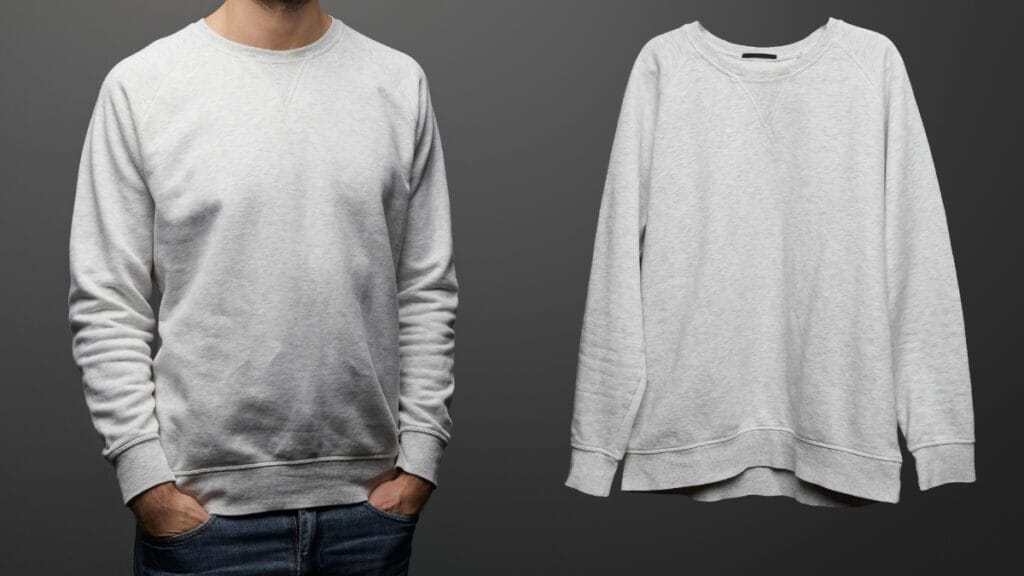
Wearing a sweatshirt feels warm, soft, and comforting. Many people enjoy sweatshirts because they provide both style and coziness. Have you ever wondered what sweatshirt fabric is called and what fabrics manufacturers use to make sweatshirts? To understand sweatshirt materials, you need to look closely at their fabric composition. This blog explains the different fabrics used in sweatshirts and how brands choose them.
Table of contents
What Is the Fabric of Sweatshirts?
Manufacturers mainly use knitted fabric to make sweatshirts because it offers warmth, softness, and breathability. Cotton, polyester, or a blend of both are the most common choices. Sweatshirts fall under leisure and athletic wear, so brands often rely on cotton-polyester fabrics. This combination creates the soft, relaxed feel that people associate with sweatshirts.
Cotton’s Contribution to Sweatshirt Fabric
Cotton is one of the most popular materials used in sweatshirt production. Its soft and breathable nature keeps wearers comfortable throughout the day. As a natural fiber, cotton offers better comfort and airflow than many synthetic fabrics.
Brands often use cotton for lightweight sweatshirts worn during spring or fall. Manufacturers spin cotton fibers into a plush texture that traps warmth without adding heavy weight. This quality makes cotton sweatshirts ideal for layering in cool weather or wearing alone in mild temperatures.
Polyester’s Contribution to Sweatshirt Fabric
Polyester is another widely used material in sweatshirt manufacturing. Unlike cotton, polyester comes from synthetic polymer fibers. While it offers less breathability, it provides excellent durability and moisture-wicking performance. Polyester sweatshirts resist shrinking, fading, and wrinkling, which makes them easy to maintain and long-lasting.
Polyester also helps sweatshirts retain their shape. The fabric resists stretching, which makes it ideal for athletic and performance wear. In addition, polyester pulls moisture away from the skin. This feature helps keep the wearer dry and comfortable during physical activity.

Blended Fabrics: The Best of Both Worlds
Many sweatshirts use blended fabrics that combine cotton and polyester. These blends balance comfort, breathability, and durability. A common 50/50 cotton-polyester blend feels soft due to cotton while staying strong and moisture-resistant because of polyester.
Manufacturers often use blended fabrics in athletic wear because they offer both comfort and function. The fabric’s performance depends on the blend ratio. Some blends focus more on softness, while others emphasize durability and moisture control.
Sweatshirt Fabric: Analyzing Its Composition
After understanding sweatshirt fabric types, it helps to examine their composition. Fabric composition varies based on the manufacturer, intended use, and design. Each material plays a specific role in comfort and performance. The sections below explain how each component contributes to sweatshirt fabric.
Sweatshirt Fabric Composition: Role of Cotton
Most sweatshirt fabrics contain a high percentage of cotton. Cotton fibers feel soft, breathable, and comfortable on the skin. They absorb sweat effectively and help regulate body temperature.
Cotton improves overall comfort and works well for sensitive skin because it is hypoallergenic. From an environmental perspective, cotton remains a renewable and biodegradable material, which makes it a more sustainable option.
Polyester in Sweatshirt Fabric: Durability and Performance
Polyester adds strength and durability to sweatshirt fabric. Manufacturers often blend it with cotton to extend the garment’s lifespan. Polyester withstands frequent washing better than pure cotton.
This fiber also improves moisture-wicking performance. Polyester pulls sweat away from the skin and dries quickly. These qualities make it especially useful in athletic and workout sweatshirts.
Spandex: Adding Stretch to Sweatshirt Fabric
Some sweatshirt fabrics include spandex to add stretch and flexibility. Spandex allows the fabric to stretch and return to its original shape. This feature improves comfort and freedom of movement.
Athletic and performance sweatshirts often include spandex because it supports active movement. The added elasticity also helps the sweatshirt maintain its fit after repeated use.
Fleece: A Cozy, Warm Addition
Fleece is another common sweatshirt fabric, often used as an inner lining. Manufacturers make fleece from polyester and brush it to create a thick, soft texture. This process improves insulation and warmth.
Fleece sweatshirts work well in cold weather because they trap heat without feeling heavy. Their lightweight nature also makes them suitable for layering.
Types of Sweatshirt Fabrics and Their Uses
Different sweatshirt fabrics serve different purposes based on climate and activity. Fleece provides exceptional warmth and comfort. Its plush texture makes it a strong insulator, which suits winter wear. People often choose fleece sweatshirts for outdoor activities, layering, or relaxing at home.
French terry features a smooth outer surface and looped inner texture. In addition, this cotton-based fabric feels lightweight and breathable. Because of this, the inner loops absorb moisture, making it ideal for spring and fall wear. As a result, French terry sweatshirts work well for casual wear and athleisure because they balance comfort and breathability.
Fabric of Hoody Sweatshirts
Hoodies are a popular type of sweatshirt that includes a hood and drawstrings. Manufacturers commonly use cotton, polyester, or fleece blends for hoodies. These fabrics make hoodies thicker and warmer than standard sweatshirts.
People wear hoodies for many activities, including hiking, workouts, and lounging. The hood provides extra protection from wind and cold weather.
How to Care for Sweatshirt Fabric
Proper care helps sweatshirts last longer and maintain their appearance. Follow these fabric care tips:
- Wash sweatshirts in cold water to reduce shrinkage
- Use mild detergents to preserve fabric softness
- Avoid high heat during drying to prevent damage
- Always check and follow the manufacturer’s care label
Conclusion
Understanding sweatshirt fabric helps you choose the right garment for your needs. Manufacturers use cotton, polyester, fleece, and blended fabrics to achieve comfort, warmth, and durability. Each material offers unique benefits. With proper care and informed choices, your sweatshirt can stay cozy, stylish, and long-lasting for years.
FAQs
1. What is the most common fabric used in sweatshirts?
Manufacturers most commonly use cotton-polyester blends because they combine softness, durability, and moisture control.
2. What is the difference between fleece and French terry?
Fleece feels thicker and warmer, making it suitable for cold weather. French terry feels lighter and more breathable, which works better in mild temperatures.
3. Can sweatshirt fabric shrink in the wash?
Yes, cotton-based sweatshirts can shrink. Washing in cold water and using low heat or air drying helps prevent shrinkage.