


Introduction
Viscose is a commonly used semi-synthetic fabric made from regenerated cellulose, often derived from wood pulp. It combines the softness of cotton with the luster of silk, therefore highly used in contemporary fashion. Viscose dresses, scarves, and suits are cherished for their smoothness and breathability.
Nonetheless, viscose’s delicate nature raises concerns for many users. One major question is: does viscose shrink? This is pertinent because any amount of shrinkage can distort fit, style, or comfort. The right knowledge and care methods can prevent damage to your beloved viscose garments.
This article will describe the behavior of viscose (along with other fabrics) in wash and drying cycles, and what you can do to maintain its pristine condition.
Does Viscose Shrink? (Answering directly)
The answer is a succinct yes; viscose does shrink, especially if not well taken care of. Negligent washing or drying techniques such as using hot water and high heat, lead to shrinkage. This phenomenon occurs due to the weakening and swelling of the viscose fibers in hot, moist environments.
Common causes of thinning out viscose garments are:
- Water temperature: hot water can ruin the fibers
- Drying method: Tumble drying leads to excessive rapid contraction of fiber length.
- Fabric type: Proportionate shrinking occurs in pure viscose fabrics compared to blended versions, where pure fabrics generally have a higher propensity of shrinkage.
Emphasis on proper washing and drying procedures helps inhibit excessive garment shrinkage, which we will further elaborate on below.
How Much Does Viscose Shrink?
Garments made from viscose fibers tend to shrink 3% to 5% within standard conditions. Extreme caretaking factors such as excessive agitation will lead to a further 10% drop in volume, drastically altering the garments size.
The comparison with other fabrics are as follows:
- Uncontrolled cotton shrinks similarly to viscose (2-5%) in raw form, but pre-shrunk cotton is rare.
- Polyester, a fully synthetic material, has a reputation of rare shrinkage.
- Rayon, which is closely related to viscose, also has a propensity to shrink in hot water.
Viscose is sitting in between natural and synthetic fibers when it comes to susceptibility for shrink risk. They are more delicate than synthetics but easier to care for (not as fragile) than wool or pure rayon.
Why Does Viscose Shrink?
Primary reason for shrinkage is the fiber structure of viscose. While dry, the fibers maintain and withstand holding shape. In a wet environment, the fibers become weaker and susceptible to warping. Heat, agitation, or both strengthens the filaments, initiating shrinkage.
This can be described as:
- Heat exposure during washing or drying binds the fibers, resulting in contraction.
- The addition of water during washing results in absorption that leads to over-inflation of fibers. The fibres then dry in a compacted configuration.
- Spinning or tumbling mechanically agitates and disrupts the fiber bonds.
Because viscose lacks elasticity, it readily deforms and does not easily revert to its original shape. A gentle approach is critical for long-term maintenance of the fabric.
How to Wash Viscose to Prevent Shrinking

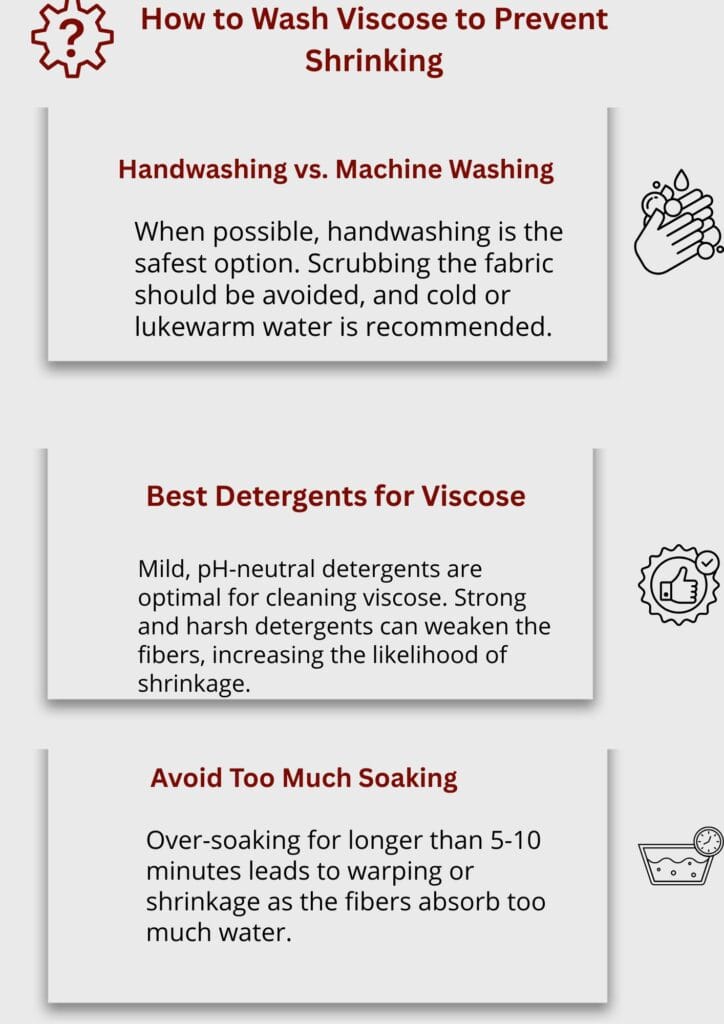
Handwashing vs. Machine Washing
When possible, handwashing is the safest option. Scrubbing the fabric should be avoided, and cold or lukewarm water is recommended. If a machine is necessary, select the gentle cycle and cold water only.
- Always place viscose garments in a mesh laundry bag.
- Avoid high-speed spinning.
- Do not exceed the machine’s washing load limit.
Best Detergents for Viscose
Mild, pH-neutral detergents are optimal for cleaning viscose. Strong and harsh detergents can weaken the fibers, increasing the likelihood of shrinkage. “Gentle” or “for delicates” are suitable labels.
- Avoid all fabric softener and bleach.
- Minimize the quantity, rinsing thoroughly to remove residue.
Avoid Too Much Soaking
Over-soaking for longer than 5-10 minutes leads to warping or shrinkage as the fibers absorb too much water. Instead of wringing, gently press water out, as this helps maintain shape.
How to Dry Viscose Without Shrinking
Air-Drying Flat Versus Hanging
For shape retention, viscose should be air-dried flat on a clean towel. Hanging may lead to stretching, especially when the fabric is damp. Always lay it in its natural resting shape.
- Utilize a breathable surface such as cotton or mesh.
- Turn fabric to its sides during mid-dry to aid in even drying mechanics.
- Do Not Tumble Dry Viscose Under Any Circumstances
Never Tumble Dry Viscose
The least ideal method for drying viscose is tumble drying. It is one of the most efficient ways to shrink it due to the heat and vigorous drying motion. Even the lowest dryer settings are risky.
- Should you need to use a dryer, which we do not advise, air-dry setting is preferable.
- Always check care labels when machine drying is involved.
Ironing Tips
Ironing viscose should be done with the steam setting on low. To prevent burns and discoloration, shine marks, or glossy marks, the garment should be ironed from the reverse side. Use a pressing cloth between the iron and the item being pressed.
- The first step should always be moistening the fabric directly before ironing.
- Aim to mist the fabric lightly beforehand while covering gently with fabric.
- The actual pressing should be done in short intervals without sliding the iron.
Can You Fix the Shrinkage on Viscose Fabrics?
Soaking in Hair Conditioner and Water
To fix stretched viscose, one can soak it in warm water with a tablespoon of hair conditioner for one to two hours. The conditioner softens the visocose fibers so that they can be easily stretched.
- Rinse with cold water.
- Air dry flat.
Gently reshape while still damp.
Reshape gently by hand until it is the desired shape.
If need be, secure with pins or lightweight clamps.
- Let air-dry flat.
- Viscose vs Cotton, Which Shrinks Worse?
Limitations
Although this method helps, it may not fully restore the original size, especially if the shrinkage was severe. The effectiveness depends on how much the garment shrank and the fabric quality.
Does Viscose Shrink More Than Cotton or Polyester?
When comparing viscose and cotton, they both shrink roughly the same amount, although cotton is pre-treated with chemicals to reduce shrinkage. Unlike the two, polyester is heat resistant, meaning that it keeps its shape and does not shrink.
Less Shrinkage With Blended Fabrics
These synthetic fibers can make fabric stronger, less fragile and more elastic by blending spandex, polyester or nylon with viscose.
- Keep an eye out for fibers “viscose-blend” or “viscose-polyester.”
- These types of fabrics are easier to wash and keep their shape.
Tips to Buy Viscose Clothing That Won’t Shrink Easily
Be careful when shopping for clothes because many clothes just bundled together. Inspect the tags and labels on the fabric to avoid purchase mistakes.
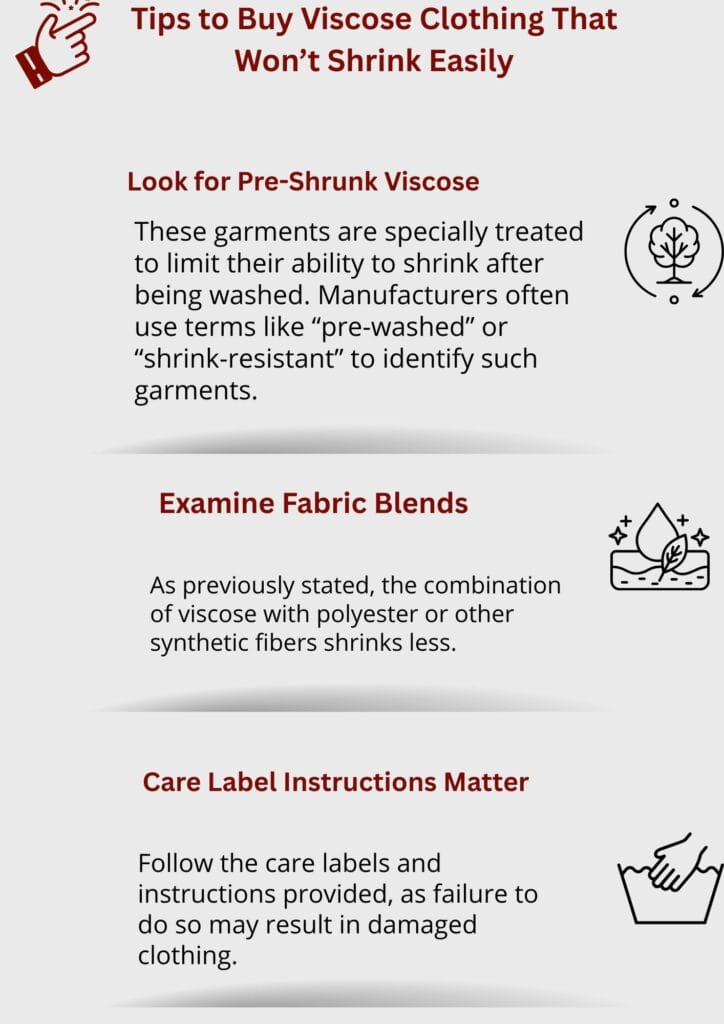
Look for Pre-Shrunk Viscose
These garments are specially treated to limit their ability to shrink after being washed. Manufacturers often use terms like “pre-washed” or “shrink-resistant” to identify such garments.
- Check with store staff to see if the fabric is pre-shrunk.
- Stay away from fast fashion and garments made from low-quality viscose
Examine Fabric Blends
As previously stated, the combination of viscose with polyester or other synthetic fibers shrinks less. For example, a 70/30 viscose-polyester blend is quite strong but also offers stretchability.
If you want low-maintenance clothes, do not buy 100% viscose. Choose these for activewear or clothes you wear daily.
Care Label Instructions Matter
Follow the care labels and instructions provided, as failure to do so may result in damaged clothing. “Dry clean only” labels should not be ignored unless attempts at cleaning with other methods are used confidently.
Common Myths About Viscose Shrinkage
“All Viscose Shrinks the Same Way”
For all the myths, exercise your common sense when it comes to how clothes are treated and woven. Lighter clothes are generally more prone to damage as compared to flowy, light viscose.
“Dry Cleaning Prevents Shrinkage Always”
While dry cleaning clothes is helpful, it is not necessary for everything. With some viscose clothing, hand washing is appropriate and safer. However, dry cleaning is best for more structured pieces like coats and lined dresses.
- Do read the care label carefully.
- If you have any questions, seek advice from a professional cleaner.
Conclusion
So, does viscose shrink? With self-care, you can effortlessly prevent shrinking. Blended viscose fabrics are more durable and better for everyday use.
- To maintain the appearance of your viscose clothing:
- Do not over-soak in water for washing.
- Stay away from using tumble dryers altogether.
- Adhere to care instructions and try to buy pre-shrunk clothes if available.