


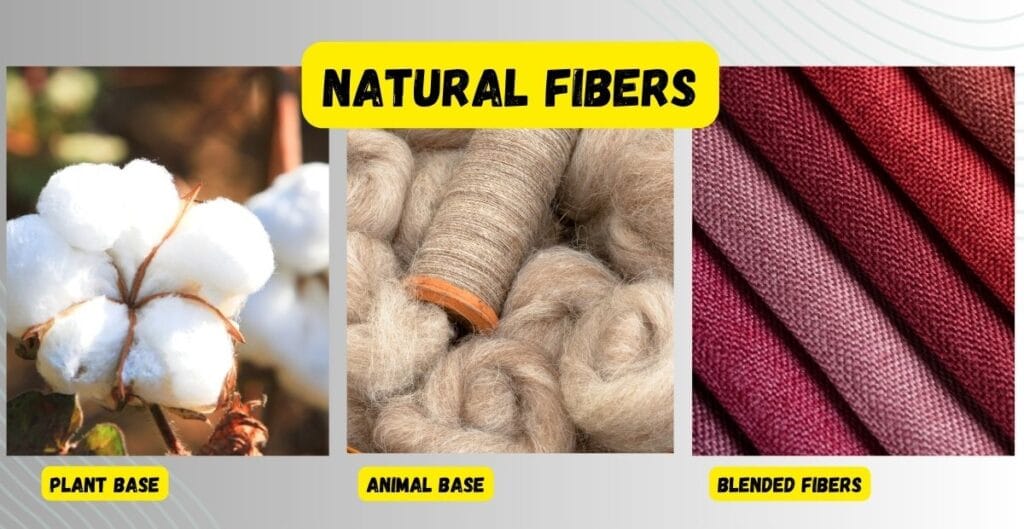
For thousands of years, natural fibers have been vital to humans for clothing, textiles, and even household items. It can be plant, animal or mineral based, as these materials are renewable, biodegradable, environmentally safe and appealing. Different industries including fashion, furniture, automotive, and even home décor are utilizing natural fibers due to the eco-friendly fibers awareness among people nowadays.
This post will cover the types of natural fibers, their sources as well as their key features to aid in comprehending their practical importance and unique characteristics.
🧵 Comparison Table: Types of Natural Fibers, Their Sources and Characteristics
| Fibers | Source | Key Features |
|---|---|---|
| Cotton | Plant | Soft and fluffy fabric which is diesel-free and breathable |
| Linen | Flax Plant | Crisp, lightweight and durable |
| Hemp | Hemp Plant | Strong and sustainable, mold resistant |
| Jute | Jute Plant | Eco-friendly, coarse and biodegradable |
| Ramie | Ramie Plant | Methane resistant and lustrous |
| Coir | Coconut Husk | Water resistant and coarse |
| Wool | Sheep | Warm, doe skin elastic and moisture wicking |
| Alpaca | Alpaca | Hypo-allergenic, insulating and soft |
| Cashmere | Cashmere Goat | Warm, lightweight and luxurious |
| Mohair | Angora Goat | Silky and glossy |
| Silk | Silkworm Cocoon | Soft, shiny, and strong |
| Camel Hair | Bactrian Camel | Insulating, soft, and breathable |
🌿 1. Plant-Based Fibers (Cellulose Fibers)
The primary component of these fibers is cellulose, a form of carbohydrate that forms the structure of plant cell walls. Variable parts of the plants such as seeds, stems and leaves serve as the source of basal fibers.
a. Cotton
- Source: Producing usings seed hairs from the cotton plant.
- Key Features:
- One of the most comfortable and soothing fibers to wear due to its porosity and softness.
- Excellent moisture absorption.
- Soft, breathable, and lightweight.
- Ideal for sensitive skin.
- Common Uses: T-e-shirts, underwear, denim jeans, towels, and right down to bedding.
- Read what is cotton Fabric…?
b. Linen (Flax)
- Source: Stalk of the flax plant.
- Key Features:
- Lightweight and tough
- Absorbent and quick-drying
- Naturally has anti-bacterial properties
- Sharp texture relative to cotton
- Common Uses: Suits, dresses, shirts, tablecloths.
- Here you can read What is Linen Fabric…?
c. Hemp
- Source: The stalks of the hemp plant.
- Key Features:
- Very durable
- Resistant to mold and ultraviolet light
- Pests will not damage the fabric
- Become softer when washed
- Common Uses: Eco-clothing, bags, shoes, ropes.
- Here you can read What is Hemp Fabric…?
d. Jute
- Source: The stems of the jute plant.
- Key Features:
- Rough texture
- High tensile
- Biodegradable and low-cost
- Common Uses: Rugs, burlap, shopping, gunny sacks.
e. Ramie
- Source: Plant ramie (a relative of nettles).
- Key Features:
- Brilliant in color but stiff
- Mould and mildew resistant
- Works well with cotton and wool
- Common Uses: Formal clothing, canvas, tablecloths.
f. Coir
- Source: The outer husk of coconuts.
- Key Features:
- Stiff but coarse of quality
- Can repel water
- Excellent for heavy-duty use
- Common Uses: Mattresses, ropes, brushes, doormats.
🐑 2. Animal-Based Fibers (Protein Fibers)
Protein animal fibers, include wool, are derived from the hair, fleece or secretions of animals. Protein fibers are made up of polymers such as Keratin or Fibroin. These materials are animal based: they can give warmth, shine and elasticity to the product.
a. Wool
- Source: Sheep
- Key Features:
- Top notch thermal insulation
- Water-resistant
- Elastic and does not crease
- Types: Merino, Shetland, Lambswool
- Common Uses: Socks, sweaters, blankets, suits.
b. Alpaca
- Source: South American Camelid: Alpaca
- Key Features:
- Softer and silkier
- Does not produce allergic reactions and is warmer than sheep’s wool
- Common Uses: Winter wear, shawls, scarfs
c. Cashmere
- Source: Cashmere goats
- Key Features:
- Softer and finer than wool, lightweight, warm and ultra-soft
- Common Uses: High-end garments, sweaters and scarves
d. Mohair
- Source: Angora goats
- Key Features:
- Steel like shine and super soft, does not easily break and has smooth texture.
- Common Uses: Suits, Luxury fabrics, Coats
e. Silk
- Source: Silkworm cocoons
- Key Features*
- Shiny and smooth, strong, however light and regulates temperature particulary well.
- Common Uses: Dreeses, lingerie, bed linen, ties.
f. Camel Hair
- Source: Bactrian camels
- Key Features:
- Retains warmth while allowing breathability
- Smooth to touch
- Naturally golden brown
- Common Uses: Jackets, blankets, and scarves.
g. Angora
- Source: Angora rabbit
- Key Features:
- Fluffy features and smooth texture
- Lightweight while providing warmth
- Common Uses: Sweaters, mittens, and winter wear.
h. Yak
- Source: Yaks from the Himalayan region
- Key Features:
- Insulating and breathable
- An elegant substitute for cashmere
- Common Uses: Shawls, sweaters, and other outer garments.
🌍 Why Choose Natural Fibers?
Natural fibers are being increasingly preferred over synthetic alternatives for several reasons.
- Biodegradable: Decomposes without releasing harmful toxins that tamper the environment.
- Renewable: Obtained from plants and animals that are capable of being regrown or raised.
- Comfortable: Non irritating and breathable to skin.
- Versatile: Applicable in clothing, home textiles, accessories and even industrial use.
- Eco-Friendly: Needs less energy to be produced and processed.
✅ Conclusion
Natural fibers provide an eco-friendly, breathable, and comfortable alternative to synthetic materials. Each fiber, whether it is the soft warmth of wool of the fresh coolness of linen, comes with a unique origin and set of characteristics making it ideal for various applications. Be it fashion, interior designing and eco-friendly manufacturing, knowing types of natural fibers enables one to make informed choices towards sustainable living.
We are not only advancing the traditional industries by using natural fibers, but as well supporting positively to the planet.