


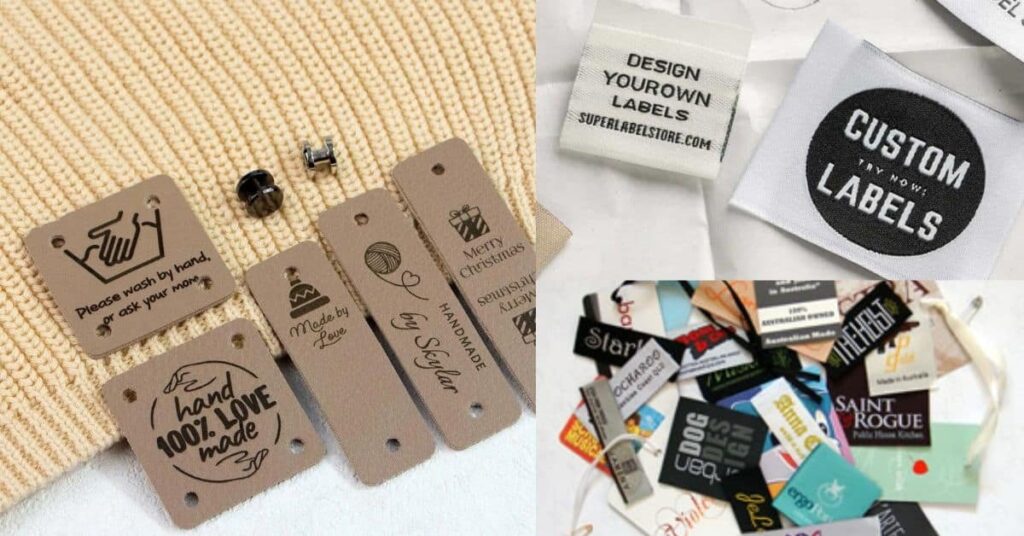
A fashion brand has its primary identity elements in the form of labels and tags, which are far more than just markings. In the world of fashion, these small graphic elements can shift the perception of a given brand, increase the loyalty of consumers, and raise their sales level. Smart strategies regarding labels and tags can boost the confidence of their consumers, make unforgettable impacts while providing what the consumers really need.
Table of Contents
Defining Labels and Tags
Different people often try to use the terms labels and tags interchangeably but it is not always a perfect approach. While both provide information about a garment, their roles differ significantly. Labels permanently attach to garments and convey important product details, such as the outfit’s name, fabric composition, and washing instructions. Tags, on the other hand, serve temporary purposes, mainly for promotional or functional reasons like displaying a price or describing the item.
A label is a non-removable part of clothing, which supports the brand, disclosing important information on how to handle and use the product for the customer. Tags however are more about what is on offer- they convey the very essence which defines and attracts attention to an outfit, quite often with the aid of a beautiful unique graphics or images.
The Significance of Branding With Labels and Tags
Clothes brand labels and tags can be termed as silent brand ambassadors. They help in creating some individuality, express quality and build confidence. Most of the time, the brand tag or label is the only contact that a consumer has with a product, therefore It has to be of high standards and in agreement with the principles of the company. For example, a high quality woven label can suggest prestige and class, simple recycled paper tags on the other hand can imply environmental friendliness.
Additionally, unique branding with the help of tags and labels adds value to the company in a competitive market. It enhances brand awareness making sure that a customer is able to identify and remember a product even when it has no visible logos or names.
Categories of Clothing Labels
Several types of clothing labels can be made, each having its distinct features which have been discussed below:
Woven Labels
- Labels that are made from threads which are sewn to the cloth.
- Tends to be strong and is common with many high-ended companies.
- These are decorated with lots of trademarks like the names of the companies and symbols.

Printed Labels
- Labels simple uses ink to print the details on the materials.
- Is quite cheap and provides a wide range of options.
- They are mostly seen on care labels and sometimes when branding.


Heat Transfer Labels
- All necessary texts and designs are printed onto the material using high heat.
- For products such as sports wear or undergarments it is often preferred since it offers a tagless feel.
- Avoids the discomfort that accompanies a normal label sewn internally into the garment.

Leather Patches
- Worn for their genuine or faux leather appeal.
- Worn on jeans or other outer garments for a more rugged appearance.
- They enhance durability while providing an elegant touch.

A different kind of label is most appropriate to a particular type of garment, a particular brand’s strategy and a certain consumer, allowing clothing brands a good degree of discretion in their choices.”
Categories of Clothing tags
Just as with clothing labels, more or less the same tags serve the purpose in clothing brand marketing strategies. The common types include:
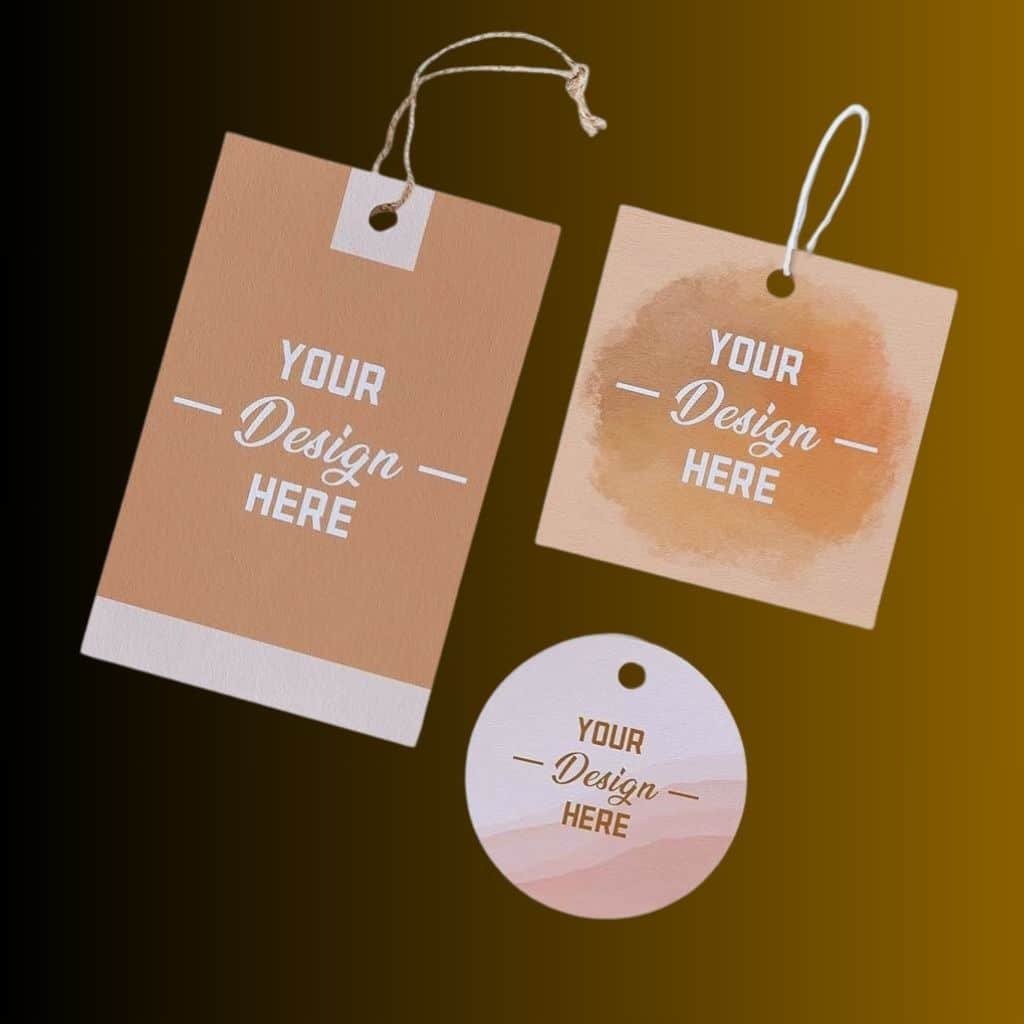
Hang Tags
- Attach and hang using string or plastic fastener onto the garment externally.
- Most likely the part of the product that a customer will come across first.
- Includes branding items, logo, slogan, and QR code.
- read more / Hang tag.
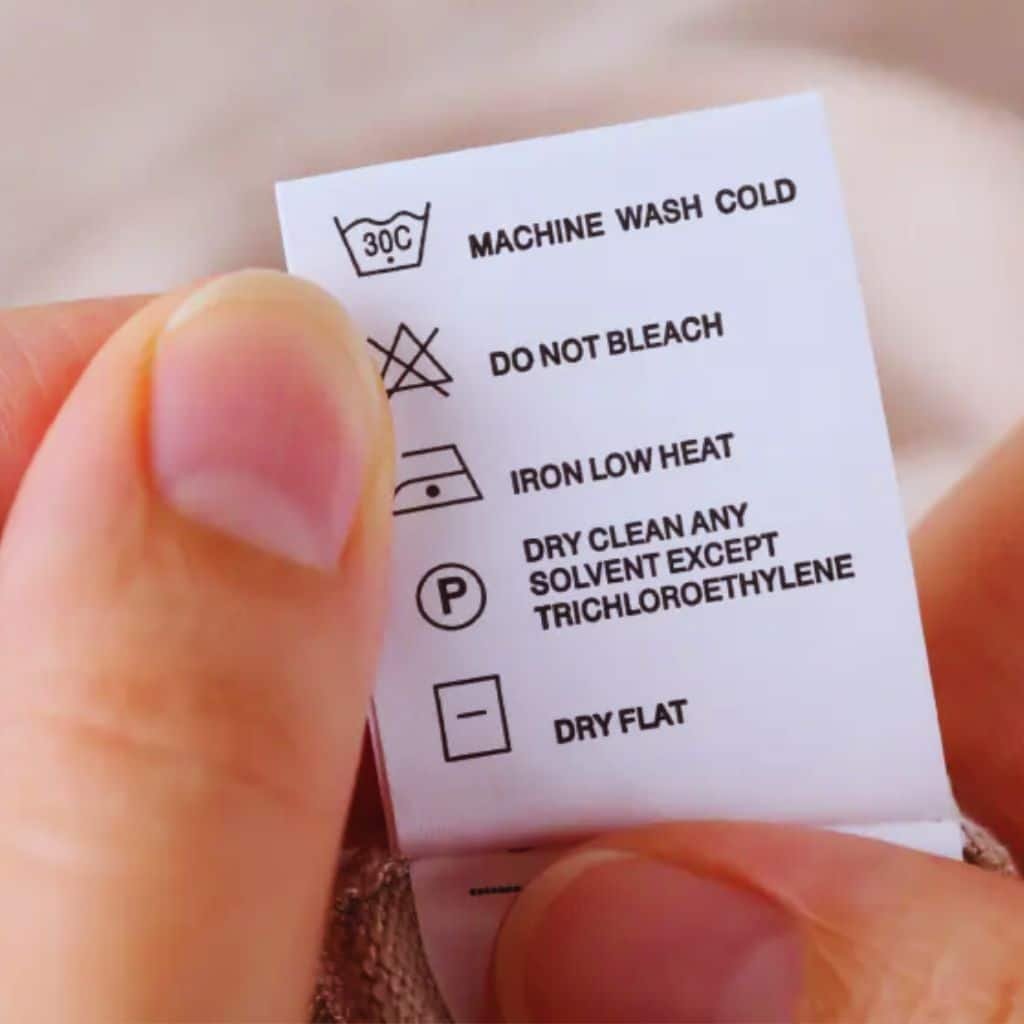
Care Tag
- Includes guidance on washing, drying, and ironing and how to store the garments.
- Helps increase the functional lifespan of the garment positively impacting consumer satisfaction levels.
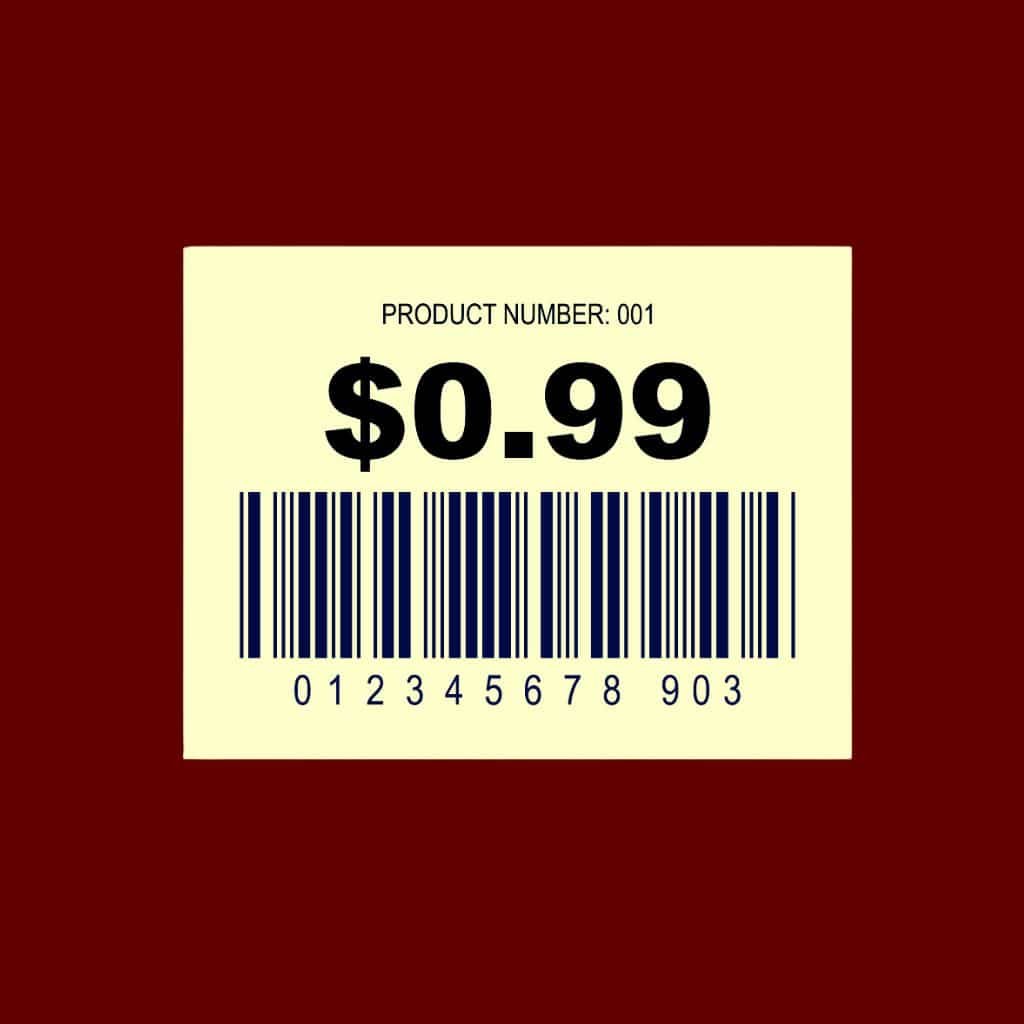
Price Tag
- Indicate the price attached to a garment and at times have a barcode.
- Make it easier for consumers to buy or checkout.
Informational Tag
- Give information which includes the history, what materials were used, and the way the garment was made.
- Focus mainly on creating awareness about environmental protection or certain key attributes.
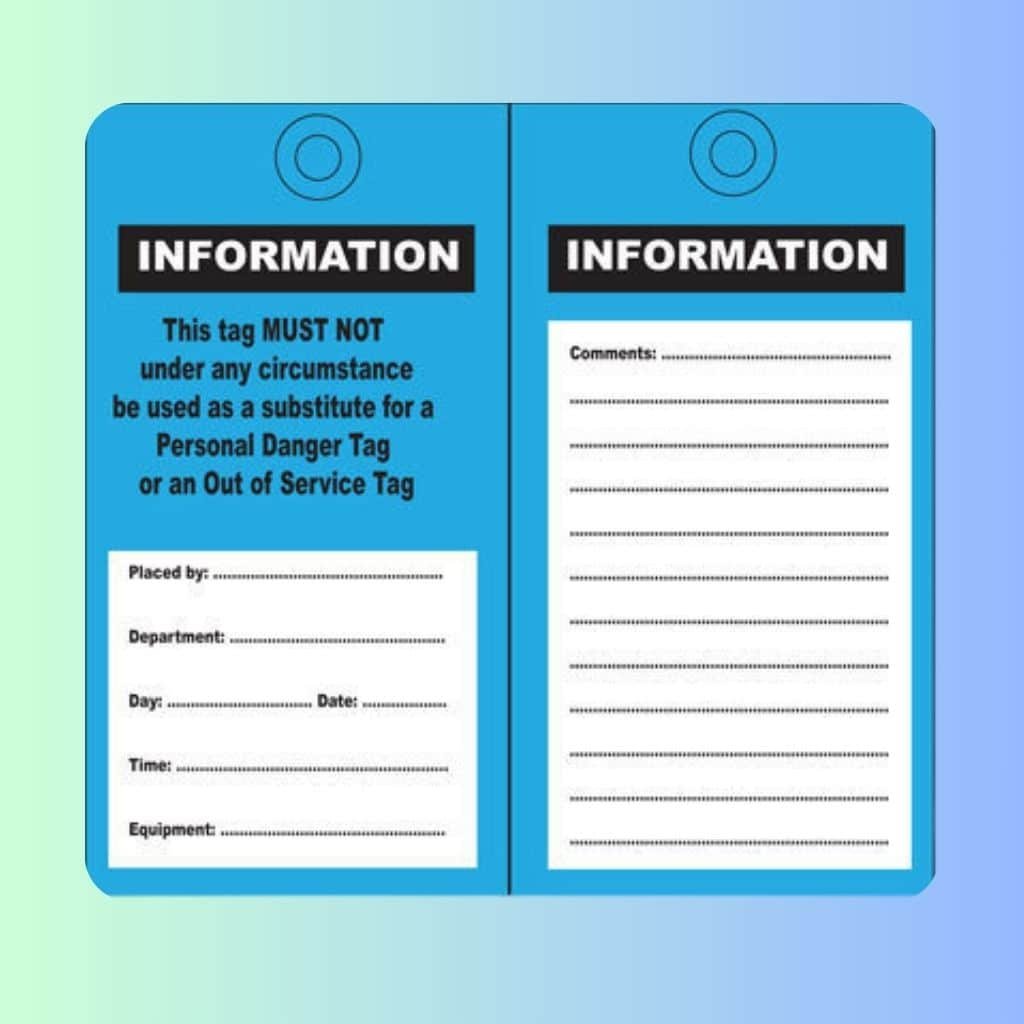
Tags serve as temporary devices, yet they are perhaps the most effective because they carry specific information designed to persuade consumers to make a purchase.
Material Choices for Labels
Labels are composed of distinct materials thereby giving them different appearance, touch and strength. It is hence, very essential for a brand to select materials that would help it achieve both aesthetic and functional requirements:
- Satin: A silky and soft fabric that is beautifully attractive. Mostly utilized for formal or soft apparels.
- Cotton: A sustainable and breathable fabric that is very alive in today’s market, often used for casual or organic lines of clothing. Introduce your self to sustainable green textile.
- Polyester: Strong and stretchable that can stand, wear and tear. Great for labels that will be washed often.
- Paper: Great for a temporary label or tag, usually oxygen and hydrogen based and can be absorbed in the environment meaning they are good for eco friendly companies.
Each of these materials has some advantages and disadvantages; hence, we must be extremely careful in matching it with the brand’s positioning strategy and the end use of the garment.
Material Choices for tags
An experience of a consumer is very vital as it determines the overall satisfaction impression on a brand and hence tags’ material reinforces that notion. Choosing the right blend of materials has almost no cost so here are some preferred ones to use:
- Card stock: Strong and resilient with great finishing and greater usability because you can formulate very different shapes.
Biodegradable materials: Environmentally friendly companies often market them as beneficial because they decompose naturally, leaving no waste behind.
Specialty finishes: Moreover, tags are not limited to wet ribbons; instead, they can feature shiny foils, embossed designs, or matte finishes, among others.
In most cases, designers thoughtfully create tags to not only enhance brand recognition but also ensure they cater to the consumer’s convenience, all while staying aligned with the company’s brand values and budget.
Design Principles for Labels
The design of a label is vital for its success. So a good label should have the following features:
- Readability: Fonts and text sizes must be chosen so that they are easy to read.
- Relevance: The collar, material, and style of the label should be relevant to the brand.
- Long lasting: There is a need for attention to the ability of a label to survive a wash or a dry or just any friction.
In addition, less is more has become popular where the consumer is provided with basic information regarding the product, and nothing more so as to not overwhelm them.
Design Principles for Tags
Tags are a platform where the brand can thunder its voice to the customers. To come up with wonderful tags the following may help:
- Use different colors and designer logos and quality product images as visuals.
- Add the story of the brand, like its vision, or how the product was made.
- Think outside the box and use unusual shapes and materials for the tags that will look good on the rack.
This is one such area which can give the limit to the creativity of the brands, thereby connecting more with the people.
Eco-Friendly Labeling and Tagging
Today with more focus on sustainability in the fashion industry eco-labels and eco-tags are a must rather than a choice. Brands are going for:
- Tags of Recycled Paper: They are biodegradable and environmentally worrying customers will love them.
- Organic Cotton Labels: Reinforcing the use of natural and eco-friendly materials.
- Water-Based Inks: They are cleaner and less harmful to the environment than the traditional dyes.
Such options appeal to eco-conscious buyers and assist brands in meeting international sustainability objective
Legal Requirements
Every garment label is required to welcome domestic and foreign provisions. Some widely applicable provisions are:
- Fiber Composition: Stating the proportions of various types of fabric used to make a piece of clothing.
- Place of Manufacture: Stating the production country of the clad.
- Washing Instructions: Including standard washing, drying, and ironing symbols.
Failure to meet requirements may result in fines or recall, which stresses the need for brands to comply with labelling requirements.
Care Labels
Both companies and consumers are interested in the proper usage of care labels. They give information as to how to wash and take care of clothes, making the garments endure or keep their quality longer. A well written care label will lessen the chances of complaint from the wearing customers and foster faith into the concerned brand.
Brands Clothing Labels
Custom labels open up avenues for brands in an already crowded field. Implementing special patterns, novel materials, or individual wording would help brands make a lasting impression. Custom labels also allow the branding of seasonal lines or joint projects as limited editions.
Technology in Labeling
Technological advancement has changed the way labels and tags work, especially in the fashion industry. Such include
- Smart Labels – QR codes or NFC tags that can be used to access product information, style does, or care guides
- Radio Frequency Identification Technology(RFID) – This streamlines stock control and assists with theft preventative measures.
- Augmented Reality(AR)– Tags that allow consumers to virtually try on a product or listen to its story.
While ensuring that brands operate efficiently, these enhancements augment the consumer experience as well.
Costs of Labels and Tags
Cost estimation for tags and labels is imperative for every brand owner . Delivery quantities, the materials used, and intricacy in design aspects determines how the pricing structure looks, QRM being one of the key factors. There are tags and labels that may be on the higher end, but it would be worth the price because these tags and labels would be able to strengthen a brand’s image and clients.
Tag Placement on Garments
Careful tagging can enhance the overall consumer experience, and vice versa. Tags can be placed in the following positions:
- Just Beginners sweep over it since their garments become more flexible in what they are designed to hang.
- At the rear of neckline, which is an area that on the garment tag, why do they come out this over here.
- Over the cut line on the chest and sleeves since they attach to garments like Montreal made carefully by licking.
This ensures that all tags are properly positioned and do not interfere with the pieces of art that the garment is.
Label Placement on Garments
It is important to place them in areas where they will be visible and easy to locate, but not where they themselves will be a distraction. Typically, these prominent areas are:
- Over the back neck line to give more credibility to the brand.
- Help tags placed inside garment side seams for people to take care the spots.
- On sleeves or On outerwear chest to look for outer clothing logo images.
Strategic tag placement is useful in communication as well as for branding purposes.
Consumer Psychology and Tags
Tags encourage consumer action and choice because they create impressions of premium quality, instilling confidence, or highlighting the brand’s focus on sustainability. Additionally, such emotional triggers not only influence purchasing decisions but also build a connection with the consumer. Therefore, it is essential to provide these triggers through tags or designs, as they evoke a sense of need and desire. Moreover, by emphasizing such elements, brands can effectively strengthen their messaging and appeal.
Cultural Considerations
This means that international companies need to adapt their labels and tags to local tastes and legal requirements. For example, some colors and symbols that are attractive in one market may be regarded negatively in others. Modification of these subtleties makes it possible to improve the acceptance of the brand throughout the globe.
Trends in Labeling and Tagging
Some of the commonly emerging trends in the industry include:
- Moving Towards Minimalism: Simple and uncomplicated designs which make the most pertinent information outstanding.
- Technological Tags: Making use of the widespread smart technology including AR and QR codes.
- Green Marketing: Using appropriate materials which resonate well with the consumers’ views.
Being proactive in these trends can allow the brand to define the industry.
Challenges in Labeling and Tagging
Some of the difficulties faced by the brands include:
- The need to maintain a balance between price and quality.
- The importance of tag and label design as an art.
- The complexity of regulations in different countries and regions.
Combatting these issues takes creativity, hard work, and most importantly, integrity. Read how to choose perfect fabric for your clothing brand.
Conclusion
As practical and strategic creative tools, labels and tags are important for every clothing brand as they help to build the brand and consumer trust. Industries ought to pay special attention to these details by combining good design, right materials, and green solutions. In the modern times, it is not only possible to invest on labels and tags; it is essential for success.
FAQs
Which label materials are the toughest?
Polyester woven labels are tough and survive repeated washes.
In what ways do smart labels assist consumers?
Smart labels offer immediate information, care instructions, and special features related to products, thereby enhancing the customer’s experience.
What are some good alternatives for tags that are environmentally friendly?
Eco tag materials that are very popular include recycled papers, organic cotton and biodegradable plastics.
Polyester woven labels are tough and survive repeated washes.
Smart labels offer immediate information, care instructions, and special features related to products, thereby enhancing the customer’s experience.
Eco tag materials that are very popular include recycled papers, organic cotton and biodegradable plastics.