


Introduction
Silk has always been regarded as a luxurious fabric due to its unrivaled softness. For centuries, silk has been treasured for its luster and comfort. Many people claim that silk is the best fabric for one to wear when sleeping, in warm weather or during a hot day. This belief leads to a very interesting question: does silk actually make you sweat, does silk make you sweat?
This debate persists even today because there are two opposing viewpoints regarding silk’s touch: some consumers claim that silk feels cool to the touch, while others argue that it makes one feel claustrophobic and tends to stick to their skin. In this article, we will try to answer these questions by looking at the science and practicality of silk. Let’s explore how silk actually performs in regards to sweat, heat, and humidity.
Silk Fabric Properties: What Is Special About Silk?
Silk is a natural protein fiber which silkworms produce, more specifically, the Bombyx mori type. These small creatures spin silk cocoons which can be collected and spun into silk thread. Silk is a natural material which, when sourced responsibly, makes it biodegradable, sustainable and environmentally friendly.
Breathability and Moisture-Wicking Abilities
Silk permits some air to move through its structure and has moderate breathability. It doesn’t breathe as well as cotton or bamboo, but it is much superior to polyester. Silk can absorb up to 30% of its weight in moisture and can do so without feeling damp, which makes it moisture-wicking to some degree.
Thermoregulation: Year Round Comfort
Silk’s ability to regulate the human body temperature is rather unique. It aid in storing body heat in cold conditions to keep you warm, and in warm conditions, it releases body heat to aid in cooling you down. Overall effectiveness of silk, however, is heavily influenced by humidity levels and the fabric’s weave.
Silk and Cotton, Polyester, and Bamboo Comparison
- Bamboo lacks the elegance and softness of silk, although it is cooler and more breathable.
- While polyester holds on to both sweat and heat making it unbearable during warm weather.
- Cotton is more airy and dries faster then silk, but suffers from excessive wrinkling.
So, where does silk stand? Somewhere in the middle. Comfortable, soft, but selective in performance.
Does Silk Make You Sweat?
The answer is not that straightforward. While silk offers several comfort features, multiple factors including the environment will determine whether you sweat more or feel sweaty.
Breathability and Air Circulation
Because of its structure, silk lacks the ability for air movement. As a result, it may help reduce the buildup of sweat as well. Because of this ability, silk may feel comfortable and cool during mild temperatures. However, performance may decline under extreme heat or humidity. Unlike open-weave cotton, tightly-woven silk may trap more heat.
Moisture Absorption and Drying Time
The ability of silk to absorb moisture like sweat can become problematic. Because silk dries slowly, it can become quite sticky, especially if one sweats heavily. On the other hand, cotton is faster drying, although the tendency to absorb more moisture leads to more visible sweat marks on clothing.
Heat Retention in Humid Climates
Silk offers unique insulating properties that can be advantageous in the winter, but in hot and humid situations can feel stifling. Combined with high levels of humidity, silk can cling to the skin resulting in excessive heat retention.
Expert Insights and Studies
Silk is not ideal for extreme heat or heavy sweating. This was proven by experts in textile. One of them stated in a Journal of the Textile Institute that silk performs well in dry heat but loses comfort in humid environments due to its poor moisture evaporation rate.
Best and Worst Conditions to Wear Silk
When to wear silk can make a significant difference. Silk’s appropriateness highly depends on the particular climate and level of activity.
Best Uses for Silk:
- Moderate Climates: In spring and fall, temperatures are moderate which benefits silk.
- Sleepwear: Pillow cases and pajamas made out of silk are great for sleepwear. Because silk is soft and airy, some wearers even report less night sweating.
- Hypersensitivity: Silk is naturally hypoallergenic. It helps reduce silking, erythema and frictional irritation which can be very helpful for eczema and allergic patients.
When Not To Wear Silk:
- Physical Activity: Sweating buckets in a silk top is an absolute no! Silk is moisture retentive, does not have elasticity, and certainly does not qualify as workout clothing.
- Hot areas: People living in high humidity areas may find silk to be sticking to their body and making them feel hot.
Silk vs Others: Best Fabrics for Sweating
Finding the right fabric to use is extremely important for comfort while sweating. Allow me to make a comparison with silk and other alternative materials.
Silk vs Cotton
- When considering comfort while sweating, cotton fabric absorbs and evaporates sweat better than silk.
- Silk offers a smoother feel and more luxurious sensation to the body than cotton, but takes longer to dry.
- Summary: For sweat absorption, cotton performs better, while for skin sensitivity and elegance, silk is superior.
Silk vs Bamboo
- Bamboo exceeds silk in its cooling effect and breathability.
- While silk loses out in structure, it makes up for it with softness.
- Summary: Bamboo excels at controlling perspiration but silk takes the win during special occasions.
Silk vs Synthetics (Polyester, Nylon)
- These materials become stiffer and less comfortable to wear the longer they are used due to their ability to trap sweat and odor.
- Silk, on the other hand, is a natural fabric that does not trap odors, though it does retain moisture.
- Verdict: While silk is more beneficial for skin hygiene, it does not work well during exercise.
Types of Silk and Their Breathability
The different types of silk differ mainly by how breathable and ecosystem friendly they are with sweat. Their type and weave greatly influences this factor.
Mulberry Silk
This is the most common type of silk and most breathable. Its ultra-soft smoothness and tight weaving makes this silk ideal for sleepwear, undergarments, and pillowcases.
Charmeuse Silk
Due to its shiny appearance, charmeuse silk offers smooth texture on one side. However, it Dense weave makes it less breathable. While it charmeuse makeup silk looks fancy, it is not appropriate for a hot day or any physical exercises.
Tussah Silk
A rougher silk that is more textured than charmeuse silk. As a result, it is more breathable. Because of its natural irregularity, tussah silk is ideal wirh scarves and casual attire.
Tips to Reduce Sweating in Silk Clothing
Silk can be a very comfortable option – a small number of the right choices can enhance comfort.
Avoid wearing silk undershirts with skin. Use cotton tanks to minimize body contact and keep the sweat away.

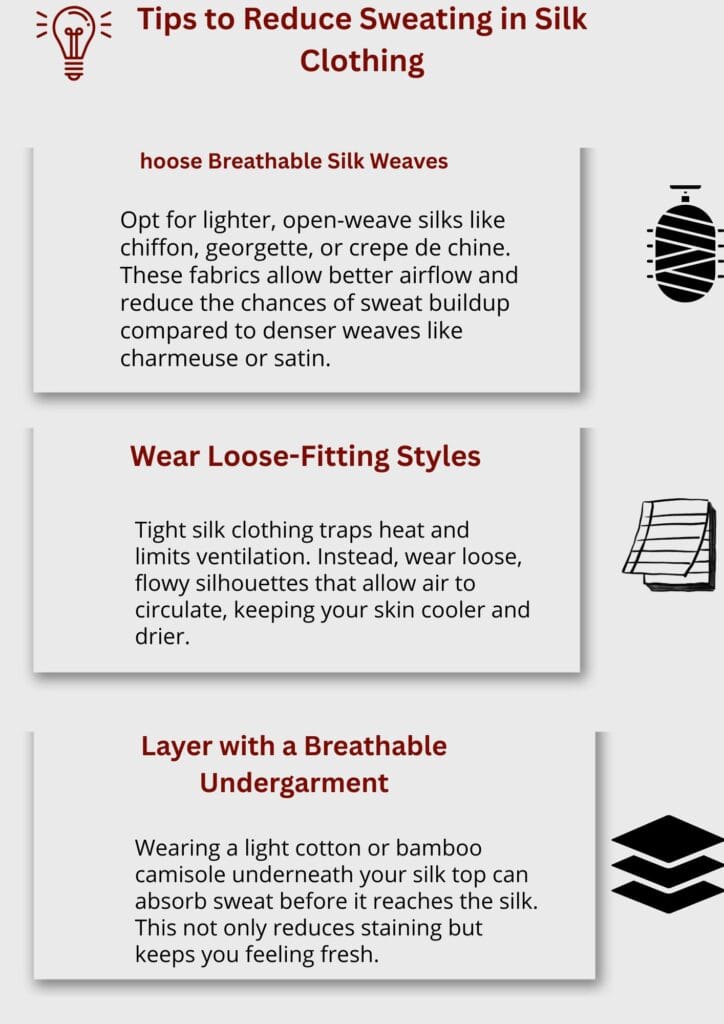
- In humid conditions, refrain from wearing close fitting silk as it retains excessive body heat.
- Use gentle silk meriting detergents for washing as this maintains breathability a silk’s softness.
- Light colors reflect sunlight. Use them to avoid excessive heat absorption.
Myths About Silk and Sweat
Giving rise to many misconceptions about silks, let’s explore the most common.
“Silk Always Keeps You Cool”
This is partially correct. While silk does maintain the body’s temperature, in humid conditions and heat, it is not as cool as one would wish. If the surroundings are hot and humid, the fabric’s heat retention can become an issue.
“Silk Makes You Sweat More”
Not True; Sweat Can’t Be Caused By Silk
The body is responsible for the process of sweating, not silk. To some degree, silk can feel stickier because it retains moisture, making it feel warmer. Whether or not the tight weave silk traps heat depends on the type of silk and the surroundings.
Best Products for Silk for People Prone To Sweating
With the right picks, silk can still be a great solution. Here are our recommended products who flourish sweat silk pillowcases:
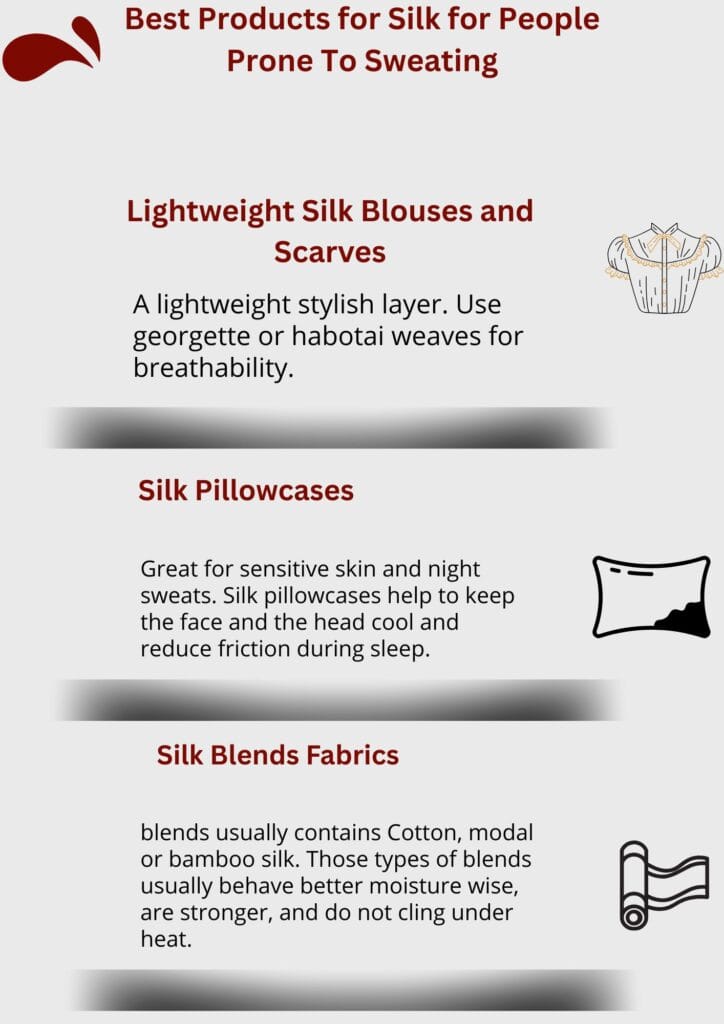
Lightweight Silk Blouses and Scarves
A lightweight stylish layer. Use georgette or habotai weaves for breathability.
Silk Pillowcases
Great for sensitive skin and night sweats. Silk pillowcases help to keep the face and the head cool and reduce friction during sleep. In addition to that, they are antimicrobial and naturally antibacteria.
Silk Blends Fabrics
blends usually contains Cotton, modal or bamboo silk. Those types of blends usually behave better moisture wise, are stronger, and do not cling under heat.
Conclusion
So does silk make you sweat? Yes and no. Because of its thermoregulating properties, silk can keep you cool in moderate or dry conditions. In hot, sweating-heavy environments, it can feel sticky and uncomfortable.
Sleeping and rest is perhaps the best time to take advantage of silk as it works best in those loose, breathable weaves in cooler climates in low humidity. These works also make silk perfect for sleepwear, wearing over sensitive skin, layering stylishly, rest periods and gentle walks, not so much intense physical exercise or tropical temperatures.